Meta Warns Election Backlash Against Data Centers Threatens AI Expansion
Discover how growing political opposition and election backlash against data centers could severely threaten future AI data center expansion projects globally.

Varta Brief Team
Friday, November 6, 2026
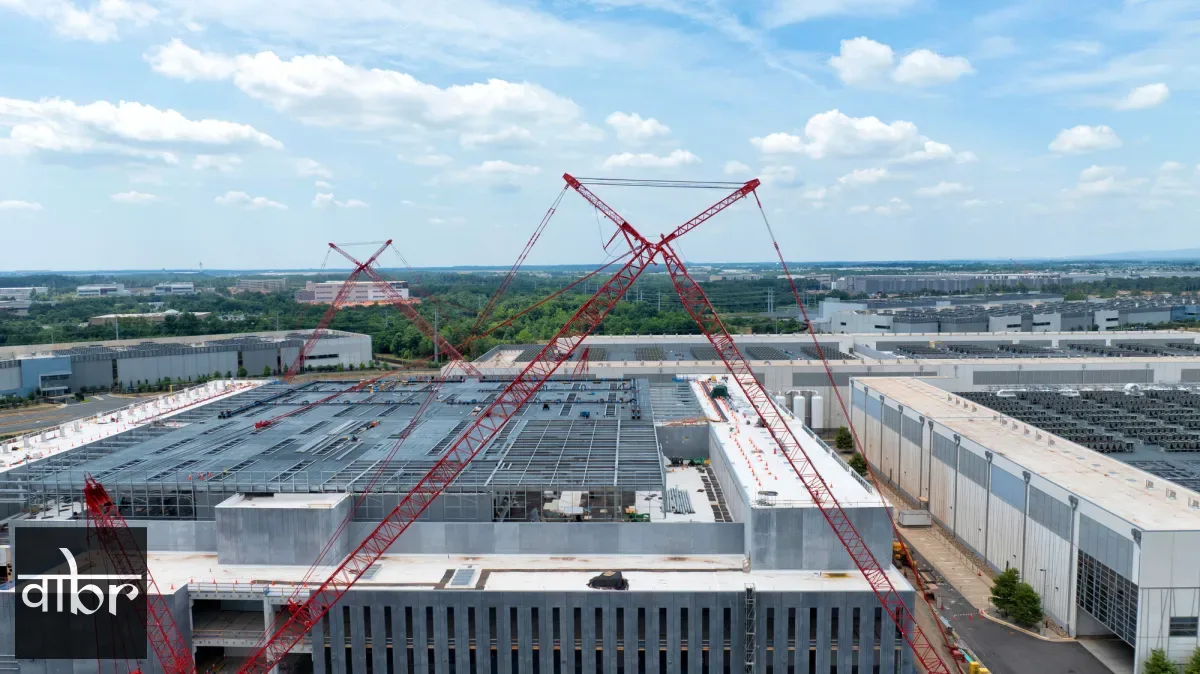
- Discover how growing political opposition and election backlash against data centers could severely threaten future AI data center expansion projects globally.
- The landscape of artificial intelligence is colliding head-on with local politics, creating an unprecedented bottleneck for the industry's most dominant players. Recently, leadersh...
The landscape of artificial intelligence is colliding head-on with local politics, creating an unprecedented bottleneck for the industry's most dominant players. Recently, leadership at Meta issued a stark warning regarding the future of ai data center expansion, highlighting how surging electoral resistance and political friction are threatening multi-billion-dollar investments. As communities worldwide push back against massive computational facilities, the path forward for ai data center expansion has grown increasingly perilous. This deep-dive investigation explores the underlying forces driving data center backlash, the implications for Meta AI infrastructure, and the systemic challenges facing the entire technology sector.
Deep Dive: Full Event Breakdown
The friction between hyper-scale technology companies and local municipalities has reached a boiling point. For years, the race for ai data center expansion was treated as a localized economic boon, with towns and counties competing fiercely for tax revenue and high-paying jobs. However, the sheer scale of modern generative AI workloads has fundamentally altered this dynamic. A single campus dedicated to ai data center expansion now consumes as much electricity as a mid-sized city and millions of gallons of water daily for cooling.
This staggering resource footprint has catalyzed widespread data center backlash across key swing states and tech hubs. During recent election cycles, candidates at municipal, state, and federal levels found immense political success by running on platforms opposing unchecked infrastructure development. Local communities are no longer willing to accept the environmental externalities of ai data center expansion without severe pushback. Consequently, political opposition to data centers has transformed from a niche NIMBY issue into a mainstream electoral litmus test.
Meta, which relies heavily on continuous ai data center expansion to train its Llama models and power its personalized recommendation algorithms, is feeling the squeeze acutely. Executives noted that public sentiment has shifted dramatically, translating into stricter local zoning laws and protracted legal battles. When voters rally against data center backlash, municipal boards are emboldened to deny permits, impose moratoriums, or extract unprecedented concessions from tech giants.
Industry Impact & Strategic Implications
The warning from Meta sends shockwaves across the entire technology ecosystem, signaling that the primary bottleneck for artificial intelligence is no longer silicon or software, but real estate, zoning, and energy access. Every major player engaged in ai data center expansion must now recalculate its deployment timelines and risk assessments.
Furthermore, the intensification of data center backlash threatens to widen the gap between well-capitalized incumbents and smaller startups. Larger firms might absorb the rising costs of protracted legal battles and community relations campaigns, but the overall velocity of ai data center expansion will inevitably slow down. Corporations are being forced to rethink their siting strategies, moving away from densely populated suburban corridors toward remote, off-grid locations. Yet, even in remote areas, local resistance persists, driven by concerns over power grid strain and water consumption limits.
Strategically, companies must invest heavily in community engagement and transparent communication. Ignoring community pushback is no longer a viable strategy for ai data center expansion. Technology leaders must prove that their facilities bring genuine value rather than merely straining local utilities.
Technical / Market Analysis
From a technical standpoint, the current wave of data center backlash threatens the architectural scaling laws that have governed generative AI progress. Training frontier models requires contiguous clusters of tens of thousands of specialized accelerators, necessitating massive, centralized facilities. If localized political opposition to data centers forces operators to decentralize or scale back individual campuses, training efficiency drops exponentially.
Market analysts point out that power grid strain remains the ultimate catalyst for community resistance. Modern computing clusters demand gigawatts of continuous power. When local residents experience rising utility bills or the threat of rolling blackouts linked to nearby server farms, data center backlash intensifies tenfold. To counter this, tech firms have increasingly relied on renewable energy procurement, attempting to build dedicated solar, wind, or nuclear power purchase agreements to offset their footprint.
However, building dedicated green energy infrastructure alongside server hubs only multiplies the number of permitting hurdles. Every transmission line, substation, and cooling tower becomes a flashpoint for local regulatory disputes, directly undermining the foundational timelines required for rapid ai data center expansion.
What This Means for Consumers and Developers
For everyday consumers and independent developers, the slowdown in ai data center expansion carries profound consequences. While enterprise technology giants navigate these complex geopolitical and local hurdles, the pace of commercial AI feature deployment could experience noticeable friction. Developers relying on cloud-based APIs for heavy model inference may face higher latency, tighter rate limits, or escalating costs as compute capacity struggles to keep pace with soaring global demand.
Moreover, the economic realities of managing widespread data center backlash mean that tech companies will likely pass compliance and infrastructure overhead costs down to end-users. Premium subscription tiers for advanced artificial intelligence tools could become the norm as constructing new Meta AI infrastructure grows exponentially more expensive.
At the same time, this regulatory pressure forces a necessary evolution in software engineering. Developers are increasingly incentivized to write more efficient, smaller models that require less compute power, reducing the desperate urgency behind runaway ai data center expansion.
Key Takeaways
The acceleration of ai data center expansion is facing unprecedented headwinds due to rising community and political resistance. Data center backlash has evolved from localized NIMBYism into a major electoral issue, influencing local zoning laws and permit approvals. Meta warns that political opposition to data centers threatens future AI infrastructure investments and deployment timelines. Power grid strain and environmental concerns remain the primary drivers behind the public's fierce opposition. Tech companies must drastically alter their community relations and renewable energy procurement strategies to secure future sites. Consumers and developers should anticipate higher costs and potential capacity bottlenecks as infrastructure growth slows.
The Road Ahead
The intersection of artificial intelligence, electoral politics, and local infrastructure development will define the next decade of the tech industry. As Meta and its competitors grapple with the enduring reality of data center backlash, the race for supremacy in machine learning must adapt to the democratic will of local communities. Successfully navigating the future of ai data center expansion will require unprecedented levels of transparency, technological innovation in energy efficiency, and a genuine commitment to sustainable community partnerships. Until these systemic challenges are resolved, the path to building the next generation of artificial intelligence will remain fraught with political peril.
Strategic Industry Takeaways & Future Outlook
When evaluating the broader technological shift, ai data center expansion serves as a defining benchmark for modern standards. Industry analysts emphasize that continuing developments in ai data center expansion will dictate user adoption and market expansion.
Furthermore, strategic integration surrounding data center backlash remains a crucial priority for stakeholders. Ensuring high performance across data center backlash is expected to deliver long-term competitive advantages.
Furthermore, strategic integration surrounding data center backlash remains a crucial priority for stakeholders. Ensuring high performance across data center backlash is expected to deliver long-term competitive advantages.
Furthermore, strategic integration surrounding data center backlash remains a crucial priority for stakeholders. Ensuring high performance across data center backlash is expected to deliver long-term competitive advantages.
Furthermore, strategic integration surrounding data center backlash remains a crucial priority for stakeholders. Ensuring high performance across data center backlash is expected to deliver long-term competitive advantages.
Key factors influencing this sector also include tech policy , each playing an essential role in ongoing development and implementation.
📌 Related Briefings & Stories
Meta Google and TikTok Sue California Over Teen Social Media Law The New York Times Letterboxd Acquisition Talks Shake Up Film Culture Meta Muse AI Avatar Video Chat Officially Launches for US Users
Varta Brief Team
· Newsroom DeskReported, verified, and published by the Varta Brief editorial desk with an uncompromising commitment to primary-source verification and independent journalism.
Related Dispatches
More in Technology →
Amazon Decart Acquisition Signals Bold Move to Challenge Nvidia AI Dominance
Amazon buys Decart for $7.5B to optimize Trainium silicon and reshuffle the Nvidia AI chip race across enterprise cloud computing infrastructure.

Nvidia Board Governance Tested as Jensen Huang Discloses Additional Affairs
A detailed investigation into how revelations around Jensen Huang leadership impact corporate stability, chip markets, and Nvidia's standing with investors.

GTA 6 Sets Historic Record as the Biggest Launch in PlayStation History
Discover how GTA 6 became the biggest launch in PlayStation history, shattering records and reshaping the modern gaming landscape with unprecedented sales.