Amazon Text Alexa Shopping Update and Ecosystem Strategy
Discover how the Amazon text Alexa shopping rollout changes e-commerce after blocking Muse, bringing conversational text features to millions of users worldwide.

Varta Brief Team
Friday, November 6, 2026
- Discover how the Amazon text Alexa shopping rollout changes e-commerce after blocking Muse, bringing conversational text features to millions of users worldwide.
- The landscape of digital commerce and smart home automation is shifting beneath our feet. In an aggressive and calculated strategic pivot, tech titan Amazon has officially announce...
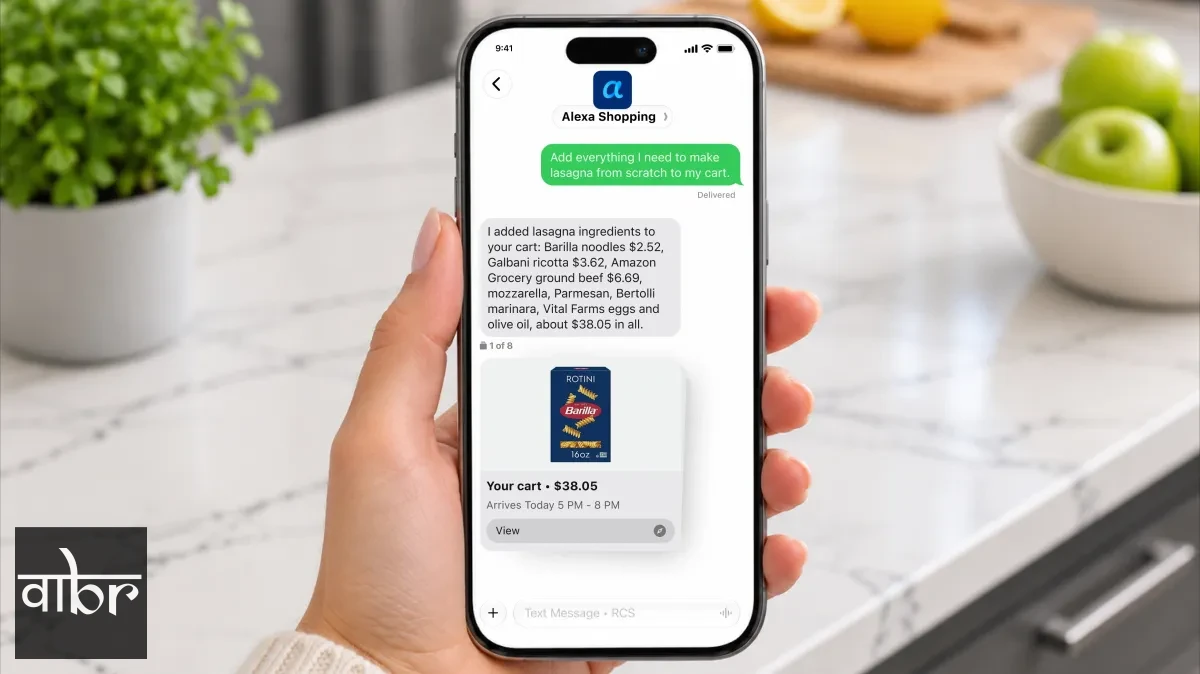
The landscape of digital commerce and smart home automation is shifting beneath our feet. In an aggressive and calculated strategic pivot, tech titan Amazon has officially announced that it is rolling out a brand-new capability allowing users to text Alexa to shop . This groundbreaking feature, widely anticipated by industry insiders, empowers millions of consumers worldwide to interact with their favorite digital assistant via text messages rather than relying solely on traditional voice commands. This monumental development arrives hot on the heels of controversial corporate maneuvers where Amazon deliberately restricted third-party access, effectively blocking rival AI interface Muse from interfacing with its proprietary ecosystem. Now, with Amazon text Alexa integration taking center stage, the tech giant is signalling a massive transformation in how everyday shoppers discover, evaluate, and purchase products across its massive marketplace.
For nearly a decade, voice interaction was championed as the ultimate frontier for human-computer interaction. Consumers across the globe placed smart speakers in their kitchens, living rooms, and bedrooms, conditioning themselves to speak aloud when adding items to their digital shopping carts. Yet, as consumer habits matured, friction points became glaringly apparent. Speaking aloud to search for sensitive products, interacting with a voice assistant in a crowded public transit commute, or attempting to parse complex product specifications entirely through audio prompts proved to be significant barriers to mainstream transactional adoption. By introducing the ability to text Alexa to shop , Amazon is directly addressing these limitations, bridging the gap between silent, text-based mobile messaging and the immense transactional power of the world's most ubiquitous digital shopping assistant .
Deep Dive: Full Event Breakdown
The genesis of this feature rollout can be traced back through a complex web of competitive pressure, platform protectionism, and shifting consumer expectations. Earlier in the product lifecycle, third-party applications like Muse attempted to bridge the gap between various platforms, allowing users to leverage external AI tools to query and interact with Amazon's shopping catalog. However, citing security, data privacy, and platform integrity concerns, Amazon swiftly moved to block Muse and similar third-party wrappers. Industry analysts immediately recognized this defensive posture as a precursor to an internal counter-offensive.
True to form, Amazon's engineering teams were quietly cooking up their own native solution. The newly announced functionality, branded broadly under the Amazon text Alexa umbrella, ensures that users no longer need to depend on third-party workarounds. Instead, consumers can open a messaging interface directly tied to their Alexa profile and type out complex product queries, price comparison requests, and direct purchase orders. Whether a user wants to find a specific brand of organic coffee, track a delayed shipment, or compare the technical specifications of competing television sets, the ability to text Alexa to shop provides a seamless, friction-free alternative to traditional app navigation.
Rollout logistics are slated to scale rapidly over the coming weeks. According to internal statements released by Amazon executives, the feature will reach millions of active accounts progressively, prioritizing mobile app users before expanding deeper into desktop and embedded smart display environments. This phased deployment allows engineers to monitor server loads, fine-tune natural language processing models, and ensure that backend inventory systems can handle the anticipated surge in text-based transactional queries.
Industry Impact & Strategic Implications
The decision to pivot toward text-based conversational interfaces marks a profound milestone in the broader voice assistant evolution . For years, tech companies treated voice and text as separate, siloed modalities of interaction. Apple, Google, and Amazon built distinct ecosystems optimized primarily for spoken commands in the smart home. However, the explosive rise of generative artificial intelligence and large language models has fundamentally rewritten the rules of engagement. Consumers today expect fluid, multimodal experiences where they can seamlessly transition from typing a message on a smartphone screen to speaking with a device in their kitchen.
By enabling users to text Alexa to shop , Amazon is positioning itself at the bleeding edge of conversational commerce . This strategic move does more than just enhance user convenience; it serves as a formidable defensive moat against emerging AI competitors. When Amazon blocked Muse, critics argued the company was attempting to stifle open competition. By subsequently launching a superior, native text-shopping ecosystem, Amazon is proving that its primary motivation was capturing and retaining full control over the high-value transaction funnel.
Furthermore, this development accelerates the broader retail technology shift currently underway across the global retail sector. Traditional e-commerce search bars, often criticized for returning cluttered, sponsored results, are increasingly being bypassed in favor of conversational agents that can understand nuanced human intent. When a shopper uses Amazon text Alexa , they are not merely typing keywords into a search box; they are engaging in a dynamic dialogue with an artificial intelligence retail engine capable of personalized recommendations, contextual upselling, and instant checkout execution.
Technical / Market Analysis
From a technical standpoint, integrating robust text-processing capabilities into an infrastructure historically optimized for acoustic audio recognition requires a monumental architectural overhaul. Traditional smart speakers rely heavily on Automatic Speech Recognition (ASR) pipelines to convert sound waves into text before routing them through Natural Language Understanding (NLU) models. However, when users natively text Alexa to shop , the ASR stage is entirely bypassed, routing text inputs straight into advanced Large Language Models fine-tuned specifically for retail intents.
Market analysts tracking the retail technology sector note that this capability could dramatically improve conversion rates. Text-based interactions inherently boast higher accuracy rates than voice commands, particularly when dealing with complex alphanumeric product serial numbers, foreign brand names, or specific dietary requirements. When a consumer initiates a session via Amazon text Alexa , the margin for miscommunication drops precipitously, leading to fewer abandoned carts and higher customer satisfaction scores.
Moreover, the economic implications for third-party sellers on the Amazon marketplace are profound. As smart home shopping evolves into chat-based shopping, search ranking algorithms will inevitably adapt to prioritize products that are easily summarized and recommended by conversational AI models. Sellers who optimize their product listings for natural language queries and clear, concise feature descriptions will stand to gain disproportionate visibility as millions of consumers adopt the habit to text Alexa to shop .
What This Means for Consumers and Developers
For everyday consumers, the introduction of this feature represents a massive win for flexibility and ease of use. Imagine sitting in a quiet office meeting, remembering that you need to reorder household essentials, and simply pulling up a messaging app to text Alexa to shop without uttering a single audible word. This silent, discreet method of digital interaction removes the social awkwardness and environmental constraints previously associated with voice assistants.
For software developers and third-party brands, the landscape is growing increasingly proprietary. The swift elimination of the Muse integration, followed immediately by Amazon's proprietary rollout, underscores the harsh reality of platform economics: third-party developers building atop closed ecosystems operate at the mercy of platform owners. Developers looking to capitalize on the booming e-commerce integration market must now carefully evaluate whether to build platform-specific skills or focus on independent direct-to-consumer channels.
Key advantages and considerations for stakeholders include:
Enhanced Accessibility: Users with speech impediments or hearing impairments can now fully leverage Alexa's retail capabilities through text. Reduced Friction: Silent shopping in public spaces eliminates previous usage barriers. Data Privacy Controls: Enhanced messaging encryption gives users greater confidence in sharing personal preferences and payment details. Ecosystem Lock-In: Deepening integration within the Amazon app further cements consumer loyalty, discouraging migration to competing platforms.
Key Takeaways (Detailed bullet points)
Strategic Timing: The feature launch arrives immediately following Amazon's decision to block third-party AI tool Muse, securing complete corporate control over the retail chat interface. Massive Deployment: Amazon has confirmed that the ability to text Alexa to shop will roll out progressively to millions of active users over the coming weeks. Multimodal Convergence: The update bridges the historical gap between voice-activated smart speakers and text-based mobile messaging apps. Conversational Superiority: Bypassing audio transcription errors allows for higher accuracy in product searches, order tracking, and checkout execution. Market Dominance: The move cements Amazon's leadership position in conversational commerce , outpacing traditional retail search engines.
The Road Ahead (Forward-looking conclusion)
As we look toward the future of digital retail, the launch of native text-based shopping capabilities through Amazon text Alexa serves as a clear indicator of where the industry is heading. The artificial intelligence revolution is no longer just about flashy demos or novelty chatbots; it is deeply embedded in the foundational plumbing of global commerce. By allowing consumers to text Alexa to shop , Amazon has successfully redefined the parameters of digital convenience, ensuring that its ecosystem remains indispensable in an increasingly crowded technological landscape. Whether this aggressive maneuver will face future antitrust scrutiny remains to be seen, but for millions of everyday shoppers, the future of retail is now literally at their fingertips.
Strategic Industry Takeaways & Future Outlook
When evaluating the broader technological shift, text Alexa to shop serves as a defining benchmark for modern standards. Industry analysts emphasize that continuing developments in text Alexa to shop will dictate user adoption and market expansion.
When evaluating the broader technological shift, text Alexa to shop serves as a defining benchmark for modern standards. Industry analysts emphasize that continuing developments in text Alexa to shop will dictate user adoption and market expansion.
When evaluating the broader technological shift, text Alexa to shop serves as a defining benchmark for modern standards. Industry analysts emphasize that continuing developments in text Alexa to shop will dictate user adoption and market expansion.
When evaluating the broader technological shift, text Alexa to shop serves as a defining benchmark for modern standards. Industry analysts emphasize that continuing developments in text Alexa to shop will dictate user adoption and market expansion.
When evaluating the broader technological shift, text Alexa to shop serves as a defining benchmark for modern standards. Industry analysts emphasize that continuing developments in text Alexa to shop will dictate user adoption and market expansion.
When evaluating the broader technological shift, text Alexa to shop serves as a defining benchmark for modern standards. Industry analysts emphasize that continuing developments in text Alexa to shop will dictate user adoption and market expansion.
When evaluating the broader technological shift, text Alexa to shop serves as a defining benchmark for modern standards. Industry analysts emphasize that continuing developments in text Alexa to shop will dictate user adoption and market expansion.
Furthermore, strategic integration surrounding Amazon text Alexa remains a crucial priority for stakeholders. Ensuring high performance across Amazon text Alexa is expected to deliver long-term competitive advantages.
Furthermore, strategic integration surrounding Amazon text Alexa remains a crucial priority for stakeholders. Ensuring high performance across Amazon text Alexa is expected to deliver long-term competitive advantages.
Furthermore, strategic integration surrounding Amazon text Alexa remains a crucial priority for stakeholders. Ensuring high performance across Amazon text Alexa is expected to deliver long-term competitive advantages.
Furthermore, strategic integration surrounding Amazon text Alexa remains a crucial priority for stakeholders. Ensuring high performance across Amazon text Alexa is expected to deliver long-term competitive advantages.
Furthermore, strategic integration surrounding Amazon text Alexa remains a crucial priority for stakeholders. Ensuring high performance across Amazon text Alexa is expected to deliver long-term competitive advantages.
Furthermore, strategic integration surrounding Amazon text Alexa remains a crucial priority for stakeholders. Ensuring high performance across Amazon text Alexa is expected to deliver long-term competitive advantages.
Furthermore, strategic integration surrounding Amazon text Alexa remains a crucial priority for stakeholders. Ensuring high performance across Amazon text Alexa is expected to deliver long-term competitive advantages.
Furthermore, strategic integration surrounding Amazon text Alexa remains a crucial priority for stakeholders. Ensuring high performance across Amazon text Alexa is expected to deliver long-term competitive advantages.
Furthermore, strategic integration surrounding Amazon text Alexa remains a crucial priority for stakeholders. Ensuring high performance across Amazon text Alexa is expected to deliver long-term competitive advantages.
Key factors influencing this sector also include Muse AI alternative , each playing an essential role in ongoing development and implementation.
📌 Related Briefings & Stories
Meta Spaces AI Collaboration: Unleashing the Power of Your Muse Agent Hundreds of Artex AI Hacking Tools Exposed Publicly on the Web AI Spending Stalling Threatens Market Growth As Anthropic Nears IPO
Varta Brief Team
· Newsroom DeskReported, verified, and published by the Varta Brief editorial desk with an uncompromising commitment to primary-source verification and independent journalism.
Related Dispatches
More in Technology →
Amazon Decart Acquisition Signals Bold Move to Challenge Nvidia AI Dominance
Amazon buys Decart for $7.5B to optimize Trainium silicon and reshuffle the Nvidia AI chip race across enterprise cloud computing infrastructure.

Nvidia Board Governance Tested as Jensen Huang Discloses Additional Affairs
A detailed investigation into how revelations around Jensen Huang leadership impact corporate stability, chip markets, and Nvidia's standing with investors.

GTA 6 Sets Historic Record as the Biggest Launch in PlayStation History
Discover how GTA 6 became the biggest launch in PlayStation history, shattering records and reshaping the modern gaming landscape with unprecedented sales.