Is Bad News For Jensen Huang Also Bad News For The AI Industry?
Discover why bad news for Jensen Huang shakes the artificial intelligence market and why so much of the global economy rides on Nvidia hardware.

Varta Brief Team
Sunday, November 15, 2026
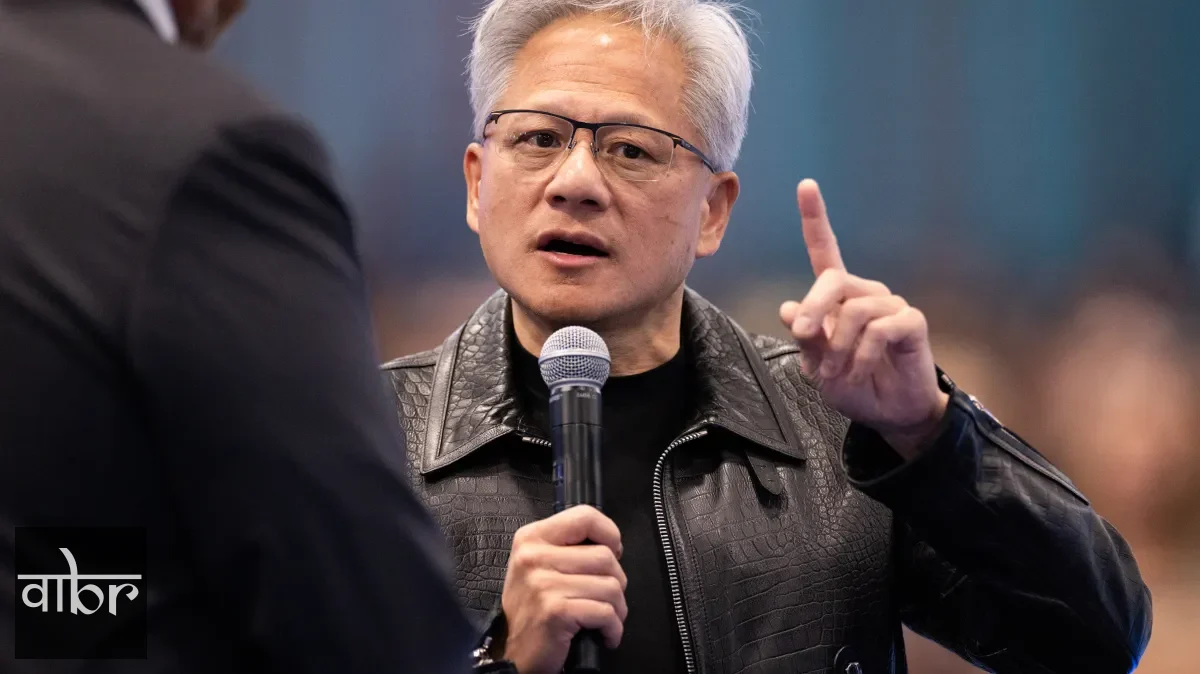
- Discover why bad news for Jensen Huang shakes the artificial intelligence market and why so much of the global economy rides on Nvidia hardware.
- For over a decade, the trajectory of modern technology has been inextricably linked to a single, leather-jacket-clad visionary. When markets fluctuate, stakeholders across the glob...
For over a decade, the trajectory of modern technology has been inextricably linked to a single, leather-jacket-clad visionary. When markets fluctuate, stakeholders across the globe instantly ask a critical question: is bad news for Jensen Huang also bad news for the artificial intelligence industry as a whole? As Wall Street navigates shifting valuations and supply chain bottlenecks, examining the symbiotic relationship between Nvidia and the broader technology sector has never been more imperative. Whenever bad news for Jensen Huang hits the ticker, tremors are felt universally across the artificial intelligence industry, exposing a delicate macroeconomic reliance.
To understand this dynamic, we must look at how the artificial intelligence industry has evolved. Jensen Huang is Nvidia, right? And so much of this economy is riding on Nvidia. From hyperscale cloud providers to venture-backed startups, nearly every major advancement in deep learning acceleration relies on advanced graphics processing units. If bad news for Jensen Huang emerges—whether through regulatory scrutiny, chip production delays, or cyclical market corrections—the shockwaves ripple through every layer of the artificial intelligence industry, stalling research and development pipelines worldwide.
Deep Dive: Full Event Breakdown
The recent wave of market anxiety began when financial analysts started questioning the sustainable ROI of massive AI infrastructure spending. Because Nvidia acts as the undisputed engine of this boom, any hint of a slowdown immediately translates to bad news for Jensen Huang. When enterprise tech adoption fails to meet hyper-inflated revenue expectations, investors panic, looking toward the chief executive who promised a trillion-dollar hardware revolution. This interdependence means that any turbulence at the top of Nvidia directly threatens the momentum of the artificial intelligence industry.
Furthermore, the semiconductor supply chain remains uniquely fragile. Advanced packaging, high-bandwidth memory shortages, and geopolitical tensions all contribute to potential operational hurdles. When production bottlenecks threaten product rollouts, it constitutes bad news for Jensen Huang, stalling the rapid scaling required by the artificial intelligence industry. Market observers note that unlike traditional tech sectors, the modern compute landscape has no immediate substitute for Nvidia GPU architecture. Thus, any vulnerability exposed at the corporate helm threatens the entire foundation of the artificial intelligence industry.
Industry Impact & Strategic Implications
The strategic implications of Nvidia's market positioning are profound. Over the years, Jensen Huang leadership has steered the company from a niche gaming graphics card manufacturer into the most valuable chipmaker on earth. However, this absolute dominance creates systemic risk. If bad news for Jensen Huang shakes investor confidence, secondary suppliers, software developers, and cloud giants all suffer collateral damage. The artificial intelligence industry cannot simply pivot to alternative hardware overnight without sacrificing massive computational throughput.
Consider the impact on venture capital and enterprise spending. Startups building foundational large language models depend entirely on continuous access to bleeding-edge hardware. When bad news for Jensen Huang triggers a broader Wall Street market correction, venture capitalists tighten their purse strings. This sudden risk aversion stifles innovation across the artificial intelligence industry, delaying the next generation of algorithmic breakthroughs and consumer-facing applications.
Technical / Market Analysis
From a technical standpoint, the hardware moat established by Nvidia is staggering. Their proprietary software ecosystem, CUDA, locks developers into an environment where switching costs are astronomically high. Consequently, when bad news for Jensen Huang surfaces regarding hardware delivery timelines or competitive margin pressures, it signals potential bottlenecks in deep learning acceleration across the artificial intelligence industry.
Market analysts tracking the macroeconomic tech impact point out that Nvidia's financial health is a leading indicator for global tech capital expenditures. When major tech giants report their quarterly earnings, Wall Street scrutinizes their capital allocation toward AI infrastructure spending above all else. Any sign of pullback or cooling demand hits Nvidia's stock price, generating bad news for Jensen Huang and sending a chilling effect through the artificial intelligence industry.
What This Means for Consumers and Developers
While everyday consumers might view these corporate fluctuations as distant financial news, the downstream effects are very real. For independent developers and smaller enterprises, hardware scarcity driven by supply chain constraints keeps operational costs exceptionally high. If bad news for Jensen Huang disrupts manufacturing schedules, indie developers face prolonged waiting lists for the compute power necessary to train efficient models.
Moreover, the artificial intelligence industry relies heavily on predictable pricing models for cloud compute. A severe market correction affecting Nvidia could force cloud providers to adjust their pricing structures, making experimental development cost-prohibitive for smaller players. Therefore, the health of Nvidia is not merely a matter of stock market fascination; it directly dictates the democratization of technology within the artificial intelligence industry.
Key Takeaways (Detailed bullet points)
Symbiotic Dominance: The modern artificial intelligence industry is inextricably tied to Nvidia's hardware monopoly and ongoing technological innovations. Macroeconomic Vulnerability: Any bad news for Jensen Huang immediately triggers broader market corrections across the technology sector and global stock exchanges. Supply Chain Realities: Bottlenecks in semiconductor manufacturing directly threaten enterprise tech adoption and large-scale model training. Software Moat: The CUDA ecosystem ensures that the artificial intelligence industry cannot easily substitute Nvidia hardware without severe performance penalties. Capital Flow: Venture capital and enterprise AI infrastructure spending are directly correlated with Nvidia's quarterly performance and executive outlook.
The Road Ahead (Forward-looking conclusion)
Ultimately, the question of whether bad news for Jensen Huang spells doom for the broader sector reveals a sobering truth: the tech world has placed an immense amount of weight on a single corporate pillar. While diversification efforts by competing chipmakers and cloud giants are underway, Nvidia's dominance remains unchallenged for the foreseeable future. As the artificial intelligence industry matures, it must eventually navigate the delicate balance between rapid, hyper-growth scaling and sustainable economic stability. Until alternative architectures achieve true parity, the fortunes of the artificial intelligence industry will continue to rise and fall alongside the leadership and vision of Jensen Huang.
Strategic Industry Takeaways & Future Outlook
When evaluating the broader technological shift, bad news for Jensen Huang serves as a defining benchmark for modern standards. Industry analysts emphasize that continuing developments in bad news for Jensen Huang will dictate user adoption and market expansion.
When evaluating the broader technological shift, bad news for Jensen Huang serves as a defining benchmark for modern standards. Industry analysts emphasize that continuing developments in bad news for Jensen Huang will dictate user adoption and market expansion.
📌 Related Briefings & Stories
Uber Data Breach Exposes Driver Licenses via AI Cloud Vendor ChatGPT Wallet Launches: Autonomous AI Shopping Agents Are Here Saturday Night Live Tech Tycoons: Satire, Silicon Valley, and Society
Varta Brief Team
· Newsroom DeskReported, verified, and published by the Varta Brief editorial desk with an uncompromising commitment to primary-source verification and independent journalism.
Related Dispatches
More in Technology →
Amazon Decart Acquisition Signals Bold Move to Challenge Nvidia AI Dominance
Amazon buys Decart for $7.5B to optimize Trainium silicon and reshuffle the Nvidia AI chip race across enterprise cloud computing infrastructure.

Nvidia Board Governance Tested as Jensen Huang Discloses Additional Affairs
A detailed investigation into how revelations around Jensen Huang leadership impact corporate stability, chip markets, and Nvidia's standing with investors.

GTA 6 Sets Historic Record as the Biggest Launch in PlayStation History
Discover how GTA 6 became the biggest launch in PlayStation history, shattering records and reshaping the modern gaming landscape with unprecedented sales.