Chrome AI Autofill Integration Changes Web Forms Forever
Discover how Chrome AI autofill integrates with Gmail to automatically fill out web forms using your inbox data while maintaining strict privacy control.

Varta Brief Team
Thursday, October 29, 2026
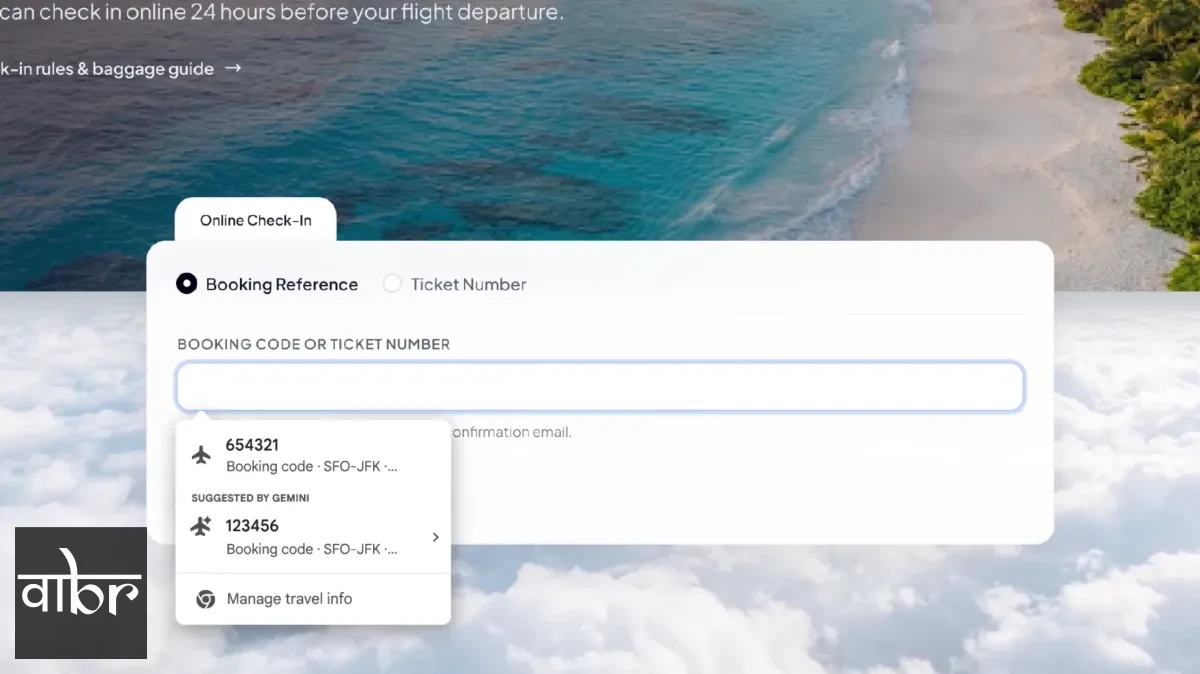
- Discover how Chrome AI autofill integrates with Gmail to automatically fill out web forms using your inbox data while maintaining strict privacy control.
- Chrome AI Autofill Integration Changes Web Forms Forever...
Chrome AI Autofill Integration Changes Web Forms Forever
In the ever-evolving landscape of browser technology, convenience and speed continually battle against security and privacy concerns. Today, Google has decisively shifted that balance with a major update to its flagship browser. The introduction of chrome ai autofill represents a monumental leap forward in how users interact with online forms. By leveraging advanced machine learning algorithms, the browser can now intelligently scan your inbox, utilizing gmail data parsing to extract crucial details like tracking numbers, flight confirmations, and complex purchase details. This comprehensive deep dive explores the technical architecture, security implications, and market-wide repercussions of chrome ai autofill.
For decades, filling out online forms has remained a tedious, repetitive chore. Despite the existence of legacy password managers and basic field-saving tools, users frequently find themselves hunting through old emails for flight numbers, shipping statuses, and specific confirmation codes. The integration of chrome ai autofill directly addresses this friction. Through seamless gmail data parsing, the browser acts as a deeply contextual assistant, recognizing when a web form requires specific information and instantly retrieving it from your personal communications. As smart form filling becomes the industry standard, this development sets a new benchmark for browser utility, transforming google chrome updates from minor UI tweaks into transformative productivity shifts.
Deep Dive: Full Event Breakdown
The mechanics behind chrome ai autofill are both fascinating and complex. When a user navigates to a checkout, booking, or registration page, chrome ai autofill initiates a secure local scan of the Document Object Model (DOM) to understand the required fields. Instead of relying purely on static form labels, chrome ai autofill uses natural language processing models to interpret context. For instance, if a field asks for a delivery tracking identifier, chrome ai autofill communicates with your inbox via permission-based gmail data parsing to locate the most recent shipping notification.
Crucially, this entire process of gmail data parsing is designed with user consent at its core. Google emphasizes that chrome ai autofill does not indiscriminately upload your entire email archive to the cloud. Instead, chrome ai autofill leverages on-device machine learning models where possible, or executes secure server-side queries strictly gated by user permission. This balance of advanced gmail data parsing and rigorous security parameters ensures that chrome ai autofill delivers lightning-fast smart form filling without compromising personal confidentiality. Industry analysts tracking recent google chrome updates note that this feature bridges the gap between static browser storage and dynamic contextual computing.
Industry Impact & Strategic Implications
The deployment of chrome ai autofill sends shockwaves through the tech industry, challenging competitors to elevate their own browser automation suites. Traditional password manager applications, which have long dominated smart form filling, must now pivot toward deeper email integration to stay relevant. By embedding gmail data parsing directly into the browser core, Google creates an ecosystem moat that external extensions will struggle to replicate with the same native performance.
Furthermore, this move redefines user expectations regarding artificial intelligence browser capabilities. Consumers no longer view AI as a standalone chatbot residing in a sidebar; they expect it to actively participate in daily web navigation. As developers optimize websites for chrome ai autofill and smart form filling, web design standards may shift to accommodate more predictable form architectures that facilitate easier gmail data parsing. Consequently, chrome ai autofill is accelerating the broader industry shift toward ubiquitous, context-aware digital assistants.
Technical / Market Analysis
From a technical perspective, implementing chrome ai autofill required overcoming significant latency and security challenges. Executing real-time gmail data parsing during a live page render demands highly optimized algorithms to prevent browser lag. Google's engineering teams utilized lightweight transformer models capable of rapid semantic extraction, ensuring chrome ai autofill executes in milliseconds.
Market analysis indicates that smart form filling features powered by chrome ai autofill will significantly boost e-commerce conversion rates. Friction during checkout is a primary cause of cart abandonment; by streamlining data entry through accurate gmail data parsing, merchants stand to benefit immensely. At the same time, privacy advocates remain vigilant, monitoring how chrome ai autofill handles sensitive data. While google chrome updates have historically prioritized security sandbox improvements, the deep integration required for chrome ai autofill necessitates ongoing scrutiny regarding data governance and local processing standards.
What This Means for Consumers and Developers
For the everyday internet user, chrome ai autofill eliminates the frustrating dance of switching between browser tabs to copy tracking numbers and confirmation codes. The integration of seamless gmail data parsing means your browser finally understands the context of your digital life. Smart form filling becomes effortless, saving cumulative hours of manual data entry over the course of a year.
For web developers and UX designers, the rise of chrome ai autofill means crafting forms that are easily readable by automated parsing tools. Ensuring that form inputs feature clear semantic labeling helps chrome ai autofill accurately interpret field requirements. Developers must also familiarize themselves with the technical boundaries of modern google chrome updates to ensure their applications play nicely with emerging browser automation standards.
Key Takeaways (Detailed bullet points)
Contextual Intelligence: chrome ai autofill transforms web browsers into proactive assistants by understanding form requirements in real time. Advanced Inbox Integration: Leveraging sophisticated gmail data parsing, the system securely extracts tracking numbers, flight details, and order confirmations. Permission-First Architecture: User consent is mandatory; chrome ai autofill respects strict privacy boundaries before accessing any personal communication. E-Commerce Acceleration: smart form filling drastically reduces checkout friction, promising higher conversion rates for online retailers. Ecosystem Dominance: This feature strengthens Google's competitive position within the artificial intelligence browser market.
The Road Ahead (Forward-looking conclusion)
The rollout of chrome ai autofill marks a definitive turning point in browser evolution. As artificial intelligence becomes deeply interwoven with our daily web activities, tools that simplify routine digital tasks will define market leadership. The synergy between chrome ai autofill and targeted gmail data parsing demonstrates the immense potential of contextual computing. Looking forward, we can anticipate further refinements in smart form filling, expanding beyond emails to encompass messaging apps, calendar entries, and document repositories. Ultimately, chrome ai autofill is not just a convenience feature; it is a foundational pillar of the next generation of intuitive, human-centric web technology.
Strategic Industry Takeaways & Future Outlook
Furthermore, strategic integration surrounding gmail data parsing remains a crucial priority for stakeholders. Ensuring high performance across gmail data parsing is expected to deliver long-term competitive advantages.
Furthermore, strategic integration surrounding gmail data parsing remains a crucial priority for stakeholders. Ensuring high performance across gmail data parsing is expected to deliver long-term competitive advantages.
Key factors influencing this sector also include digital privacy , machine learning forms , local data processing , each playing an essential role in ongoing development and implementation.
📌 Related Briefings & Stories
Google AI agents reshape the web by opening Gemini and Search to apps PHP2Shell and the Vulnpocalypse: Wiz CTO Warns of Cyber Storm Microsoft Record Revenue Milestone Proves AI Strategy Pays Off
Varta Brief Team
· Newsroom DeskReported, verified, and published by the Varta Brief editorial desk with an uncompromising commitment to primary-source verification and independent journalism.
Related Dispatches
More in Technology →
Amazon Decart Acquisition Signals Bold Move to Challenge Nvidia AI Dominance
Amazon buys Decart for $7.5B to optimize Trainium silicon and reshuffle the Nvidia AI chip race across enterprise cloud computing infrastructure.

Nvidia Board Governance Tested as Jensen Huang Discloses Additional Affairs
A detailed investigation into how revelations around Jensen Huang leadership impact corporate stability, chip markets, and Nvidia's standing with investors.

GTA 6 Sets Historic Record as the Biggest Launch in PlayStation History
Discover how GTA 6 became the biggest launch in PlayStation history, shattering records and reshaping the modern gaming landscape with unprecedented sales.