Elon Musk Defends Jensen Huang: Ousting Nvidia CEO is Like Cutting Jordan
Elon Musk defends Jensen Huang, comparing ousting the Nvidia CEO to cutting Michael Jordan, highlighting his vital role in artificial intelligence hardware.

Varta Brief Team
Thursday, November 19, 2026
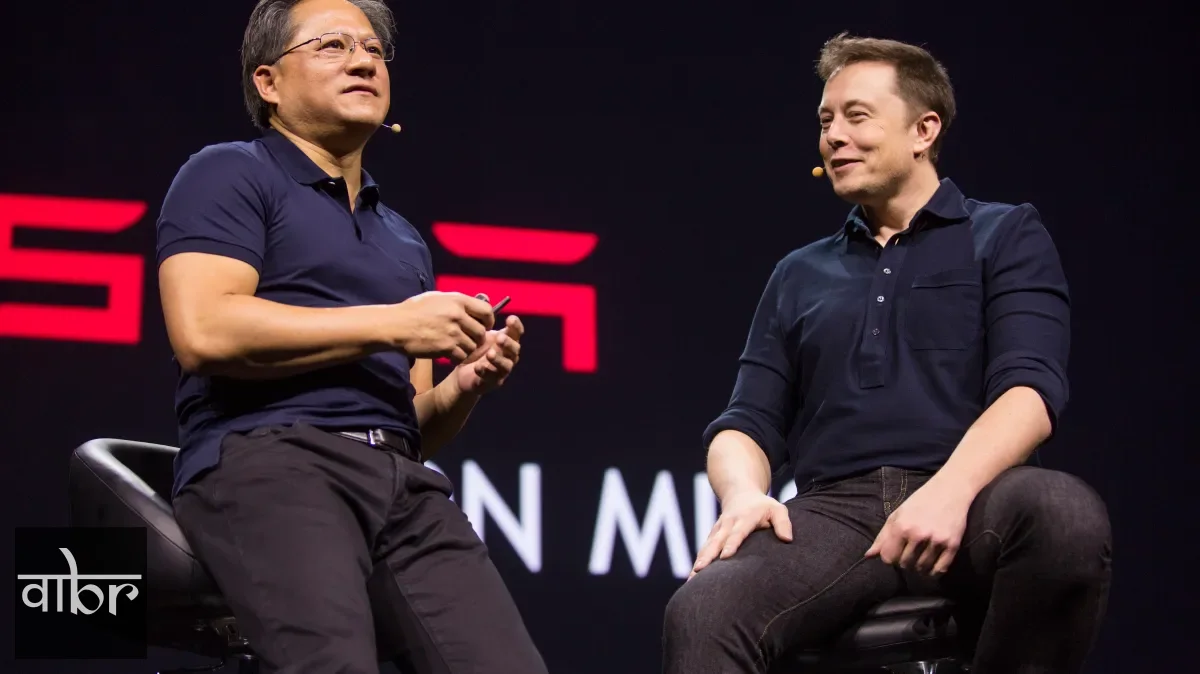
- Elon Musk defends Jensen Huang, comparing ousting the Nvidia CEO to cutting Michael Jordan, highlighting his vital role in artificial intelligence hardware.
- Elon Musk Defends Jensen Huang: Ousting Nvidia CEO is Like Cutting Jordan...
Elon Musk Defends Jensen Huang: Ousting Nvidia CEO is Like Cutting Jordan
In the fast-paced and intensely competitive landscape of modern technology, few figures command as much influence, respect, and occasional scrutiny as Elon Musk and Jensen Huang. Recently, conversations at the highest levels of the tech sector have turned toward the geopolitical and structural integrity of the American semiconductor supply chain. In a surprising yet characteristically vivid statement, Elon Musk stepped forward to defend the Nvidia CEO, explicitly stating that attempting to push Jensen Huang out of the picture would be akin to kicking Michael Jordan off your championship-winning basketball team. This high-stakes comparison underscores not only the massive footprint of artificial intelligence hardware today, but also the irreplaceable nature of genuine visionaries in modern corporate leadership.
As the global technology market grapples with shifting regulatory paradigms, trade tensions, and the relentless scaling demands of foundational models, the comments made by Elon Musk serve as a critical focal point. They direct attention squarely onto the intricate dependencies that define our digital era. To understand why Elon Musk made such a striking comparison regarding Jensen Huang, we must examine the multifaceted ecosystem of modern computing, the relentless push for AI hardware dominance, and the structural vulnerabilities facing the semiconductor industry at large.
Deep Dive: Full Event Breakdown
The remarks from Elon Musk arrived during a period of heightened public discourse regarding tech nationalism, supply chain sovereignty, and the leadership of critical American enterprises. Critics and regulatory bodies have increasingly scrutinized multinational tech figures, questioning loyalty, market concentration, and cross-border dependencies. Amidst this climate of intense oversight, Elon Musk offered a blunt and unequivocal assessment. Musk emphasized that Jensen Huang is fundamentally committed to advancing technological progress and remains an indispensable asset to the United States and the broader global technology market.
According to Elon Musk, the idea of removing or marginalizing someone of Jensen Huang caliber shows a profound misunderstanding of how elite teams operate. Comparing the Nvidia CEO to basketball legend Michael Jordan, Elon Musk argued that championship teams do not bench their star players during the fourth quarter. Instead, they build structural support around them to maximize output. This defense of Jensen Huang highlights a rare moment of public solidarity between two of the most powerful titans in artificial intelligence hardware, reminding observers that visionary tech leadership transcends standard corporate boundaries.
Industry Impact & Strategic Implications
The implications of Elon Musk defending Jensen Huang reverberate far beyond Silicon Valley boardrooms, directly touching the core of the semiconductor industry. For decades, the semiconductor industry operated quietly behind the scenes, supplying silicon wafers to consumer electronics manufacturers and enterprise data centers. However, the generative AI boom transformed silicon into the new oil. Today, AI hardware dominance dictates which nations, corporations, and research institutions lead the next industrial revolution.
When Elon Musk speaks about Jensen Huang, he is addressing the architect behind the modern computing paradigm. Under Jensen Huang, Nvidia shifted its strategic focus away from traditional graphics processing units (GPUs) toward comprehensive parallel computing platforms like CUDA. This decision laid the groundwork for modern artificial intelligence hardware. If Jensen Huang were somehow ousted or sidelined due to regulatory overreach or political friction, the ripple effects across the semiconductor industry would be catastrophic. Development pipelines for next-generation GPU architecture would stutter, delaying deployment schedules for hyperscalers, autonomous vehicle startups, and enterprise cloud providers alike.
Furthermore, Elon Musk has consistently maintained that technological execution relies on rare talent rather than bureaucratic committees. By comparing Jensen Huang to Michael Jordan, Elon Musk reinforces the notion that elite tech leadership cannot easily be replaced by committee-driven management structures. For investors, developers, and policymakers, this commentary serves as a stark reminder that supply chain resilience depends just as much on human genius as it does on factory fabrication plants and capital expenditure.
Technical / Market Analysis
To fully appreciate the gravity of the statements made by Elon Musk, one must examine the technical moat that Jensen Huang and Nvidia have meticulously constructed over the past two decades. The dominance of Nvidia in artificial intelligence hardware is not merely a product of brute-force manufacturing; it is deeply rooted in software-hardware co-design. The CUDA software ecosystem, championed early on by Jensen Huang, created an impenetrable barrier to entry for rival chipmakers.
When Elon Musk evaluates the global technology market, he views it through the lens of first principles and scaling laws. Both Musk's companies—such as xAI, Tesla, and SpaceX—and Nvidia rely heavily on massive clusters of advanced accelerators to train complex neural networks. Disrupting Jensen Huang would introduce systemic friction into the very engine driving modern compute scaling. In financial markets, any perceived threat to the leadership stability of Nvidia sends immediate shockwaves through equity valuations, underscoring how deeply intertwined Jensen Huang is with the current bull run in artificial intelligence hardware.
Moreover, the geopolitical dimension cannot be ignored. As governments worldwide race to secure domestic semiconductor manufacturing capabilities, leaders like Elon Musk and Jensen Huang find themselves navigating complex regulatory minefields. Musk's defense of Jensen Huang signals to policymakers that undermining key technological architects weakens the collective defensive posture of Western innovation against foreign competitors.
What This Means for Consumers and Developers
While high-level political and industrial debates often feel detached from everyday reality, the partnership and mutual respect between figures like Elon Musk and Jensen Huang have direct consequences for everyday consumers and software developers. The rapid evolution of artificial intelligence hardware enables consumer-facing breakthroughs, ranging from hyper-realistic real-time video game rendering and advanced physics simulations to conversational AI assistants and autonomous driving systems.
For developers writing code for AI and high-performance computing, the stability of the ecosystem led by Jensen Huang ensures continuous improvements in developer toolchains, optimization libraries, and compiler efficiencies. If the leadership of the semiconductor industry were destabilized, developers would face fragmentation, increased latency, and a slowdown in hardware iteration cycles. Elon Musk recognizes that maintaining momentum in AI requires protecting the key architects who make high-throughput, low-latency computing possible.
Key Takeaways (Detailed bullet points)
Unwavering Support from Peers: Elon Musk forcefully defended Jensen Huang, stating that removing the Nvidia CEO would be like kicking Michael Jordan off a championship team. Crucial Tech Leadership: The comparison highlights the irreplaceable nature of visionary founders who drive massive shifts in the global technology market. Protection of AI Infrastructure: Elon Musk emphasized that artificial intelligence hardware development relies heavily on the continued stability and vision of leaders like Jensen Huang. Securing the Supply Chain: The defense serves as a warning to regulators and policymakers about the dangers of destabilizing critical figures within the semiconductor industry. Ecosystem Cohesion: Jensen Huang's long-term bet on CUDA and parallel GPU architecture remains the bedrock upon which modern AI models and autonomous systems are trained.
The Road Ahead (Forward-looking conclusion)
As the twenty-first century progresses into deeper technological integration, the intersection of politics, corporate leadership, and foundational science will only grow more volatile. The strong remarks from Elon Musk regarding Jensen Huang provide a fascinating lens through which to view the future of innovation. They remind us that behind every massive technological leap lie extraordinary individuals whose contributions defy easy categorization or bureaucratic replacement.
Ultimately, whether the discussion centers on autonomous vehicles, large language models, or advanced GPU architecture, the alliance of visionaries like Elon Musk and Jensen Huang will continue to shape the contours of our digital future. Protecting and respecting top-tier talent ensures that innovation outpaces stagnation, keeping the engine of global technological progress roaring forward without unnecessary disruption.
📌 Related Briefings & Stories
Satya Nadella AI Cybersecurity Warning: Critical Infrastructure Vulnerabilities Elon Musk says I am not MAGA at DealBook Summit: A Deep Dive Analysis Microsoft CEO Satya Nadella Explains Why He Asked 60K Employees to Quit
Varta Brief Team
· Newsroom DeskReported, verified, and published by the Varta Brief editorial desk with an uncompromising commitment to primary-source verification and independent journalism.
Related Dispatches
More in Technology →
Amazon Decart Acquisition Signals Bold Move to Challenge Nvidia AI Dominance
Amazon buys Decart for $7.5B to optimize Trainium silicon and reshuffle the Nvidia AI chip race across enterprise cloud computing infrastructure.

Nvidia Board Governance Tested as Jensen Huang Discloses Additional Affairs
A detailed investigation into how revelations around Jensen Huang leadership impact corporate stability, chip markets, and Nvidia's standing with investors.

GTA 6 Sets Historic Record as the Biggest Launch in PlayStation History
Discover how GTA 6 became the biggest launch in PlayStation history, shattering records and reshaping the modern gaming landscape with unprecedented sales.