Exoplanet Weather Patterns Unveiled by Space Telescopes
Advanced space telescopes map extreme weather, wind speeds, and thermal dynamics across distant exoplanet atmospheres with high precision.

Varta Brief Team
Friday, September 18, 2026
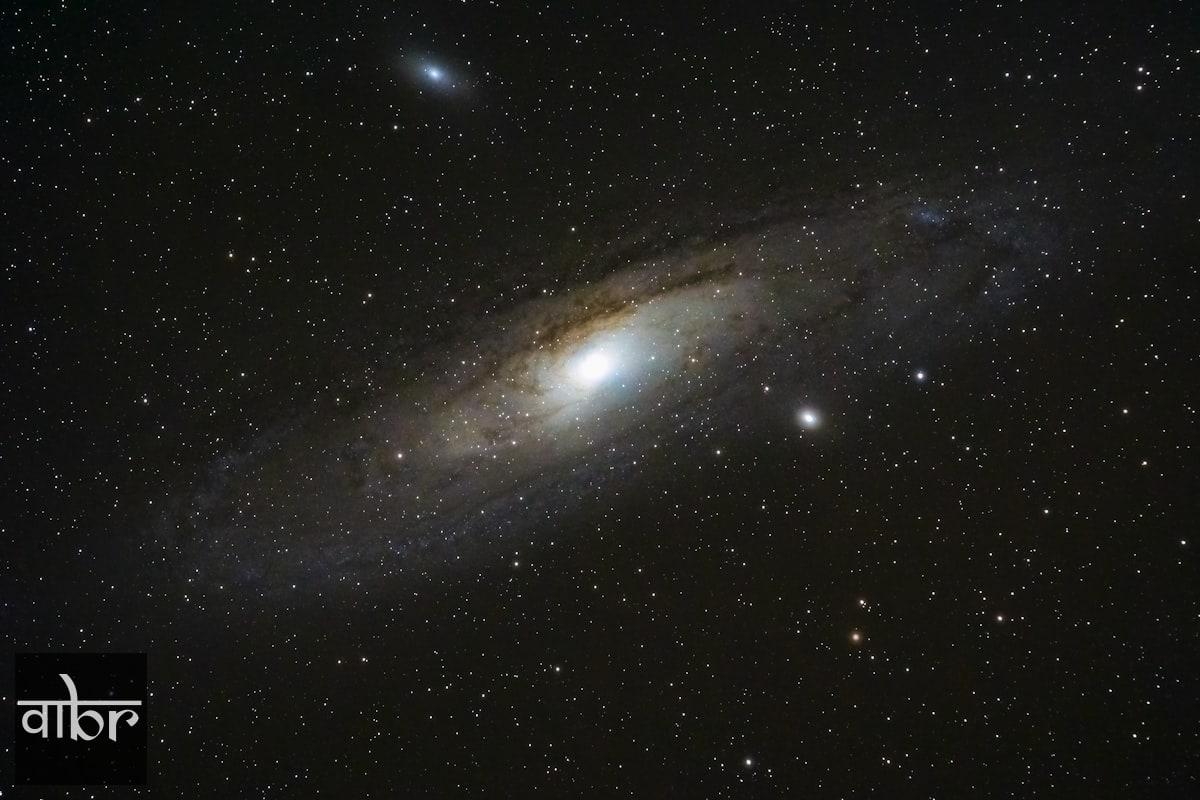
- Advanced space telescopes map extreme weather, wind speeds, and thermal dynamics across distant exoplanet atmospheres with high precision.
- Mapping Alien Climates from Light-Years Away...
Mapping Alien Climates from Light-Years Away
Understanding weather on Earth is complex enough, but meteorology extends far beyond our solar system. Modern space telescopes now map global wind patterns, thermal maps, and cloud dynamics on distant exoplanets. By tracking phase curves and thermal emission over entire orbital periods, astronomers construct detailed weather reports for worlds light-years away.
These observations reveal extreme meteorological phenomena that defy terrestrial intuition. Ultra-hot Jupiters feature supersonic winds, iron rain, and permanent daysides locked in perpetual stellar glare. Capturing these subtle shifts requires incredible instrumental sensitivity and meticulous data analysis protocols.
Thermal Phase Curves and Wind Dynamics
Thermal phase curves track how an exoplanet's brightness changes as it orbits its host star. Because tidally locked planets present the same hemisphere to their star permanently, energy redistribution becomes a critical atmospheric process. Strong jet streams often transport heat from the blistering dayside to the dark nightside.
Astronomers measure these temperature differentials to calculate wind velocities. In many cases, wind speeds exceed Mach 5, creating planetary-scale shockwaves. Researchers utilize high-performance computing clusters to model these violent fluid dynamics, drawing parallels to complex simulation challenges found in The Rise of Synthetic Data: Training Next-Gen AI Models .
Notable Meteorological Findings
Supersonic jet streams circling hot gas giants. Persistent nightside temperature inversions. Extreme hemispheric temperature contrasts exceeding 1,000 degrees. Cloud formations composed of vaporized minerals and silicates.
Atmospheric Circulation and Energy Balance
Energy balance dictates how an atmosphere stabilizes under extreme stellar irradiation. When space telescopes record emission spectra at various orbital phases, scientists isolate specific longitudinal regions. This spatial resolution permits the creation of rudimentary weather maps for planets we can never visit physically.
The data consistently shows that atmospheric circulation acts as a vital thermal valve. Without efficient heat redistribution, dayside temperatures would soar far beyond current theoretical limits. These insights improve our overarching models of planetary fluid mechanics and radiative transfer.
Observation Technique Primary Metric Measured Target Planet Type Key Scientific Insight Phase Curve Analysis Thermal Emission Flux Hot Jupiters Heat Redistribution Efficiency Eclipse Mapping Longitudinal Brightness Ultra-Hot Jupiters Dayside Thermal Hotspot Shift High-Resolution Doppler Wind Velocity Spectra Gas Giants Jet Stream Speed Verification
Technical Challenges in Meteorological Extraction
Extracting weather patterns from distant starlight is fraught with technical hurdles. Stellar variability often mimics atmospheric signals, forcing researchers to deploy sophisticated filtering algorithms. Teams constantly update their analytical frameworks to meet international validation standards, similar to governance updates seen in the Global Tech Standards Framework Updated for 2026 Compliance .
Collaboration among international space agencies ensures cross-verification of observational data. As telescope apertures grow and sensor tech improves, astronomers anticipate mapping weather on smaller, rocky worlds. This progression brings humanity one step closer to comprehensive meteorological catalogs for our galactic neighborhood.
Varta Brief Team
· Newsroom DeskReported, verified, and published by the Varta Brief editorial desk with an uncompromising commitment to primary-source verification and independent journalism.
Related Dispatches
More in Technology →
Amazon Decart Acquisition Signals Bold Move to Challenge Nvidia AI Dominance
Amazon buys Decart for $7.5B to optimize Trainium silicon and reshuffle the Nvidia AI chip race across enterprise cloud computing infrastructure.

Nvidia Board Governance Tested as Jensen Huang Discloses Additional Affairs
A detailed investigation into how revelations around Jensen Huang leadership impact corporate stability, chip markets, and Nvidia's standing with investors.

GTA 6 Sets Historic Record as the Biggest Launch in PlayStation History
Discover how GTA 6 became the biggest launch in PlayStation history, shattering records and reshaping the modern gaming landscape with unprecedented sales.