Google AI agents reshape the web by opening Gemini and Search to apps
Discover how Google AI agents reshape the web as Google opens Gemini and Search to more apps, revolutionizing app discovery and user experiences.

Varta Brief Team
Thursday, October 29, 2026
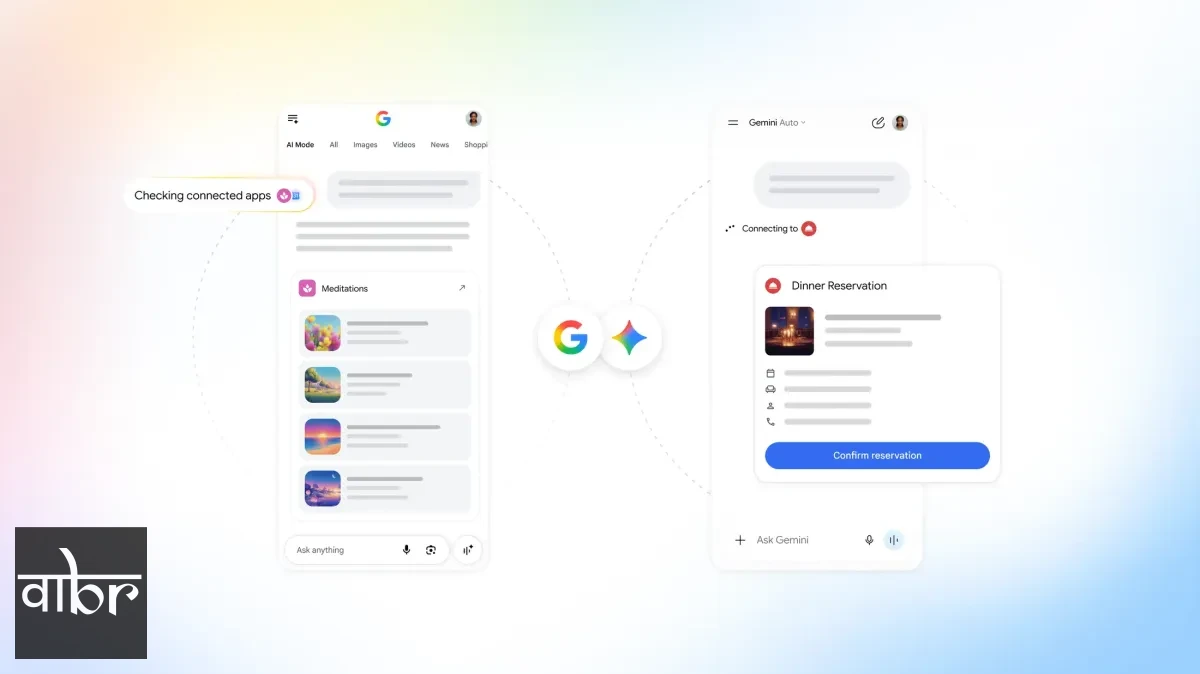
- Discover how Google AI agents reshape the web as Google opens Gemini and Search to more apps, revolutionizing app discovery and user experiences.
- Google AI agents reshape the web by opening Gemini and Search to apps...
Google AI agents reshape the web by opening Gemini and Search to apps
As the digital landscape experiences a monumental paradigm shift, technology giants are racing to redefine how humanity interacts with information. In this fast-evolving digital era, Google AI agents are taking center stage, fundamentally transforming the traditional web experience. With the recent announcement that Google is actively opening Gemini and Search to third-party applications, the tech industry stands on the precipice of a brand-new era. This deep-dive report explores the mechanics behind this strategy, the profound impacts on software development, and the future of online discovery.
Deep Dive: Full Event Breakdown
The announcement centers around a robust new developer platform designed to bridge the gap between external services and Google's flagship conversational interfaces. For years, users relied on traditional web browsers to navigate discrete websites and download isolated mobile applications. Today, Google AI agents reshape the web by introducing a unified, intent-driven layer where users can command software natively inside chat and search windows.
By integrating external services into Gemini and Search, Google allows businesses to inject their specific transactional and informational capabilities directly into conversational prompts. When a user asks Gemini to handle a complex, multi-step task—such as booking a bespoke travel itinerary, reserving a table at a newly opened restaurant, or purchasing specialized software tools—the underlying architecture utilizes Gemini and Search to orchestrate these tasks seamlessly. This means Google AI agents do not merely retrieve text links anymore; they execute complex actions across the broader digital ecosystem.
Industry Impact & Strategic Implications
The decision to integrate external applications deeply into Gemini and Search carries massive ramifications for global enterprises, startup ecosystems, and digital publishers. Traditionally, web visibility was dictated by rigid search engine optimization tactics, where companies competed fiercely for top-ranking blue links. However, as Google AI agents reshape the web, the mechanics of user acquisition are shifting from visual browsing to algorithmic delegation.
Businesses must now adopt a modern developer platform approach, building secure, structured endpoints that autonomous software can parse and invoke. Companies that fail to adapt risk becoming invisible in a world where Gemini and Search serve as the ultimate gatekeepers and facilitators of consumer intent. Furthermore, this strategic pivot challenges alternative tech titans who are racing to establish their own proprietary ecosystems, accelerating the race toward hyper-personalized, context-aware artificial intelligence.
Technical / Market Analysis
From a technical perspective, opening Gemini and Search to third-party apps requires sophisticated application programming interface architecture, rigorous security protocols, and advanced machine learning models capable of handling ambiguous user requests. Google AI agents rely heavily on semantic parsing, function calling, and real-time validation to ensure that instructions executed across external servers are accurate and secure.
Market analysts suggest that this architectural shift will drastically reduce friction for end-users while shifting massive volumes of web traffic away from traditional landing pages. Instead of clicking through a multi-page checkout flow, consumers will authorize Gemini and Search to complete transactions inline. This creates a fascinating economic tension: while conversion rates for participating businesses might soar, publishers and platforms that rely purely on display advertising revenue must reevaluate their monetization strategies as Google AI agents reshape the web.
What This Means for Consumers and Developers
For everyday consumers, the integration of Gemini and Search into everyday workflows promises an unprecedented level of convenience. Complex digital chores that once required juggling a dozen different browser tabs can now be orchestrated instantly through a single conversational prompt. Whether comparing insurance policies or coordinating group schedules, Google AI agents streamline the entire consumer journey.
For developers and software engineers, this environment introduces both extraordinary opportunities and daunting engineering challenges. Building for this new paradigm requires adopting the newly introduced developer platform tools that expose application functionalities directly to conversational assistants. Developers must ensure their backend infrastructure is robust enough to handle high-frequency programmatic calls from autonomous systems while maintaining absolute data privacy and robust cybersecurity safeguards.
Key Takeaways
Google AI agents reshape the web by shifting user experiences from traditional browser-based navigation to intent-driven conversational execution. The rollout of a specialized developer platform allows third-party businesses to integrate their services natively into Gemini and Search interfaces. As Gemini and Search become primary conduits for digital transactions, traditional web traffic patterns and SEO strategies will undergo permanent structural transformation. Technical execution requires advanced application programming interface design, secure function calling, and strict privacy guardrails to protect sensitive consumer data. Consumers will benefit from streamlined, frictionless digital interactions, while software developers must adapt their backend systems to support autonomous machine invocation.
The Road Ahead
As we look toward the future, it is abundantly clear that Google AI agents reshape the web in ways that will reverberate across every sector of the global economy. The fusion of Gemini and Search with thousands of external applications marks the transition from static web pages to a dynamic, agent-driven internet. Industry stakeholders, from solo developers to enterprise executives, must closely monitor these developments, innovate rapidly, and prepare for a reality where artificial intelligence acts as the primary intermediary between humanity and the digital world.
Strategic Industry Takeaways & Future Outlook
When evaluating the broader technological shift, Google AI agents serves as a defining benchmark for modern standards. Industry analysts emphasize that continuing developments in Google AI agents will dictate user adoption and market expansion.
When evaluating the broader technological shift, Google AI agents serves as a defining benchmark for modern standards. Industry analysts emphasize that continuing developments in Google AI agents will dictate user adoption and market expansion.
Furthermore, strategic integration surrounding Gemini and Search remains a crucial priority for stakeholders. Ensuring high performance across Gemini and Search is expected to deliver long-term competitive advantages.
Key factors influencing this sector also include conversational AI , autonomous agents , each playing an essential role in ongoing development and implementation.
📌 Related Briefings & Stories
PHP2Shell and the Vulnpocalypse: Wiz CTO Warns of Cyber Storm Microsoft Record Revenue Milestone Proves AI Strategy Pays Off Microsoft OpenAI Revenue Surges to $10 Billion in Major Financial Milestone
Varta Brief Team
· Newsroom DeskReported, verified, and published by the Varta Brief editorial desk with an uncompromising commitment to primary-source verification and independent journalism.
Related Dispatches
More in Technology →
Amazon Decart Acquisition Signals Bold Move to Challenge Nvidia AI Dominance
Amazon buys Decart for $7.5B to optimize Trainium silicon and reshuffle the Nvidia AI chip race across enterprise cloud computing infrastructure.

Nvidia Board Governance Tested as Jensen Huang Discloses Additional Affairs
A detailed investigation into how revelations around Jensen Huang leadership impact corporate stability, chip markets, and Nvidia's standing with investors.

GTA 6 Sets Historic Record as the Biggest Launch in PlayStation History
Discover how GTA 6 became the biggest launch in PlayStation history, shattering records and reshaping the modern gaming landscape with unprecedented sales.