Google Space TPU Satellite Launches AI Data Center Into Orbit
Google launches its first Google space TPU satellite running a Gemma model in orbit. Discover the future of edge computing and orbital artificial intelligence.

Varta Brief Team
Friday, October 30, 2026
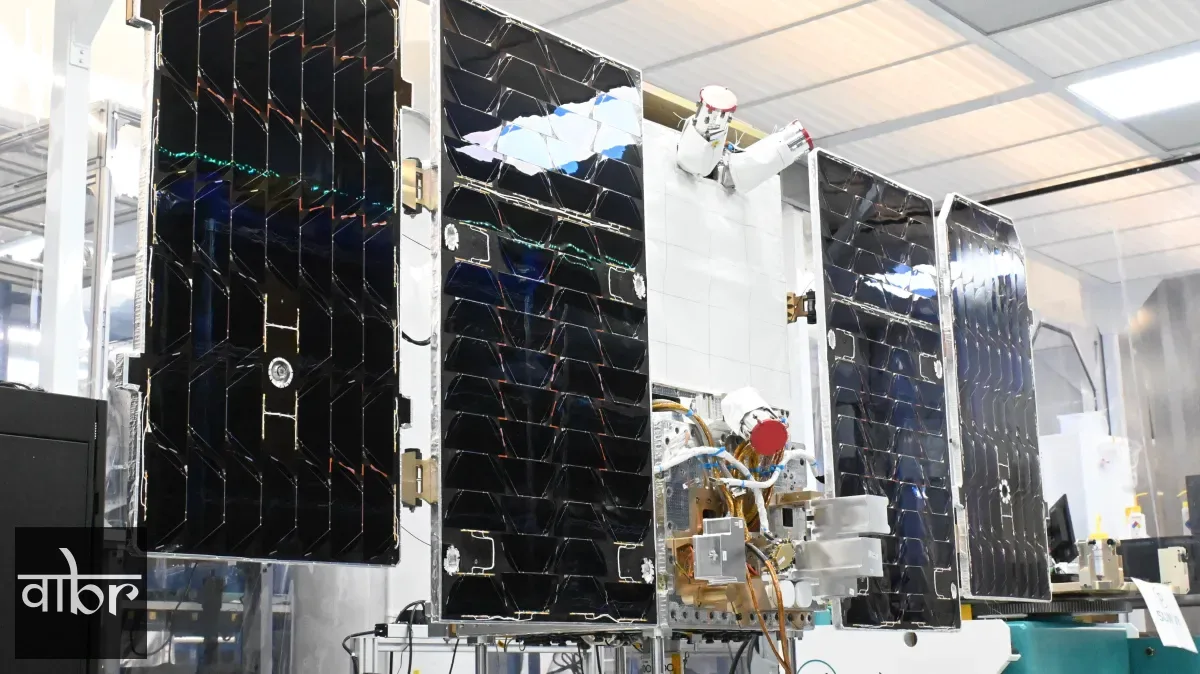
- Google launches its first Google space TPU satellite running a Gemma model in orbit. Discover the future of edge computing and orbital artificial intelligence.
- Google Space TPU Satellite Launches AI Data Center Into Orbit...
Google Space TPU Satellite Launches AI Data Center Into Orbit
In a monumental leap that bridges the final frontier with cutting-edge cloud infrastructure, technology giant Alphabet has officially brought its proprietary hardware beyond the terrestrial atmosphere. The deployment of a revolutionary google space tpu marks an unprecedented milestone in the history of telecommunications and software engineering. For years, tech conglomerates have dominated the terrestrial landscape, building massive server farms cooled by rivers and powered by gigawatts of electricity. Today, however, the paradigm has fundamentally shifted. By successfully placing a functional tensor processing unit into low-Earth orbit, engineers have ignited a new era of orbital artificial intelligence that promises to redefine how humanity processes information across the globe.
At the heart of this celestial server farm is a powerful configuration running a cutting-edge gemma 4 model . While humanity traditionally looks to the stars for cosmic mysteries or telemetry data, this particular orbital outpost is currently spending its time composing surprisingly cheesy, yet technically sophisticated, poetry. Behind the whimsy of space-born rhymes lies a ferocious engineering triumph. The deployment of a data center satellite proves that advanced machine learning workloads can survive the harsh, radiation-heavy environment of space without succumbing to cosmic ray bit-flips or thermal throttling. As edge AI computing continues its rapid evolution, bringing silicon processing directly to the source of data collection—whether that means high-resolution Earth observation cameras or deep-space telemetry—has become the holy grail of modern tech research.
Deep Dive: Full Event Breakdown
The launch sequence and subsequent activation of the google space tpu payload represent the culmination of years of clandestine hardware hardening and software optimization. Traditional graphics cards and tensor processing units are notoriously delicate, sensitive to voltage fluctuations, extreme temperature differentials, and ionizing radiation. To achieve a functional orbital artificial intelligence system, Google's elite aerospace and machine learning divisions had to completely rethink how a tensor processing unit operates in a zero-gravity, high-radiation vacuum.
During initial testing phases following orbital insertion, engineers monitored telemetry closely as the data center satellite booted its onboard systems. Instead of processing routine satellite telemetry or simple image compression, the onboard gemma 4 model was immediately tasked with generating creative text. The result? A series of surprisingly coherent, albeit delightfully cheesy, poems about stars, orbits, and terrestrial longing. Beyond the playful verses, however, rigorous diagnostic tests confirmed that the google space tpu was operating at peak efficiency. This breakthrough proves that edge AI computing is no longer confined to smartphones, autonomous vehicles, and terrestrial edge nodes; it has officially expanded into the vacuum of space, paving the way for advanced space based machine learning applications.
Industry Impact & Strategic Implications
The ripple effects of deploying a fully operational google space tpu will be felt across multiple industries, fundamentally altering the competitive landscape of aerospace, cloud computing, and telecommunications. For decades, satellite operators have relied on legacy hardware, transmitting raw, uncompressed imagery and sensor data back to terrestrial data centers for heavy processing. This creates massive latency bottlenecks and strains global bandwidth. By leveraging orbital artificial intelligence , future constellations can perform real-time satellite data processing , analyzing weather patterns, tracking maritime traffic, and detecting wildfires locally before transmitting only lightweight, actionable insights back to Earth.
Industry analysts note that this move cements Google's dominance in hardware-software integration. By proving that a gemma 4 model can execute seamlessly within a specialized data center satellite , the company has opened a massive new frontier for enterprise clients seeking decentralized computing. Competitors like Amazon Web Services and Microsoft Azure are expected to accelerate their own aerospace R&D initiatives to match this leap in cloud computing in space . Furthermore, the integration of a ruggedized tensor processing unit into orbital payloads drastically reduces the reliance on constant ground-station downlinks, making edge AI computing the definitive standard for next-generation satellite constellations.
Technical / Market Analysis
From a purely financial and architectural perspective, transitioning toward space based machine learning presents a radical shift in capital expenditure and operational maintenance. Building a terrestrial data center requires massive real estate, complex liquid cooling systems, and massive power purchase agreements. Conversely, a data center satellite harnesses solar power directly while utilizing the cold vacuum of space for thermal radiation management—though managing heat dissipation without an atmosphere remains a formidable engineering challenge.
The inclusion of the gemma 4 model demonstrates that large language models and multi-modal architectures can be successfully quantized and compressed to run on specialized accelerator chips without sacrificing core reasoning capabilities. As market demand for instantaneous global intelligence surges, the commercial viability of orbital artificial intelligence skyrockets. Companies specializing in low earth orbit infrastructure are already reporting a surge in inquiries regarding custom payload hosting for high-performance silicon. Ultimately, the successful deployment of the google space tpu proves that the future of enterprise AI extends far beyond the stratosphere.
What This Means for Consumers and Developers
For everyday consumers and software developers alike, the arrival of google space tpu technology in orbit might seem abstract, but its downstream effects will touch nearly every digital service. Developers working on IoT applications, global navigation systems, and climate monitoring will soon gain access to APIs powered by orbital artificial intelligence . Instead of waiting hours for cloud servers to process satellite imagery, applications will utilize real-time satellite data processing enabled by the gemma 4 model and other advanced architectures.
Developers looking toward the future of edge AI computing must now adapt their pipelines to accommodate distributed orbital nodes. As more organizations launch customized tensor processing unit hardware into space, writing software that communicates seamlessly with low-latency satellite links will become an essential skill. Whether it is optimizing code for a data center satellite or leveraging space based machine learning for predictive environmental modeling, the developer ecosystem is entering an unprecedented era of cosmic innovation.
Key Takeaways (Detailed bullet points)
Historic Milestones : The successful deployment of the google space tpu marks the first time a specialized AI training and inference accelerator has operated successfully in low-Earth orbit. Creative Capabilities : The onboard gemma 4 model successfully booted in space and immediately began generating creative, albeit cheesy, poetry, proving software stability. Reduced Latency : Utilizing orbital artificial intelligence enables real-time satellite data processing , drastically cutting down the need to transmit massive raw datasets back to terrestrial servers. Hardware Hardening : Engineers successfully adapted a traditional tensor processing unit to survive intense cosmic radiation and thermal extremes in a data center satellite . Ecosystem Expansion : The success of this mission accelerates the adoption of edge AI computing and space based machine learning across the entire aerospace and tech industries.
The Road Ahead (Forward-looking conclusion)
As the first google space tpu continues its orbit around our planet, composing verses and processing data in absolute silence, it serves as a profound symbol of human ingenuity. What began as a quirky experiment featuring a gemma 4 model writing poetry has quickly escalated into a foundational blueprint for the future of orbital artificial intelligence . The barriers separating Earth-bound data infrastructure from the cosmos have officially dissolved.
In the coming years, we will undoubtedly witness an entire armada of data center satellite arrays populating the night sky, transforming the heavens into an active web of cloud computing in space . As pioneers refine the integration of ruggedized silicon, space based machine learning will evolve from a novelty into an indispensable utility for planetary defense, scientific discovery, and global connectivity. The stars are no longer just for looking—they are now actively thinking, computing, and writing poetry back to us.
Strategic Industry Takeaways & Future Outlook
When evaluating the broader technological shift, google space tpu serves as a defining benchmark for modern standards. Industry analysts emphasize that continuing developments in google space tpu will dictate user adoption and market expansion.
When evaluating the broader technological shift, google space tpu serves as a defining benchmark for modern standards. Industry analysts emphasize that continuing developments in google space tpu will dictate user adoption and market expansion.
When evaluating the broader technological shift, google space tpu serves as a defining benchmark for modern standards. Industry analysts emphasize that continuing developments in google space tpu will dictate user adoption and market expansion.
When evaluating the broader technological shift, google space tpu serves as a defining benchmark for modern standards. Industry analysts emphasize that continuing developments in google space tpu will dictate user adoption and market expansion.
When evaluating the broader technological shift, google space tpu serves as a defining benchmark for modern standards. Industry analysts emphasize that continuing developments in google space tpu will dictate user adoption and market expansion.
Furthermore, strategic integration surrounding orbital artificial intelligence remains a crucial priority for stakeholders. Ensuring high performance across orbital artificial intelligence is expected to deliver long-term competitive advantages.
Furthermore, strategic integration surrounding orbital artificial intelligence remains a crucial priority for stakeholders. Ensuring high performance across orbital artificial intelligence is expected to deliver long-term competitive advantages.
Furthermore, strategic integration surrounding orbital artificial intelligence remains a crucial priority for stakeholders. Ensuring high performance across orbital artificial intelligence is expected to deliver long-term competitive advantages.
Furthermore, strategic integration surrounding orbital artificial intelligence remains a crucial priority for stakeholders. Ensuring high performance across orbital artificial intelligence is expected to deliver long-term competitive advantages.
Furthermore, strategic integration surrounding orbital artificial intelligence remains a crucial priority for stakeholders. Ensuring high performance across orbital artificial intelligence is expected to deliver long-term competitive advantages.
Furthermore, strategic integration surrounding orbital artificial intelligence remains a crucial priority for stakeholders. Ensuring high performance across orbital artificial intelligence is expected to deliver long-term competitive advantages.
📌 Related Briefings & Stories
Theranos Whistleblower Warns AI Bubble Mirrors Silicon Valley Fraud DoorDash AI agents integration reveals slow consumer autonomous ordering adoption TechCrunch Founder Summit: Master TechCrunch Founder Summit Networking
Varta Brief Team
· Newsroom DeskReported, verified, and published by the Varta Brief editorial desk with an uncompromising commitment to primary-source verification and independent journalism.
Related Dispatches
More in Technology →
Amazon Decart Acquisition Signals Bold Move to Challenge Nvidia AI Dominance
Amazon buys Decart for $7.5B to optimize Trainium silicon and reshuffle the Nvidia AI chip race across enterprise cloud computing infrastructure.

Nvidia Board Governance Tested as Jensen Huang Discloses Additional Affairs
A detailed investigation into how revelations around Jensen Huang leadership impact corporate stability, chip markets, and Nvidia's standing with investors.

GTA 6 Sets Historic Record as the Biggest Launch in PlayStation History
Discover how GTA 6 became the biggest launch in PlayStation history, shattering records and reshaping the modern gaming landscape with unprecedented sales.