France Blames Iran For Grocery Freezer Cyber Attacks And National Security Threats
France blames Iran for grocery freezer cyber attacks targeting commercial refrigeration and blood banks across Europe, sparking severe security concerns.

Varta Brief Team
Tuesday, November 10, 2026
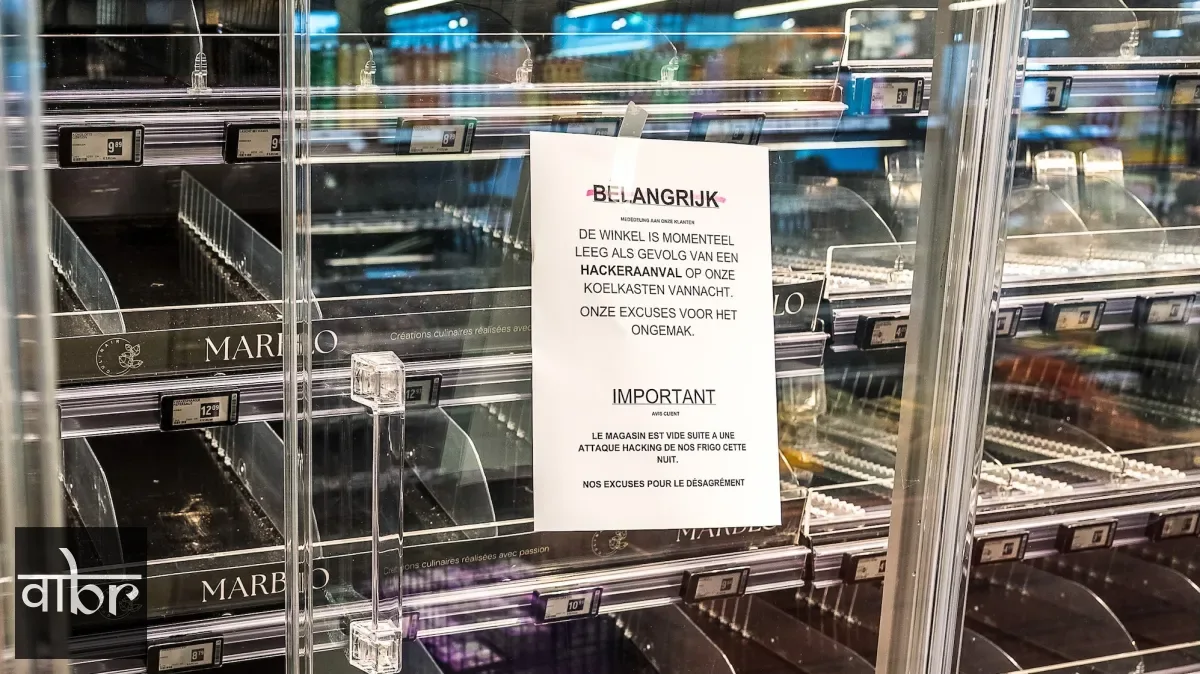
- France blames Iran for grocery freezer cyber attacks targeting commercial refrigeration and blood banks across Europe, sparking severe security concerns.
- France Blames Iran For Grocery Freezer Cyber Attacks And National Security Threats...
France Blames Iran For Grocery Freezer Cyber Attacks And National Security Threats
As digital and physical worlds continue to converge, the modern threat landscape has expanded far beyond traditional IT networks. In a startling geopolitical and technological development, the French government has officially pointed the finger at Iran for a series of coordinated incursions dubbed grocery freezer cyber attacks. These sophisticated digital assaults targeted industrial refrigerated units, commercial grocery stores, and critical medical cold-storage facilities, including blood banks, across France and the broader European continent. For technology analysts and national security experts, grocery freezer cyber attacks represent a terrifying escalation in state-sponsored cyber warfare, demonstrating that threat actors are increasingly willing to disrupt basic human sustenance and medical supplies to achieve strategic goals.
The implications of these grocery freezer cyber attacks extend far beyond temporary commercial spoilage. By infiltrating operational technology networks that manage temperature controls, attackers showcased a chilling disregard for public safety. As investigations by European cybersecurity agencies unfold, governments are scrambling to understand how foreign actors managed to breach these seemingly mundane systems. The fallout from these grocery freezer cyber attacks forces a radical reassessment of how modern infrastructure is protected against malicious state actors engaging in state-sponsored cyber warfare.
Deep Dive: Full Event Breakdown
The operation unfolded in distinct waves, catching system administrators and network monitors entirely off guard. According to intelligence briefings released by French authorities, the grocery freezer cyber attacks involved at least two major waves of intrusions targeting industrial refrigeration equipment. These systems, often connected to the broader internet for remote monitoring and predictive maintenance, served as soft entry points for the attackers.
During the initial phase of grocery freezer cyber attacks, unauthorized actors gained administrative access to programmable logic controllers governing cooling units in several major grocery store chains. Rather than demanding traditional ransomware payments, the perpetrators systematically altered temperature thresholds, causing widespread spoilage and forcing facility managers to emergency-purge inventory. The second wave of grocery freezer cyber attacks was even more alarming, targeting medical facilities and blood banks where strict temperature maintenance is a matter of life and death.
Intelligence analysts specializing in state-sponsored cyber warfare noted the operational signatures bore a striking resemblance to known advanced persistent threat groups backed by Tehran. The foreign minister attribution came after months of forensic digital analysis, tracing malicious command-and-control traffic back to server infrastructure associated with state intelligence proxies. These grocery freezer cyber attacks underscore the urgent need for robust industrial control systems security across all commercial sectors.
Industry Impact & Strategic Implications
The revelation that state actors are orchestrating grocery freezer cyber attacks has sent shockwaves through the retail, healthcare, and technology sectors. Commercial refrigeration manufacturers are now facing intense scrutiny regarding their default security settings, remote access protocols, and overall IoT security protocols. For decades, operational technology security was treated as an afterthought, with legacy systems prioritized for uptime rather than resilience against hostile actors.
Now, industry leaders are realizing that grocery freezer cyber attacks are symptomatic of wider supply chain vulnerabilities. When a supermarket chain's cooling system can be weaponized remotely, the definition of critical infrastructure expands to include private commercial entities. European cybersecurity agencies are drafting emergency directives to mandate stricter authentication standards, network segmentation, and air-gapping for sensitive temperature-controlled environments.
Furthermore, the formal foreign minister attribution marks a turning point in how diplomatic channels respond to non-traditional attacks. Engaging in state-sponsored cyber warfare through the sabotage of food and medicine crosses a red line, prompting discussions about proportional economic sanctions and retaliatory digital operations.
Technical / Market Analysis
From a technical perspective, grocery freezer cyber attacks exploit the convergence of IT and OT networks. Modern commercial freezers rely on networked sensors and smart controllers to optimize energy consumption. However, these convenience features often introduce severe supply chain vulnerabilities if manufacturers fail to implement secure boot processes, encrypted communication channels, and multi-factor authentication for remote engineering access.
Market analysts tracking operational technology security predict a massive surge in cybersecurity spending directed toward commercial refrigeration and building management systems. Companies that previously ignored digital hygiene must now invest heavily in continuous monitoring tools and threat intelligence integration. As grocery freezer cyber attacks demonstrate, a breach in a third-party vendor's software can cascade into catastrophic physical damage.
The sophistication required to execute grocery freezer cyber attacks highlights the evolution of state-sponsored cyber warfare. Attackers no longer focus solely on stealing intellectual property or disrupting government databases; they target the physical assets that sustain daily civilian life. Security researchers emphasize that digital espionage campaigns often serve as precursors or testing grounds for more destructive physical sabotage.
What This Means for Consumers and Developers
For the everyday consumer, grocery freezer cyber attacks bring the abstract threat of cyber warfare directly to the local supermarket aisle and community hospital. While the immediate danger of spoiled food or compromised blood supplies has been mitigated by rapid emergency response teams, public anxiety remains high regarding the fragility of modern conveniences.
For software developers and system architects, the mandate is clear: secure-by-design principles must govern every connected device, regardless of its industry sector. Developers building firmware for industrial control systems can no longer rely on obscurity or perimeter defenses. Every component must be hardened against potential exploitation, keeping in mind that state-sponsored cyber warfare actors will probe every connected endpoint for weaknesses.
Key Takeaways
Unprecedented Targeting: The recent grocery freezer cyber attacks marked the first time state actors systematically targeted commercial food and medical cold-storage units on a mass scale across Europe. Official Attribution: France's foreign minister officially blamed Iran for the orchestrated digital incursions, escalating diplomatic tensions surrounding state-sponsored cyber warfare. Critical Infrastructure Expansion: Incidents like these prove that supply chain vulnerabilities in retail refrigeration must be treated with the same urgency as energy grids and financial networks. Technology Deficits: Legacy industrial control systems and lax IoT security protocols continue to provide easy entry points for sophisticated malicious actors. Regulatory Shifts: European cybersecurity agencies are preparing sweeping new mandates to enforce operational technology security across commercial sectors.
The Road Ahead
The fallout from these grocery freezer cyber attacks will shape cybersecurity policy and industrial engineering for the next decade. As nation-states continue to test the boundaries of gray-zone conflict through state-sponsored cyber warfare, governments and private enterprises must forge unprecedented partnerships to defend civilian infrastructure. The transition toward a more resilient digital society requires acknowledging that every connected thermostat, sensor, and freezer is a potential battlefield.
Ultimately, safeguarding our food supply and medical logistics against future grocery freezer cyber attacks demands a permanent cultural shift within the technology industry—one where security is never sacrificed for convenience, and where critical infrastructure protection encompasses every link in the modern global supply chain.
Strategic Industry Takeaways & Future Outlook
Furthermore, strategic integration surrounding state-sponsored cyber warfare remains a crucial priority for stakeholders. Ensuring high performance across state-sponsored cyber warfare is expected to deliver long-term competitive advantages.
Furthermore, strategic integration surrounding state-sponsored cyber warfare remains a crucial priority for stakeholders. Ensuring high performance across state-sponsored cyber warfare is expected to deliver long-term competitive advantages.
Furthermore, strategic integration surrounding state-sponsored cyber warfare remains a crucial priority for stakeholders. Ensuring high performance across state-sponsored cyber warfare is expected to deliver long-term competitive advantages.
Furthermore, strategic integration surrounding state-sponsored cyber warfare remains a crucial priority for stakeholders. Ensuring high performance across state-sponsored cyber warfare is expected to deliver long-term competitive advantages.
Furthermore, strategic integration surrounding state-sponsored cyber warfare remains a crucial priority for stakeholders. Ensuring high performance across state-sponsored cyber warfare is expected to deliver long-term competitive advantages.
📌 Related Briefings & Stories
AI hardware startup Nominal triples valuation to $3B in just eight months Anthropic Releases New Mythos and Fable Models Amid RSI Concerns YouTube Streaming Data Returns to Billboard Charts in Major Industry Shift
Varta Brief Team
· Newsroom DeskReported, verified, and published by the Varta Brief editorial desk with an uncompromising commitment to primary-source verification and independent journalism.
Related Dispatches
More in Technology →
Amazon Decart Acquisition Signals Bold Move to Challenge Nvidia AI Dominance
Amazon buys Decart for $7.5B to optimize Trainium silicon and reshuffle the Nvidia AI chip race across enterprise cloud computing infrastructure.

Nvidia Board Governance Tested as Jensen Huang Discloses Additional Affairs
A detailed investigation into how revelations around Jensen Huang leadership impact corporate stability, chip markets, and Nvidia's standing with investors.

GTA 6 Sets Historic Record as the Biggest Launch in PlayStation History
Discover how GTA 6 became the biggest launch in PlayStation history, shattering records and reshaping the modern gaming landscape with unprecedented sales.