Jensen Huang's Ouster from Nvidia: Five Ways It Damages the AI Industry
Discover how Jensen Huang's ouster from Nvidia and artificial intelligence leadership shakeups could dramatically damage the global AI industry trajectory.

Varta Brief Team
Friday, November 13, 2026
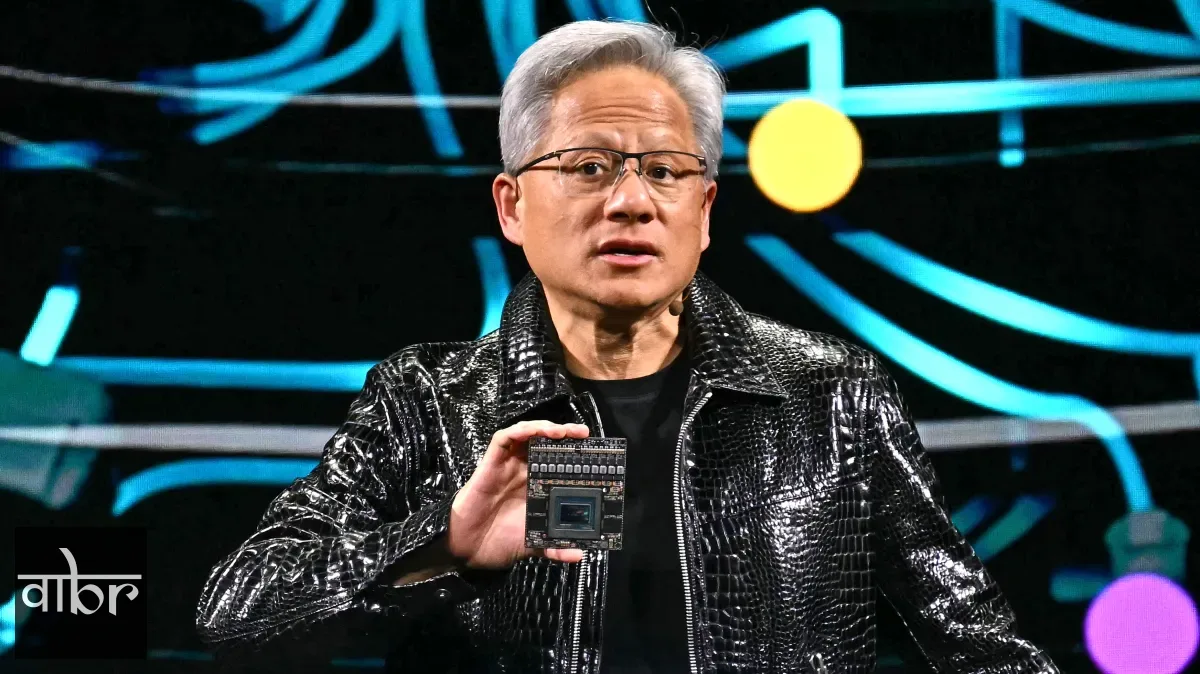
- Discover how Jensen Huang's ouster from Nvidia and artificial intelligence leadership shakeups could dramatically damage the global AI industry trajectory.
- Jensen Huang's Ouster from Nvidia: Five Ways It Damages the AI Industry...
Jensen Huang's Ouster from Nvidia: Five Ways It Damages the AI Industry
Silicon Valley has experienced seismic shifts before, but few events match the global shockwave generated by the sudden and dramatic Jensen Huang ouster from the helm of the world's most valuable semiconductor titan. For decades, the leather-jacketed visionary synonymous with graphic processing units steered not only his own corporation but the entire trajectory of modern computing. This unprecedented Nvidia CEO departure is not merely a salacious boardroom drama or a routine corporate restructuring; it represents a profound rupture in the global tech ecosystem. As markets react and analysts scramble to model the fallout, the reality sets in: Jensen Huang ouster dynamics will ripple across every sector relying on cutting-edge compute. In this comprehensive deep dive, we examine the systemic vulnerabilities exposed by the Jensen Huang ouster and analyze five catastrophic ways this artificial intelligence leadership crisis could severely damage the global AI industry.
Deep Dive: Full Event Breakdown
The events leading up to the Jensen Huang ouster unfolded behind closed doors over a turbulent quarter marked by escalating geopolitical tensions, fierce competition in the AI hardware market, and mounting friction between board members regarding long-term strategic positioning. While exact details remain guarded by non-disclosure agreements, sources close to the board indicate that disagreements over open-source software integration, capital allocation for next-generation silicon, and aggressive pricing models for enterprise customers catalyzed the revolt. For an empire built upon the relentless pursuit of neural network acceleration, stability at the top has always been assumed. Yet, the sudden artificial intelligence leadership vacuum left by the Nvidia CEO departure has immediately triggered a scramble for power, throwing the roadmap for future graphics architecture and high-performance computing into uncharted waters.
Industry Impact & Strategic Implications
The broader consequences of the Jensen Huang ouster extend far beyond the corporate campus in Santa Clara. For years, the Jensen Huang ouster would have been considered an impossible scenario, given the executive's visionary status and tight control over corporate culture. Without his singular vision driving artificial intelligence leadership forward, major cloud providers, hyperscalers, and research institutions face immediate strategic uncertainty. The foundational alliance between hardware design and software ecosystems—cemented by proprietary CUDA frameworks—now faces potential fragmentation. Furthermore, the Jensen Huang ouster threatens to disrupt ongoing capital expenditure cycles. Enterprise AI deployment relies heavily on predictable hardware roadmaps; any sign of internal instability at Nvidia directly jeopardizes these multi-billion-dollar infrastructure bets, altering the competitive landscape forever.
Technical / Market Analysis
From a purely technical perspective, the Jensen Huang ouster introduces severe risks to ongoing research and development in machine learning infrastructure. Under Huang, Nvidia successfully championed the paradigm shift from general-purpose CPUs to massively parallel GPU architectures, essentially creating the modern AI hardware market from scratch. The Jensen Huang ouster introduces a leadership vacuum at a critical juncture when architectural transitions toward optical interconnects and chiplet designs require absolute execution focus. Competitors like AMD, Intel, and custom ASIC builders are already circling, eager to exploit any stumbles in neural network acceleration roadmaps. A prolonged leadership struggle following the Nvidia CEO departure could slow down architectural cadence, directly impacting the speed at which foundational models are trained and deployed.
What This Means for Consumers and Developers
While enterprise tech giants fret over silicon roadmaps, the Jensen Huang ouster also trickles down to everyday developers, researchers, and gaming consumers. The delicate symbiotic relationship between Nvidia’s gaming division and its dominant data center business has long subsidized cutting-edge graphics innovations like ray tracing and DLSS. If the new artificial intelligence leadership shifts priorities drastically away from gaming to appease short-term shareholder demands, the PC gaming hardware ecosystem could stagnate. Simultaneously, independent AI developers who rely on stable, backward-compatible software stacks fear that a post-Huang corporate culture might pivot away from developer-friendly ecosystem investments, making enterprise AI deployment more expensive, proprietary, and difficult to scale.
Key Takeaways (Detailed bullet points)
Disruption of Long-Term Roadmaps: The Jensen Huang ouster threatens multi-year hardware and software development cycles designed to advance artificial intelligence leadership. Ecosystem Vulnerability: The unique synergy between Nvidia’s proprietary CUDA software and hardware may fracture without the architect of the platform at the helm. Competitive Opening for Rivals: Competitors in the AI hardware market gain a strategic window to capture market share while Nvidia navigates internal governance turmoil. Uncertainty in Enterprise Spending: Organizations planning large-scale enterprise AI deployment may delay major infrastructure upgrades due to heightened strategic unpredictability. Impact on Developer Communities: Changes in executive philosophy could alter support structures for researchers and developers relying on open or accessible machine learning infrastructure.
The Road Ahead (Forward-looking conclusion)
The global technology sector now stands at a hazardous crossroads following the Jensen Huang ouster. Whether the board can successfully stabilize the corporation and install a competent successor who maintains the spirit of relentless innovation remains the trillion-dollar question. If artificial intelligence leadership falters during this vulnerable transition period, the ripple effects will be felt across global supply chains, national security initiatives, and commercial technology markets for decades. Ultimately, the Jensen Huang ouster serves as a stark reminder of how deeply concentrated the modern digital economy is in the minds of a few visionary leaders. Navigating the aftermath of the Nvidia CEO departure will require unprecedented resilience from the entire tech community as it adjusts to a fundamentally altered landscape.
Strategic Industry Takeaways & Future Outlook
Furthermore, strategic integration surrounding artificial intelligence leadership remains a crucial priority for stakeholders. Ensuring high performance across artificial intelligence leadership is expected to deliver long-term competitive advantages.
Furthermore, strategic integration surrounding artificial intelligence leadership remains a crucial priority for stakeholders. Ensuring high performance across artificial intelligence leadership is expected to deliver long-term competitive advantages.
Furthermore, strategic integration surrounding artificial intelligence leadership remains a crucial priority for stakeholders. Ensuring high performance across artificial intelligence leadership is expected to deliver long-term competitive advantages.
Furthermore, strategic integration surrounding artificial intelligence leadership remains a crucial priority for stakeholders. Ensuring high performance across artificial intelligence leadership is expected to deliver long-term competitive advantages.
Key factors influencing this sector also include GPU supply chain , Silicon Valley governance , tech industry disruption , each playing an essential role in ongoing development and implementation.
📌 Related Briefings & Stories
Jensen Huang Congressional Hearing: Inside the Tech Giant's Shocking Downfall Phota Labs AI Photo Editing Breakthrough Transforms Everyday Shots SoftBank AI Natural Gas Loss Re-evaluates Data Center Power Limits
Varta Brief Team
· Newsroom DeskReported, verified, and published by the Varta Brief editorial desk with an uncompromising commitment to primary-source verification and independent journalism.
Related Dispatches
More in Technology →
Amazon Decart Acquisition Signals Bold Move to Challenge Nvidia AI Dominance
Amazon buys Decart for $7.5B to optimize Trainium silicon and reshuffle the Nvidia AI chip race across enterprise cloud computing infrastructure.

Nvidia Board Governance Tested as Jensen Huang Discloses Additional Affairs
A detailed investigation into how revelations around Jensen Huang leadership impact corporate stability, chip markets, and Nvidia's standing with investors.

GTA 6 Sets Historic Record as the Biggest Launch in PlayStation History
Discover how GTA 6 became the biggest launch in PlayStation history, shattering records and reshaping the modern gaming landscape with unprecedented sales.