Jensen Huang Spy Scandal Threatens Nvidia China Strategy and AI Dominance
Discover how the Jensen Huang spy scandal impacts Nvidia China strategy, semiconductor export controls, and the future of global artificial intelligence.

Varta Brief Team
Monday, November 9, 2026
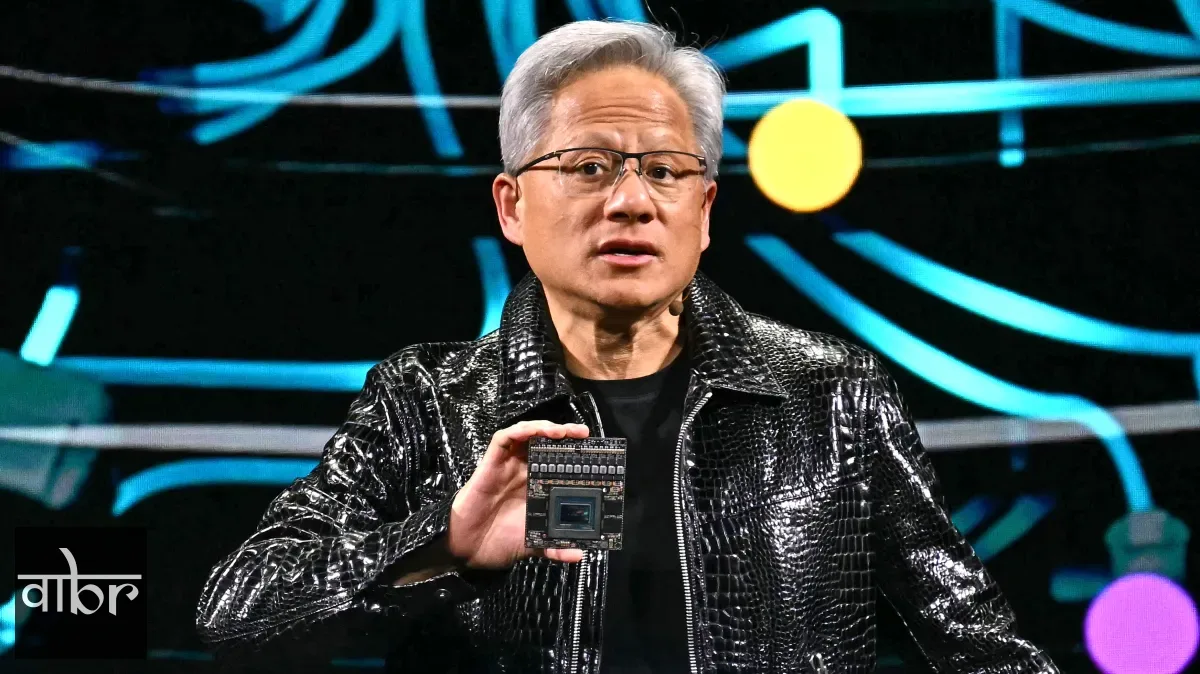
- Discover how the Jensen Huang spy scandal impacts Nvidia China strategy, semiconductor export controls, and the future of global artificial intelligence.
- Jensen Huang Spy Scandal Threatens Nvidia China Strategy and AI Dominance...
Jensen Huang Spy Scandal Threatens Nvidia China Strategy and AI Dominance
In the high-stakes realm of global semiconductor manufacturing and artificial intelligence supremacy, few executives command the towering presence of Nvidia's visionary co-founder and CEO. However, the corporate world was sent into a state of shock following revelations regarding the Jensen Huang spy scandal. This unfolding controversy introduces unprecedented turbulence to the already complex geopolitics of the global technology sector. As federal regulators and intelligence agencies examine the fallout, the viability of the Nvidia China strategy hangs precariously in the balance, threatening to alter the competitive landscape of the artificial intelligence market forever.
For years, Nvidia has navigated a treacherous tightrope walk between Washington and Beijing. The company has worked tirelessly to comply with tightening U.S. chip export restrictions while maintaining vital commercial ties within the world's second-largest economy. Now, the Jensen Huang spy scandal threatens to completely dismantle these diplomatic efforts. This in-depth investigative report explores the multi-faceted implications of the allegations, breaking down what this means for enterprise clients, everyday consumers, and the broader tech sector as it grapples with a major national security review.
Deep Dive: Full Event Breakdown
The genesis of the Jensen Huang spy scandal traces back to classified intelligence briefings that surfaced in early November. According to investigative reports, federal counterintelligence investigators flagged a personal relationship between Nvidia's chief executive and an individual alleged to have deep ties to Chinese intelligence networks. While details regarding the timeline and nature of the interactions remain heavily shielded under executive privilege and ongoing investigations, the mere disclosure of the Jensen Huang spy scandal has triggered immediate alarm bells across Washington D.C.
Industry insiders note that the Nvidia China strategy relied heavily on direct, high-level diplomatic outreach conducted by Huang himself. He frequently traveled across Asia, meeting with prominent business leaders and government officials to advocate for equitable trade policies. The Jensen Huang spy scandal fundamentally compromises the integrity of this personal lobbying framework. Congressional leaders from both sides of the aisle are now demanding a comprehensive federal probe into whether proprietary corporate data, trade secrets, or discussions regarding U.S. chip export restrictions were inadvertently compromised during these high-level interactions.
The timing of these revelations could not be worse for the silicon giant. The semiconductor industry is currently navigating a delicate transitional phase, with companies pushing the boundaries of GPU architecture to support next-generation large language models. With the Jensen Huang spy scandal dominating media headlines, Nvidia's board of directors has convened emergency sessions to evaluate internal risk management protocols and address potential threats to corporate governance.
Industry Impact & Strategic Implications
The immediate fallout from the Jensen Huang spy scandal extends far beyond the corporate headquarters in Santa Clara, sending shockwaves through the global semiconductor industry. For months, Nvidia had been spearheading intensive tech lobbying campaigns aimed at convincing the Bureau of Industry and Security to loosen strict U.S. chip export restrictions. The company argued that blanket bans on advanced processors only served to accelerate domestic Chinese semiconductor innovation while alienating American firms from a lucrative commercial ecosystem.
However, the unfolding Jensen Huang spy scandal has completely derailed these lobbying efforts. Lawmakers who were previously sympathetic to arguments regarding economic pragmatism have abruptly hardened their stances. A successful Nvidia China strategy now appears virtually impossible under the weight of heightened scrutiny and bipartisan demands for stricter national security reviews. Competitors in the artificial intelligence market are watching closely, recognizing that Nvidia's regulatory setbacks could open a window of opportunity for alternative hardware providers seeking to capture lost market share in the East.
Furthermore, the Jensen Huang spy scandal raises serious questions about executive oversight and the vulnerabilities of high-profile tech leaders operating within a polarized geopolitical climate. As superpower competition intensifies, corporate chieftains are increasingly treated as instruments of statecraft, making personal discretion an invaluable asset for any multinational enterprise.
Technical / Market Analysis
From a purely financial and structural standpoint, the market reaction to the Jensen Huang spy scandal has introduced profound volatility into Nvidia's stock valuation. Investors who previously viewed the company as an unstoppable juggernaut in the artificial intelligence market are now aggressively pricing in regulatory risk. The foundational pillars of the Nvidia China strategy relied on shipping customized, compliant accelerators tailored to regulatory thresholds without violating U.S. chip export restrictions.
If the Jensen Huang spy scandal results in punitive legislative measures or expanded sanctions, Nvidia could face complete exclusion from the Chinese mainland. Such an outcome would drastically alter revenue forecasts, forcing the company to pivot its primary focus toward Western markets and allied nations in Europe and the Asia-Pacific region. From a hardware perspective, engineering teams have continually optimized their GPU architecture to maximize parallel processing efficiency while adhering to export controls. Yet, no amount of engineering brilliance can insulate a corporation from the severe reputational and legal fallout associated with the Jensen Huang spy scandal.
Industry analysts emphasize that the semiconductor industry operates on extraordinarily long planning horizons. Supply chain configurations, foundry allocations with partners like TSMC, and multi-year research and development roadmaps cannot be easily altered overnight. The disruption caused by the Nvidia China strategy crisis forces institutional investors to re-evaluate risk premiums associated with geopolitical exposure, fundamentally reshaping how Wall Street prices modern tech giants.
What This Means for Consumers and Developers
While the high-level boardroom drama and geopolitical maneuvers may seem distant to everyday users, the Jensen Huang spy scandal has tangible downstream effects for software developers and consumers alike. The artificial intelligence market relies heavily on a unified software ecosystem, primarily anchored by Nvidia's CUDA platform. Any regulatory crackdown or structural reorganization stemming from the Jensen Huang spy scandal could slow down the rapid deployment of next-generation AI infrastructure.
For developers relying on advanced graphics cards and enterprise-grade accelerators for deep learning training, hardware availability and pricing volatility remain critical concerns. If the Nvidia China strategy is severely curtailed, the company may experience a short-term oversupply of inventory originally earmarked for Asian markets, potentially leading to price stabilization or temporary discounts for domestic consumers. Conversely, long-term innovation could suffer if international R&D collaboration is stifled by sweeping national security reviews and restrictive trade policies.
Ultimately, the Jensen Huang spy scandal serves as a stark reminder that technology and geopolitics are inextricably intertwined. Developers building applications on top of cutting-edge GPU architecture must remain adaptable, keeping a close eye on regulatory shifts that could alter the availability of essential hardware components.
Key Takeaways
The Jensen Huang spy scandal has introduced unprecedented regulatory uncertainty for one of the world's most valuable technology corporations. The core components of the Nvidia China strategy are now facing intense bipartisan scrutiny and potential legislative rollbacks in Washington D.C. Efforts to ease U.S. chip export restrictions have stalled indefinitely as lawmakers prioritize national security over commercial pragmatism. Financial markets have responded to the controversy with heightened volatility, forcing investors to re-assess geopolitical risk premiums in the semiconductor industry. Competitors within the artificial intelligence market are actively positioning themselves to capture market share should Nvidia face extended operational hurdles in Asia.
The Road Ahead
As the dust settles on the initial revelations surrounding the Jensen Huang spy scandal, Nvidia faces a defining moment in its corporate history. Navigating the treacherous waters of modern geopolitics requires more than just superior GPU architecture and market dominance; it demands impeccable corporate governance, transparent risk management, and unwavering adherence to national security standards. Whether the company can successfully salvage its Nvidia China strategy and rebuild trust with federal regulators remains one of the most critical questions facing the global technology sector. One thing is certain: the era of unchecked globalization for tech conglomerates has officially come to an end, ushering in a new reality where national security supersedes all else.
Strategic Industry Takeaways & Future Outlook
When evaluating the broader technological shift, Jensen Huang spy scandal serves as a defining benchmark for modern standards. Industry analysts emphasize that continuing developments in Jensen Huang spy scandal will dictate user adoption and market expansion.
Furthermore, strategic integration surrounding Nvidia China strategy remains a crucial priority for stakeholders. Ensuring high performance across Nvidia China strategy is expected to deliver long-term competitive advantages.
Furthermore, strategic integration surrounding Nvidia China strategy remains a crucial priority for stakeholders. Ensuring high performance across Nvidia China strategy is expected to deliver long-term competitive advantages.
Furthermore, strategic integration surrounding Nvidia China strategy remains a crucial priority for stakeholders. Ensuring high performance across Nvidia China strategy is expected to deliver long-term competitive advantages.
Furthermore, strategic integration surrounding Nvidia China strategy remains a crucial priority for stakeholders. Ensuring high performance across Nvidia China strategy is expected to deliver long-term competitive advantages.
Furthermore, strategic integration surrounding Nvidia China strategy remains a crucial priority for stakeholders. Ensuring high performance across Nvidia China strategy is expected to deliver long-term competitive advantages.
Furthermore, strategic integration surrounding Nvidia China strategy remains a crucial priority for stakeholders. Ensuring high performance across Nvidia China strategy is expected to deliver long-term competitive advantages.
📌 Related Briefings & Stories
Uber Parking Launch Signals Strategic Shift Toward Autonomous Robotaxis Automattic Unveils Spacefast to Conquer the Vibe Coding Era Meet Drops: The New Music Discovery App Revolutionizing Social Audio
Varta Brief Team
· Newsroom DeskReported, verified, and published by the Varta Brief editorial desk with an uncompromising commitment to primary-source verification and independent journalism.
Related Dispatches
More in Technology →
Amazon Decart Acquisition Signals Bold Move to Challenge Nvidia AI Dominance
Amazon buys Decart for $7.5B to optimize Trainium silicon and reshuffle the Nvidia AI chip race across enterprise cloud computing infrastructure.

Nvidia Board Governance Tested as Jensen Huang Discloses Additional Affairs
A detailed investigation into how revelations around Jensen Huang leadership impact corporate stability, chip markets, and Nvidia's standing with investors.

GTA 6 Sets Historic Record as the Biggest Launch in PlayStation History
Discover how GTA 6 became the biggest launch in PlayStation history, shattering records and reshaping the modern gaming landscape with unprecedented sales.