Megaspeed U.S. Blacklist Imminent Following High-Stakes Tech Scandal
As the Jensen Huang scandal unfolds, Megaspeed faces potential trade sanctions from U.S. regulators that could severely alter global AI supply chains.

Varta Brief Team
Monday, November 23, 2026
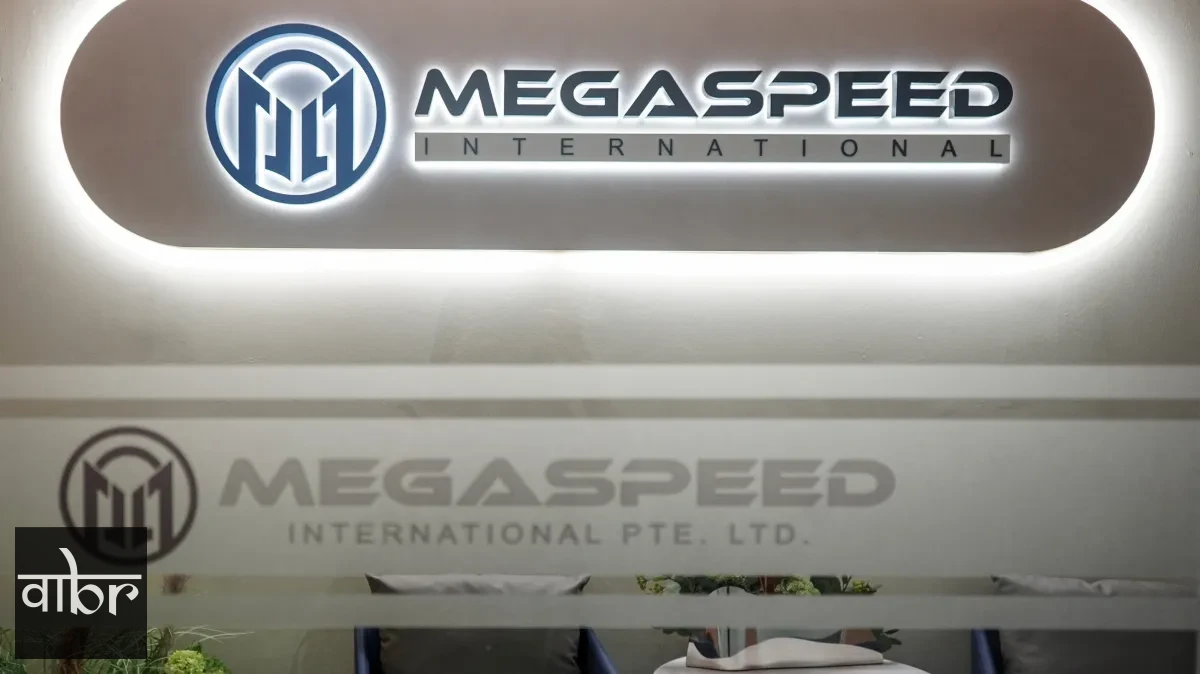
- As the Jensen Huang scandal unfolds, Megaspeed faces potential trade sanctions from U.S. regulators that could severely alter global AI supply chains.
- In a move that promises to send seismic shocks throughout the global technology sector, high-ranking federal regulators are finalizing plans that could severely isolate one of hard...
In a move that promises to send seismic shocks throughout the global technology sector, high-ranking federal regulators are finalizing plans that could severely isolate one of hardware's most enigmatic players. Reports confirm that the corporate entity known as Megaspeed is rapidly heading toward inclusion on federal trade restriction lists. This potential Megaspeed U.S. blacklist designation arrives as the broader fallout from the ongoing Jensen Huang scandal continues to intensify across Silicon Valley and international regulatory bodies.
The emerging situation marks a critical escalation in regulatory oversight surrounding advanced compute architecture and foreign trade relations. At the epicenter of this international narrative is the widespread fallout from the Jensen Huang scandal, which has called into question corporate governance, undisclosed cross-border partnerships, and hardware distribution channels. As law enforcement and trade officials inspect corporate relationships, the implementation of a Megaspeed U.S. blacklist would effectively sever the firm’s access to essential domestic technology partners, enterprise clients, and specialized IP portfolios.
Deep Dive: Full Event Breakdown
The rapid deterioration of Megaspeed’s operational standing follows months of intense federal scrutiny tied directly to the Jensen Huang scandal. Founded as a high-performance compute logistics and hardware integration intermediary, Megaspeed initially operated in relative obscurity. However, corporate restructuring under Alice Huang leadership brought the firm under direct observation by federal auditors investigating compliance anomalies. As law enforcement targets this distribution chain, a formal Megaspeed U.S. blacklist appears imminent.
Federal regulators at the Bureau of Industry and Security are now preparing administrative actions that would mandate strict export license requirements for any American enterprise seeking to transact with Megaspeed. Should the Megaspeed U.S. blacklist become official, American technology suppliers, software developers, and cloud infrastructure partners will be prohibited from shipping components, software updates, or engineering designs to Megaspeed without explicit federal authorization.
The underlying catalyst for this regulatory crackdown stems directly from the Jensen Huang scandal. Investigative leaks suggest that federal agencies uncovered unaccounted transfers of advanced processors and high-density memory modules routed through third-party intermediaries. As investigators unraveled these transaction chains, Megaspeed emerged as a pivotal conduit. The impending Megaspeed U.S. blacklist reflects Washington's determination to seal potential regulatory loopholes in sensitive high-technology distribution channels.
Furthermore, corporate registries show that during the period of Alice Huang leadership, Megaspeed expanded its physical and legal infrastructure across multiple international jurisdictions. This expansion coincided with heightened federal concerns regarding AI chip exports to restricted regions. Consequently, the fallout from the Jensen Huang scandal has accelerated a coordinated multi-agency investigation involving trade oversight officials, intelligence analysts, and financial regulators.
Industry Impact & Strategic Implications
The formal execution of a Megaspeed U.S. blacklist carries immediate, wide-ranging strategic consequences for the global enterprise hardware landscape. For years, intermediate vendors have served as key operational links in supplying customized server deployments and acceleration hardware. With Megaspeed facing regulatory isolation, enterprise customers are scrambling to audit their supply chains and eliminate exposure to restricted partners.
Industry experts emphasize that the fallout from the Jensen Huang scandal extends far beyond individual corporate entities. The situation highlights how rapidly evolving semiconductor trade controls are reshaping commercial partnerships across the globe. As federal regulators enforce strict compliance protocols, domestic technology vendors must navigate an increasingly hostile regulatory matrix where secondary counterparty risks can dismantle multi-billion-dollar enterprise agreements overnight.
Moreover, the prospective Megaspeed U.S. blacklist sends an unmistakable signal to hardware distributors worldwide. By placing a high-profile entity under strict transaction limits, the U.S. government is demonstrating its intent to leverage Department of Commerce sanctions to police international tech supply chains. Companies operating in high-performance computing must now account for severe regulatory enforcement when establishing international distribution channels, particularly in the shadow of the ongoing Jensen Huang scandal.
Technical / Market Analysis
From a technical perspective, the enforcement of a Megaspeed U.S. blacklist will create immediate operational bottlenecks in hardware provisioning. High-performance compute clusters rely on tightly integrated technology stacks, ranging from specialized silicon and custom high-speed interconnects to proprietary firmware libraries. Depriving Megaspeed of U.S.-sourced hardware components and software licenses effectively neutralizes its ability to deliver integrated enterprise systems.
The market disruption triggered by the Jensen Huang scandal has already caused volatility across hardware futures and supply logistics. Enterprise buyers who previously relied on third-party integrators like Megaspeed now face extended lead times and inflated procurement costs. The probability of a Megaspeed U.S. blacklist has forced data center operators to reconsider multi-year capacity expansions while analysts anticipate significant global supply chain disruption as hardware flows are rerouted through vetted tier-one vendors capable of satisfying rigorous federal compliance mandates.
Additionally, the prospective Entity List placement of Megaspeed highlights the technical complexity of modern supply chain auditing. Advanced compute platforms are composed of thousands of sub-assemblies produced across dozens of sovereign jurisdictions. In light of the Jensen Huang scandal, hardware manufacturers are investing heavily in cryptographic component tracing and end-to-end supply chain verification to ensure their products do not land on restricted entities' workbenches or violate active export restrictions.
What This Means for Consumers and Developers
While the immediate consequences of the Megaspeed U.S. blacklist are concentrated in executive boardrooms and enterprise data centers, developers and end consumers will eventually feel the secondary effects. Cloud software developers relying on specialized GPU clusters may experience localized compute shortages or increased instance pricing as infrastructure providers absorb compliance and restructuring costs associated with the Jensen Huang scandal.
For independent developers, software optimization efforts could also encounter friction. Access to specific hardware development kits, customized compiler frameworks, and driver optimization updates often depends on unhindered collaboration between hardware vendors and integration partners. If the Megaspeed U.S. blacklist proceeds as anticipated, projects built on customized Megaspeed hardware configurations could face abrupt deprecation or require expensive architectural migrations.
Furthermore, consumer tech enthusiasts and enterprise IT managers alike must prepare for broader market recalibrations. As regulatory bodies enforce stringent semiconductor trade controls, the commercial availability of cutting-edge hardware may experience regional segmentation. The structural aftermath of the Jensen Huang scandal serves as a stark reminder that software and hardware development are inextricably linked to geopolitics and regulatory compliance.
Key Takeaways
Regulatory Isolation: The impending Megaspeed U.S. blacklist will prohibit domestic firms from doing business with Megaspeed without specialized federal licenses. Corporate Fallout: Unraveling details from the Jensen Huang scandal continue to trigger intense regulatory scrutiny across international hardware distribution networks. Leadership Scrutiny: Governance decisions made during the period of Alice Huang leadership have drawn deep interest from federal investigative bodies. Supply Chain Realignments: Escalating Department of Commerce sanctions are forcing enterprise hardware clients to undergo global supply chain disruption and complete vendor audits. Technical Friction: Developers and system architects face increased software migration costs and potential compute shortages as trade barriers solidify.
The Road Ahead
As federal authorities finalize the administrative details surrounding the Megaspeed U.S. blacklist, the broader tech sector stands at an unprecedented regulatory crossroads. The systemic revelations brought to light by the Jensen Huang scandal have permanently altered the balance between rapid commercial expansion and national security compliance. Moving forward, tech enterprises must recognize that compliance oversight is no longer an afterthought, but a core architectural requirement in modern hardware design and international commerce.
Strategic Industry Takeaways & Future Outlook
When evaluating the broader technological shift, Megaspeed U.S. blacklist serves as a defining benchmark for modern standards. Industry analysts emphasize that continuing developments in Megaspeed U.S. blacklist will dictate user adoption and market expansion.
When evaluating the broader technological shift, Megaspeed U.S. blacklist serves as a defining benchmark for modern standards. Industry analysts emphasize that continuing developments in Megaspeed U.S. blacklist will dictate user adoption and market expansion.
When evaluating the broader technological shift, Megaspeed U.S. blacklist serves as a defining benchmark for modern standards. Industry analysts emphasize that continuing developments in Megaspeed U.S. blacklist will dictate user adoption and market expansion.
Furthermore, strategic integration surrounding Jensen Huang scandal remains a crucial priority for stakeholders. Ensuring high performance across Jensen Huang scandal is expected to deliver long-term competitive advantages.
Furthermore, strategic integration surrounding Jensen Huang scandal remains a crucial priority for stakeholders. Ensuring high performance across Jensen Huang scandal is expected to deliver long-term competitive advantages.
Furthermore, strategic integration surrounding Jensen Huang scandal remains a crucial priority for stakeholders. Ensuring high performance across Jensen Huang scandal is expected to deliver long-term competitive advantages.
📌 Related Briefings & Stories
Nvidia Jensen Huang Hero Return: Inside the Historic Headquarters Welcome Live-Action Naruto Movie Casts Hiroyuki Sanada for Key Role in Lionsgate Project South of Midnight Director Feared Xbox Rome Burning Funding Crisis
Varta Brief Team
· Newsroom DeskReported, verified, and published by the Varta Brief editorial desk with an uncompromising commitment to primary-source verification and independent journalism.
Related Dispatches
More in Technology →
Amazon Decart Acquisition Signals Bold Move to Challenge Nvidia AI Dominance
Amazon buys Decart for $7.5B to optimize Trainium silicon and reshuffle the Nvidia AI chip race across enterprise cloud computing infrastructure.

Nvidia Board Governance Tested as Jensen Huang Discloses Additional Affairs
A detailed investigation into how revelations around Jensen Huang leadership impact corporate stability, chip markets, and Nvidia's standing with investors.

GTA 6 Sets Historic Record as the Biggest Launch in PlayStation History
Discover how GTA 6 became the biggest launch in PlayStation history, shattering records and reshaping the modern gaming landscape with unprecedented sales.