Moonlighter Developer Delays Playtest Over AI Cloning Fears
Discover how Moonlighter developer Digital Sun Games delayed public playtests for ReVamp due to growing concerns over generative AI cloning technologies.

Varta Brief Team
Sunday, November 8, 2026
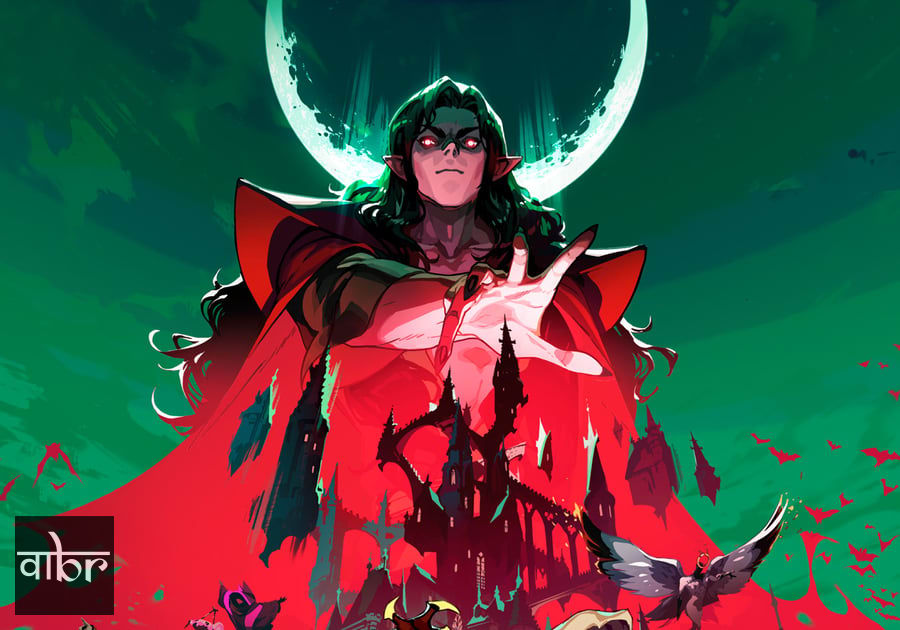
- Discover how Moonlighter developer Digital Sun Games delayed public playtests for ReVamp due to growing concerns over generative AI cloning technologies.
- Moonlighter Developer Delays Playtest Over AI Cloning Fears...
Moonlighter Developer Delays Playtest Over AI Cloning Fears
The landscape of indie game development has fundamentally shifted. As advanced algorithms and machine learning models proliferate across the digital ecosystem, creators face unprecedented vulnerabilities. Recently, the esteemed Moonlighter developer, Digital Sun Games, made waves across the industry by abruptly altering the release strategy for its upcoming title, ReVamp. Citing acute anxieties regarding generative AI cloning, the studio decided to restrict its initial hands-on trial exclusively to its verified Discord community, shelving broader public demonstrations.
This decision marks a watershed moment in contemporary gaming. For years, open alpha tests, public betas, and widespread demos have served as essential milestones for building hype, collecting vital telemetry, and refining mechanics. However, as the capabilities of deep learning tools expand exponentially, the very act of sharing early builds has transformed from a standard marketing ritual into a high-stakes security hazard. In this comprehensive investigative report, we dissect the motivations behind the Moonlighter developer choice, evaluate the looming specter of AI cloning, and analyze the profound ramifications for the broader interactive entertainment sector.
Deep Dive: Full Event Breakdown
Digital Sun Games earned international acclaim with the release of Moonlighter, a celebrated action-RPG that blended shopkeeping simulation with dungeon crawling. Building upon that legacy of innovation, the team poured extensive resources into conceptualizing their next major project, provisionally titled ReVamp. Eager to gather early user feedback, studio leadership initially planned an expansive, open public playtest designed to stress-test servers, evaluate balance adjustments, and gauge community sentiment.
Yet, as development reached a critical juncture, internal discussions pivoted dramatically. The Moonlighter developer team grew increasingly alarmed by the rapid evolution of unauthorized asset scraping technologies and aggressive automated reverse-engineering pipelines. Bad actors equipped with sophisticated generative models can now ingest video footage, conceptual art, and raw functional code from public builds, instantly synthesizing derivative clones, ripping UI frameworks, and mimicking core gameplay loops within hours.
Faced with this alarming reality, the Moonlighter developer made the pragmatic choice to pivot. Instead of a widespread public rollout, access to ReVamp was funneled strictly into a closed, heavily vetted environment within their official Discord server. By limiting exposure to trusted community members and implementing stringent non-disclosure parameters, the Moonlighter developer hopes to shield their intellectual property from predatory actors while still harvesting essential playtest data.
Industry Impact & Strategic Implications
The precautionary stance adopted by the Moonlighter developer sends a chilling message to studios of all sizes. Indie game development has historically thrived on transparency, community collaboration, and open developmental pipelines. Crowdfunding platforms, early access programs, and public playtests rely on a foundation of mutual trust between developers and players. When that trust is undermined by the threat of AI cloning, the entire ecosystem begins to contract.
Major publishers possess massive legal departments and proprietary security architectures to combat intellectual property theft. Conversely, independent teams like the Moonlighter developer operate on lean budgets and tight schedules. For these smaller studios, a successful rapid clone launched by unscrupulous competitors can siphon crucial initial sales, dilute brand identity, and inflict catastrophic financial damage before the legitimate title even hits official digital storefronts.
Consequently, we are witnessing a systemic shift toward defensive development methodologies. Studios are increasingly reluctant to showcase work-in-progress materials, opting for closed-door testing phases, heavy watermarking on visual assets, and heavily obfuscated code structures. While these measures protect proprietary assets, they simultaneously stifle the organic, community-driven marketing that has historically propelled indie hits to commercial success.
Technical / Market Analysis
The mechanics driving these fears are rooted in recent breakthroughs in multimodal artificial intelligence. Modern neural networks are no longer confined to generating static images or text prompts; they possess advanced spatial reasoning and functional emulation capabilities. When a public playtest goes live, automated scrapers can capture every frame of animation, map out input-to-output logic trees, and reconstruct procedural generation rules.
From a market analysis perspective, this creates an environment of extreme volatility. Investors and publishers financing indie projects are beginning to demand rigorous anti-piracy and anti-cloning safeguards as a baseline condition for funding. The Moonlighter developer action highlights that technical safeguards alone are insufficient; operational security—such as restricting access points and vetting participants—has become paramount.
Furthermore, the economic impact extends beyond immediate revenue loss. Consumer confidence can erode if the marketplace becomes saturated with low-quality, AI-generated replicas of anticipated titles. Players may struggle to distinguish legitimate innovations from rapid knockoffs, leading to widespread market fatigue and skepticism toward newly announced independent games.
What This Means for Consumers and Developers
For everyday gamers and dedicated enthusiasts, the defensive posture assumed by the Moonlighter developer and other forward-thinking studios alters how communities interact with unreleased software. The days of effortless, frictionless public betas may be coming to a close. Gamers who relish participating in early developmental phases will likely need to jump through additional verification hoops, join curated community hubs, and submit to stricter privacy agreements.
For developers, the mandate is clear: proactive risk assessment must encompass post-launch piracy and pre-release algorithmic theft. As generative AI tools become more democratized and accessible to malicious entities, protecting creative labor requires a blend of legal vigilance, technical obfuscation, and community-centric gatekeeping.
Key Takeaways (Detailed bullet points)
Strategic Shift by the Moonlighter Developer: Digital Sun Games restricted ReVamp playtests to its private Discord server to mitigate security risks. The Escalating Threat of AI Cloning: Modern generative models can rapidly scrape, analyze, and replicate game assets and mechanics from public builds. Vulnerability of Independent Studios: Smaller teams lack the robust legal and technical resources of AAA publishers to combat automated intellectual property theft. Transformation of Community Engagement: The traditional open-beta model is facing significant friction as developers prioritize asset protection over broad public visibility. Operational Security as a Priority: Vetted access loops and closed environments are replacing widespread promotional playtests across the indie sector.
The Road Ahead (Forward-looking conclusion)
The decisive action taken by the Moonlighter developer regarding ReVamp serves as a bellwether for the interactive entertainment industry. As generative AI continues its relentless march forward, studios will be forced to continuously adapt their development pipelines, balancing the desire for open community collaboration with the absolute necessity of asset security.
Whether platform holders, legal authorities, and engine developers will step forward with robust anti-cloning frameworks remains to be seen. In the interim, creators will undoubtedly follow the lead of Digital Sun Games, erecting digital walls around their creative endeavors to ensure that genuine artistic vision prevails over automated replication.
Strategic Industry Takeaways & Future Outlook
When evaluating the broader technological shift, Moonlighter developer serves as a defining benchmark for modern standards. Industry analysts emphasize that continuing developments in Moonlighter developer will dictate user adoption and market expansion.
When evaluating the broader technological shift, Moonlighter developer serves as a defining benchmark for modern standards. Industry analysts emphasize that continuing developments in Moonlighter developer will dictate user adoption and market expansion.
Furthermore, strategic integration surrounding AI cloning remains a crucial priority for stakeholders. Ensuring high performance across AI cloning is expected to deliver long-term competitive advantages.
Furthermore, strategic integration surrounding AI cloning remains a crucial priority for stakeholders. Ensuring high performance across AI cloning is expected to deliver long-term competitive advantages.
Furthermore, strategic integration surrounding AI cloning remains a crucial priority for stakeholders. Ensuring high performance across AI cloning is expected to deliver long-term competitive advantages.
Furthermore, strategic integration surrounding AI cloning remains a crucial priority for stakeholders. Ensuring high performance across AI cloning is expected to deliver long-term competitive advantages.
Furthermore, strategic integration surrounding AI cloning remains a crucial priority for stakeholders. Ensuring high performance across AI cloning is expected to deliver long-term competitive advantages.
Furthermore, strategic integration surrounding AI cloning remains a crucial priority for stakeholders. Ensuring high performance across AI cloning is expected to deliver long-term competitive advantages.
Key factors influencing this sector also include generative AI threat , video game security , machine learning theft , game design protection , copyright infringement , each playing an essential role in ongoing development and implementation.
📌 Related Briefings & Stories
Saturday Night Live Takes Aim with New Elon Musk Impression Sketch Fortnite Chapter 7 Mini Season Map Fragments Guide and Secrets The Tesla Cybertruck Experiment Is Officially Over: Market Shift Unveiled
Varta Brief Team
· Newsroom DeskReported, verified, and published by the Varta Brief editorial desk with an uncompromising commitment to primary-source verification and independent journalism.
Related Dispatches
More in Technology →
Amazon Decart Acquisition Signals Bold Move to Challenge Nvidia AI Dominance
Amazon buys Decart for $7.5B to optimize Trainium silicon and reshuffle the Nvidia AI chip race across enterprise cloud computing infrastructure.

Nvidia Board Governance Tested as Jensen Huang Discloses Additional Affairs
A detailed investigation into how revelations around Jensen Huang leadership impact corporate stability, chip markets, and Nvidia's standing with investors.

GTA 6 Sets Historic Record as the Biggest Launch in PlayStation History
Discover how GTA 6 became the biggest launch in PlayStation history, shattering records and reshaping the modern gaming landscape with unprecedented sales.