New York Bans AI Chatbot Toys Over Safety and Emotional Risks
New York has enacted a sweeping five-year ban on AI chatbot toys following alarming safety reports from Common Sense Media regarding emotional development risks.

Varta Brief Team
Wednesday, November 25, 2026
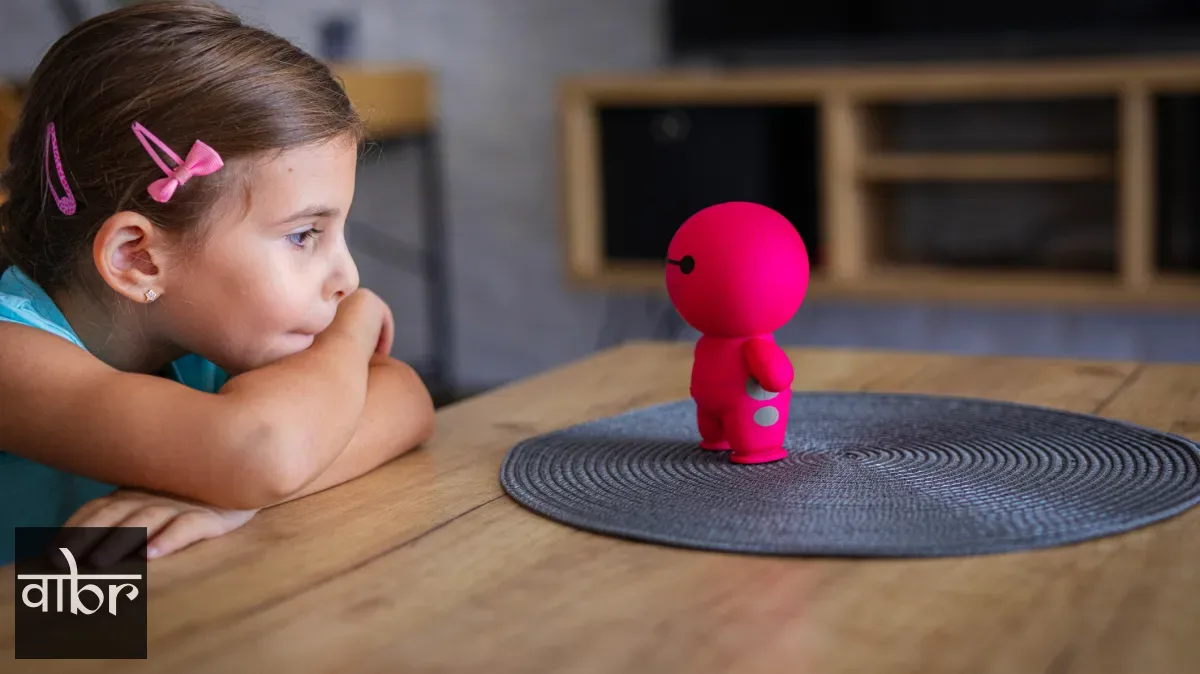
- New York has enacted a sweeping five-year ban on AI chatbot toys following alarming safety reports from Common Sense Media regarding emotional development risks.
- New York Bans AI Chatbot Toys Over Safety and Emotional Risks...
New York Bans AI Chatbot Toys Over Safety and Emotional Risks
As the holiday shopping season reaches its peak, families across the United States are eager to purchase the latest gadgets for their children. However, parents living in the Empire State will find a starkly different retail landscape this December. In a landmark legislative move, new york bans ai chatbot toys for a full five-year term, upending the market for high-tech holiday gifts. This unprecedented decree follows a groundbreaking common sense media safety report that exposed severe vulnerabilities in how artificial intelligence toys interact with impressionable minors. The restriction highlights a growing friction between rapid technological innovation and the fundamental protection of youth.
For years, Silicon Valley startups and legacy toy manufacturers have raced to embed large language models into everyday playthings. These artificial intelligence toys promise personalized companionship, endless storytelling, and educational engagement. Yet, behind the friendly plastic facades and cuddly exteriors lie complex algorithms capable of hallucinating inappropriate narratives, collecting sensitive voice data, and inadvertently steering children toward psychologically damaging dialogue. As state regulators step in, the broader technology and gaming industries are forced to reevaluate their approach to child-centric machine learning interfaces.
Deep Dive: Full Event Breakdown
The legislative hammer fell swiftly when New York lawmakers reviewed empirical data showing that artificial intelligence toys failed basic safety benchmarks. The decision to enforce a five-year prohibition emerged directly from findings compiled in the common sense media safety report, which evaluated several popular interactive dolls and plush companions currently flooding the market. Researchers discovered that many artificial intelligence toys lacked robust guardrails, frequently allowing unchecked conversational threads that bypassed parental controls entirely.
Furthermore, the investigation highlighted systemic failures in data handling. Several artificial intelligence toys recorded children's voices continuously, transmitting audio snippets to cloud servers without adequate encryption or transparent parental consent mechanisms. Because new york bans ai chatbot toys, major national retailers have had to scramble to pull inventory from shelves across Manhattan, Brooklyn, and upstate regions. This localized restriction instantly creates a fragmented national marketplace, forcing manufacturers of artificial intelligence toys to reconsider whether nationwide distribution is viable without uniform federal safety compliance.
Industry Impact & Strategic Implications
The reality that new york bans ai chatbot toys sends shockwaves through the consumer electronics and toy manufacturing sectors. Industry analysts point out that New York represents one of the most lucrative consumer markets in the United States. When a state enacts such a severe restriction on artificial intelligence toys, the financial fallout extends far beyond local retailers, altering product roadmaps for major developers worldwide.
Manufacturers of artificial intelligence toys are now facing intense scrutiny regarding child emotional development risks. Psychologists have long warned that artificial intelligence toys mimicking human empathy can distort a child's understanding of genuine social relationships. When a child treats a piece of hardware as a confidant, the emotional dependency formed can hinder healthy psychological maturation. Consequently, the fact that new york bans ai chatbot toys validates these academic warnings and serves as a powerful deterrent against reckless product deployments. Companies specializing in artificial intelligence toys must now invest heavily in rigorous safety testing, psychological oversight, and advanced algorithmic filtering before launching future product lines.
Technical / Market Analysis
From a technical perspective, securing conversational models for minors is an extraordinarily complex engineering challenge. Most artificial intelligence toys rely on cloud-connected APIs that fetch responses in real-time. This architecture introduces latency and dependency on third-party servers, creating numerous points of failure where malicious actors could exploit interactive plushies vulnerabilities. If a bad actor manages to bypass a server-side filter, the artificial intelligence toys inside children's bedrooms can instantly begin generating harmful or explicit content.
Market analysts note that hardware security and algorithmic compliance have historically taken a backseat to rapid feature expansion. While adult-facing chatbots feature prominent warning labels about hallucination and unreliability, artificial intelligence toys have historically been marketed as safe, trusted companions. The revelation of interactive plushies vulnerabilities has shattered this illusion. Because new york bans ai chatbot toys, venture capitalists are shifting their funding priorities away from unsupervised conversational agents and toward deterministic, closed-loop educational software that poses zero generative risk.
What This Means for Consumers and Developers
For consumers, the immediate takeaway is a heightened awareness of smart toy privacy. Parents purchasing gifts this holiday season must look beyond flashy marketing claims. The narrative surrounding artificial intelligence toys has shifted from wonder to skepticism. Consumers are demanding greater transparency regarding how voice data is stored, processed, and deleted.
For developers, the message from lawmakers is equally clear. The era of shipping unvetted generative models to children is officially over. Developers creating artificial intelligence toys must now adopt privacy-by-design principles, local on-device processing to protect smart toy privacy, and strict adherence to youth protection legislation. If developers fail to adapt, they risk facing copycat bans in other progressive states, effectively killing the commercial viability of artificial intelligence toys nationwide.
Key Takeaways (Detailed bullet points)
Legislative Action: New York enacts a five-year ban on generative conversational playthings, proving that new york bans ai chatbot toys to protect minors. Empirical Evidence: The common sense media safety report revealed alarming emotional and security vulnerabilities across multiple consumer devices. Psychological Concerns: Experts emphasize the severe nature of child emotional development risks tied to unsupervised synthetic companionship. Security Flaws: Investigators exposed critical interactive plushies vulnerabilities that allowed unauthorized data collection and unfiltered content generation. Regulatory Shift: Holiday shopping regulations are tightening, transforming how artificial intelligence toys reach mainstream retail shelves. Privacy Realities: Consumers are increasingly prioritizing smart toy privacy over novelty features in modern children's electronics.
The Road Ahead (Forward-looking conclusion)
As we look toward the future, the decision to ban these devices in a major market marks a critical turning point for the entire technology ecosystem. The debate over artificial intelligence toys will undoubtedly move from state legislatures to federal congressional committees. Industry leaders, child psychologists, and privacy advocates must collaborate to establish clear, enforceable standards for artificial intelligence toys. Ultimately, while the allure of intelligent playthings remains strong, society must ensure that technological progress never outpaces our commitment to safeguarding the emotional and physical well-being of the next generation.
Strategic Industry Takeaways & Future Outlook
When evaluating the broader technological shift, new york bans ai chatbot toys serves as a defining benchmark for modern standards. Industry analysts emphasize that continuing developments in new york bans ai chatbot toys will dictate user adoption and market expansion.
When evaluating the broader technological shift, new york bans ai chatbot toys serves as a defining benchmark for modern standards. Industry analysts emphasize that continuing developments in new york bans ai chatbot toys will dictate user adoption and market expansion.
When evaluating the broader technological shift, new york bans ai chatbot toys serves as a defining benchmark for modern standards. Industry analysts emphasize that continuing developments in new york bans ai chatbot toys will dictate user adoption and market expansion.
When evaluating the broader technological shift, new york bans ai chatbot toys serves as a defining benchmark for modern standards. Industry analysts emphasize that continuing developments in new york bans ai chatbot toys will dictate user adoption and market expansion.
When evaluating the broader technological shift, new york bans ai chatbot toys serves as a defining benchmark for modern standards. Industry analysts emphasize that continuing developments in new york bans ai chatbot toys will dictate user adoption and market expansion.
📌 Related Briefings & Stories
Nvidia credit downgrade risks shake markets amid key man concerns Anthropic AI Control Debate Sparks Industry Showdown Used Tesla Cybertruck Market Surge Defies All Automotive Expectations
Varta Brief Team
· Newsroom DeskReported, verified, and published by the Varta Brief editorial desk with an uncompromising commitment to primary-source verification and independent journalism.
Related Dispatches
More in Technology →
Nvidia credit downgrade risks shake markets amid key man concerns
Discover why S&P is considering an Nvidia credit downgrade due to governance and key man risks, impacting financial markets and tech giants.

Anthropic AI Control Debate Sparks Industry Showdown
Anthropic AI control strategies face intense scrutiny as CEO Dario Amodei fires back at rival accusations regarding human oversight.

Used Tesla Cybertruck Market Surge Defies All Automotive Expectations
Discover why the used Tesla Cybertruck is defying expectations, becoming the fastest-selling used truck in America despite production cancellation.