How Ocarina of Time Remake Shapes Junior Game Developers at Nintendo
Nintendo's strategy leverages iconic titles to train junior game developers, instilling core design mechanics while building future Zelda games.

Varta Brief Team
Tuesday, November 24, 2026
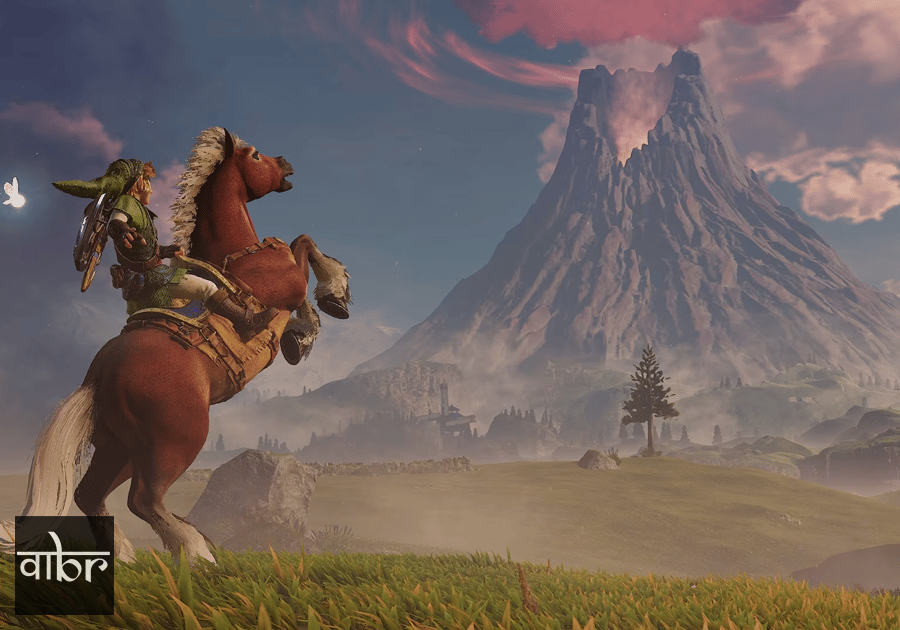
- Nintendo's strategy leverages iconic titles to train junior game developers, instilling core design mechanics while building future Zelda games.
- In an era dominated by sprawling open-world architectures and hyper-realistic graphics engines, the fundamental principles of level design can sometimes get lost in translation. Lo...
In an era dominated by sprawling open-world architectures and hyper-realistic graphics engines, the fundamental principles of level design can sometimes get lost in translation. Longtime series producer Eiji Aonuma recently revealed an intriguing studio methodology: utilizing an Ocarina of Time remake project as a foundational training ground for junior game developers. By deconstructing and rebuilding landmark titles, Nintendo ensures that emerging talent absorbs classic design paradigms before tackling massive modern productions. This strategic approach highlights how working on an Ocarina of Time remake offers irreplaceable hands-on experience for junior game developers who must master spatial logic, concise puzzle mechanics, and intuitive user feedback.
Deep Dive: Full Event Breakdown
When discussing Nintendo’s internal studio structure, series veteran Eiji Aonuma emphasized that legacy projects serve a dual purpose. Beyond preserving gaming history for players, an Ocarina of Time remake gives junior game developers direct exposure to foundational game design philosophy. Rather than assigning new hires immediately to bloated teams, Nintendo integrates them into targeted remake projects.
During development cycles, internal leaders recognized that modern game development tools can obscure core mechanics behind layers of automation. By working on an Ocarina of Time remake, junior game developers are forced to grapple with tight environmental constraints, camera systems, and rigid geometry. Eiji Aonuma noted that studying how original developers solved 3D spatial awareness issues back in 1998 provides practical insights that no classroom or modern manual can replicate.
Furthermore, analyzing an Ocarina of Time remake exposes talent to masterclass dungeon design. Understanding how lock-and-key design loops function without modern directional markers instills a deep respect for player agency. As Eiji Aonuma explained, when young creators dismantle classic game mechanics, they discover how small scale adjustments alter psychological flow.
Industry Impact & Strategic Implications
The decision to utilize an Ocarina of Time remake as a pedagogical tool reflects broader shifts across legacy game franchises. In an industry plagued by skyrocketing budgets and prolonged production timelines, studio onboarding has become a major bottleneck. Nintendo's approach integrates mentorship in gaming directly into production schedules, turning commercial remakes into internal incubators.
For junior game developers, starting their career on such a project bridges the gap between academic theory and high-stakes AAA production. Instead of being relegated to minor asset creation on massive titles, team members on an Ocarina of Time remake touch systemic gameplay elements, script core enemy AI, and tune camera behaviors.
This structure also refines the Nintendo studio pipeline. Rather than treating remakes as mere financial cash-ins, Nintendo treats an Ocarina of Time remake as a practical sandbox where junior game developers can fail safely, innovate under tight constraints, and internalize corporate core values before moving on to flagship sequels.
Technical / Market Analysis
From a technical standpoint, recreating a seminal 1998 title forces developers to confront low-level problem solving. The original release operated under strict hardware limitations, forcing original creators to innovate with Z-targeting and minimalist UI. When staff recreate these systems in an Ocarina of Time remake, they analyze how technical constraints drove timeless creative solutions.
Market data shows that studios employing structured mentorship in gaming retain talent longer and minimize pipeline friction. By immersing junior game developers in an Ocarina of Time remake, studios foster a deep technical intuition regarding frame timing, collision detection, and spatial pacing. While modern engine suites simplify basic asset placement, an Ocarina of Time remake challenges junior game developers to understand why specific camera angles work and how visual cues guide the human eye without intrusive waypoints.
What This Means for Consumers and Developers
For gamers, Nintendo's emphasis on using an Ocarina of Time remake to train junior game developers guarantees long-term quality control for legacy game franchises. When junior game developers eventually step up to direct future entries, they carry forward the timeless spatial design and tight interaction design that defined classic titles.
For the industry, Eiji Aonuma’s revelation offers a blueprint for sustainable studio growth. Rather than throwing junior game developers directly into complex modern game development pipelines, studios can leverage smaller-scale remakes and remasters as structured learning labs. This approach ensures that classic game mechanics remain at the heart of next-generation titles.
Key Takeaways
Pedagogical Remakes: An Ocarina of Time remake functions as a practical school where junior game developers master spatial logic and core mechanics. Preserving Design DNA: Eiji Aonuma highlights how deconstructing classic titles keeps timeless game design philosophy alive in modern teams. Pipeline Efficiency: The Nintendo studio pipeline utilizes smaller projects to mentor junior game developers before assigning them to massive flagship projects. Technical Mastery: Working on an Ocarina of Time remake helps young designers understand fundamental camera logic and 3D spatial awareness. Industry Blueprint: Mentorship in gaming through curated remake development mitigates onboarding bottlenecks across legacy game franchises.
The Road Ahead
As game development becomes increasingly complex, the lessons derived from an Ocarina of Time remake will remain vital. Eiji Aonuma and Nintendo have demonstrated that looking back is often the best way to move forward. By ensuring that junior game developers understand the genius behind historic masterpieces, Nintendo guarantees that its future games will maintain the charm, precision, and elegance that fans have expected for decades. Ultimately, every Ocarina of Time remake does more than entertain legacy fans—it molds the master developers of tomorrow.
📌 Related Briefings & Stories
Unity Acquisition Rumors Addressed by Exec Amid Game Engine Market Shifts Itch.io AI Games Surge Doubles Store Listings While Sales Stall Nagoshi Studio Shutdown: NetEase Funding Cuts End Post-Sega Era
Varta Brief Team
· Newsroom DeskReported, verified, and published by the Varta Brief editorial desk with an uncompromising commitment to primary-source verification and independent journalism.
Related Dispatches
More in Gaming →
GTA 6 Weekend Sales Crush Eras Tour and Shatter Gaming Records
GTA 6 smashes sales records, outperforming Taylor Swift's tour and major films while driving gaming industry revenue to unprecedented global heights.

Unity Acquisition Rumors Addressed by Exec Amid Game Engine Market Shifts
Unity exec Adam Smith addresses Unity acquisition rumors as quarterly financial results stabilize the company's place in the evolving game engine market.

Itch.io AI Games Surge Doubles Store Listings While Sales Stall
An unprecedented AI game store flood on Itch.io has doubled platform page counts without boosting revenue, exposing major vulnerabilities in indie distribution.