Our Next Energy Goes Public: Can the Battery Startup Survive?
After surviving near-bankruptcy, Our Next Energy goes public via SPAC. Discover how this battery startup plans to compete in the energy sector.

Varta Brief Team
Monday, November 16, 2026
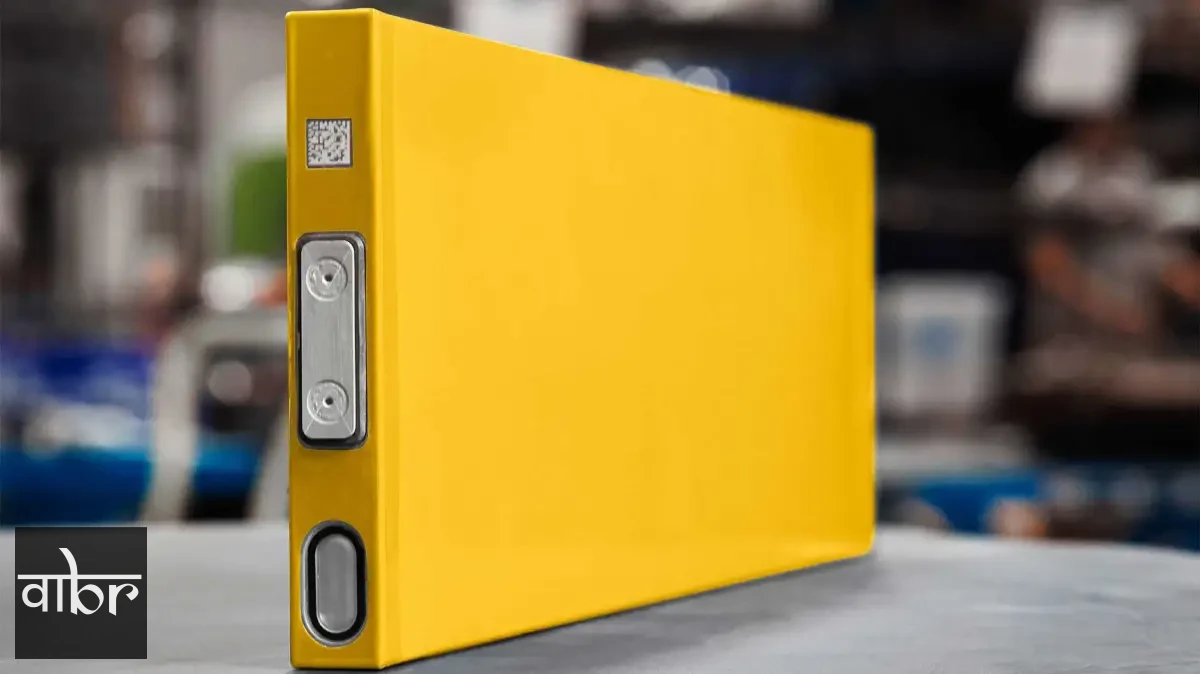
- After surviving near-bankruptcy, Our Next Energy goes public via SPAC. Discover how this battery startup plans to compete in the energy sector.
- Our Next Energy Goes Public: Can the Battery Startup Survive?...
Our Next Energy Goes Public: Can the Battery Startup Survive?
In the volatile world of clean energy hardware, few trajectories are as dramatic as the one experienced by Michigan-based innovator Our Next Energy. After an agonizing brush with insolvency that nearly shuttered its doors, the company has officially announced that Our Next Energy goes public, relying on a high-stakes SPAC merger to secure its future. This financial maneuver is more than just a liquidity event; it represents a desperate bid for battery startup survival in an unforgiving global market dominated by entrenched Asian giants and heavily subsidized domestic competitors. As investors weigh the long-term prospects of Our Next Energy goes public, financial analysts are intensely scrutinizing whether the newly minted entity possesses the capital and technological edge required to endure.
The journey toward ensuring battery startup survival has been fraught with operational pivots, executive shuffling, and immense cash burn. When Our Next Energy goes public, it joins a long line of speculative green-tech enterprises that turned to special purpose acquisition companies as an alternative to traditional initial public offerings. Yet, the broader market remains deeply skeptical about SPAC transactions, particularly within the hardware and energy storage sectors. Observers remember the graveyard of publicly traded climate tech firms that flamed out after their initial market debuts. Consequently, the narrative surrounding Our Next Energy goes public is not merely about raising capital—it is a crucible testing whether innovative engineering can overcome brutal macroeconomic realities.
Deep Dive: Full Event Breakdown
The road leading to the moment Our Next Energy goes public was paved with existential crises. Just over a year ago, the company faced a severe cash crunch, forcing sweeping layoffs and a dramatic scaling back of its ambitious manufacturing ambitions. Industry insiders whispered that liquidation was imminent. However, a last-minute infusion of bridge funding provided a vital lifeline, allowing management to stabilize operations and re-evaluate their commercial strategy. Achieving battery startup survival required ruthless prioritization, shifting focus away from capital-intensive passenger vehicle cells toward more immediately lucrative stationary energy storage markets.
The SPAC merger structure chosen for Our Next Energy goes public provides immediate access to public markets without the traditional roadshow delays, albeit with heightened regulatory scrutiny and the risk of significant shareholder redemptions. Management hopes that by pushing forward with Our Next Energy goes public, they can unlock the institutional capital necessary to finalize their next-generation chemistry developments. For any venture focused on battery startup survival, securing a war chest of this magnitude is non-negotiable if they hope to compete against multinational cell manufacturers boasting infinite scale and rock-bottom production costs.
Industry Impact & Strategic Implications
The decision that Our Next Energy goes public sends powerful shockwaves through the clean technology ecosystem. It forces competitors, suppliers, and automotive Original Equipment Manufacturers to reassess the viability of independent cell suppliers. As established players continue consolidating, the path toward ultimate battery startup survival becomes increasingly narrow. By executing this market debut, Our Next Energy aims to prove that venture-backed energy innovators can pivot quickly enough to survive supply chain disruptions and shifting geopolitical trade barriers.
Furthermore, the success of Our Next Energy goes public will likely dictate whether other early-stage innovators can secure public financing in the near future. If the stock trades well and institutional investors back the vision, venture capitalists may feel emboldened to deploy fresh capital into alternative chemistry developers. Conversely, a poor reception for Our Next Energy goes public could slam the window shut on clean tech market valuations for years, making battery startup survival an even steeper uphill battle for remaining private companies.
Technical / Market Analysis
At the core of the enterprise is a dual-product strategy combining high-capacity energy storage systems with advanced cathode chemistry designed to minimize reliance on critical minerals like cobalt and nickel. While initial market enthusiasm centered around ultra-long-range passenger vehicle packs, the commercial reality of Our Next Energy goes public underscores a pragmatic pivot toward stationary power applications. Energy storage systems offer faster commercialization cycles and steadier revenue streams compared to the notoriously low-margin electric vehicle market.
To guarantee sustainable battery startup survival, the company must demonstrate consistent manufacturing execution at gigawatt-hour scale. The technical hurdle lies in transitioning laboratory breakthroughs into mass-produced hardware without sacrificing safety or cycle life. Market analysts watching Our Next Energy goes public note that investors will demand strict adherence to production timelines and clear pathways to gross margin profitability. Without these milestones, even a successful public listing will not prevent eventual capital depletion.
What This Means for Consumers and Developers
For downstream developers of commercial energy grids and industrial microgrids, the fact that Our Next Energy goes public offers a reassuring sign of long-term operational stability. Developers require long-term warranty backing and dependable supply chains, attributes that heavily favor publicly traded entities over precarious early-stage ventures. By establishing a transparent financial foundation through Our Next Energy goes public, the enterprise reassures partners that it will remain solvent throughout multi-year deployment cycles.
At the same time, consumers tracking the broader evolution of electric mobility and grid resilience stand to benefit from the increased competition driven by battery startup survival. When innovative startups manage to weather storms and bring differentiated products to market, incumbent manufacturers are forced to accelerate their own research and development roadmaps. Ultimately, the market presence of a publicly capitalized Our Next Energy fosters a healthier, more dynamic ecosystem for advanced power solutions.
Key Takeaways (Detailed bullet points)
Capital Restructuring: The decision that Our Next Energy goes public provides critical liquidity following a near-death financial experience. Strategic Pivot: Ensuring long-term battery startup survival necessitated a shift from passenger vehicles to stationary energy storage systems. Market Skepticism: The SPAC vehicle used for Our Next Energy goes public faces intense scrutiny from institutional investors wary of green-tech valuations. Operational Discipline: Achieving sustainable battery startup survival demands rigorous cost control and reliable gigawatt-hour manufacturing scale. Ecosystem Impact: The market debut of Our Next Energy goes public serves as a vital bellwether for independent clean tech funding rounds.
The Road Ahead (Forward-looking conclusion)
The bell has rung, and the spotlight is now firmly fixed on executive leadership as Our Next Energy goes public. Navigating the public markets requires a delicate balance between meeting short-term quarterly expectations and executing long-term scientific research. While the immediate threat of insolvency has been averted, true battery startup survival will ultimately be measured by sustained revenue growth, manufacturing excellence, and continuous technological differentiation in an aggressively competitive global arena.
Strategic Industry Takeaways & Future Outlook
Furthermore, strategic integration surrounding battery startup survival remains a crucial priority for stakeholders. Ensuring high performance across battery startup survival is expected to deliver long-term competitive advantages.
Furthermore, strategic integration surrounding battery startup survival remains a crucial priority for stakeholders. Ensuring high performance across battery startup survival is expected to deliver long-term competitive advantages.
Furthermore, strategic integration surrounding battery startup survival remains a crucial priority for stakeholders. Ensuring high performance across battery startup survival is expected to deliver long-term competitive advantages.
Key factors influencing this sector also include lithium ion batteries , solid state tech , each playing an essential role in ongoing development and implementation.
📌 Related Briefings & Stories
John Romero Canceled Game Rescued by New Publisher Amid Major Scope Shift Roblox Growth Slumps As Daily User Metrics Miss Wall Street Estimates Anthropic AI Game Clones: Claude Code Halts Video Game Remakes
Varta Brief Team
· Newsroom DeskReported, verified, and published by the Varta Brief editorial desk with an uncompromising commitment to primary-source verification and independent journalism.
Related Dispatches
More in Technology →
Amazon Decart Acquisition Signals Bold Move to Challenge Nvidia AI Dominance
Amazon buys Decart for $7.5B to optimize Trainium silicon and reshuffle the Nvidia AI chip race across enterprise cloud computing infrastructure.

Nvidia Board Governance Tested as Jensen Huang Discloses Additional Affairs
A detailed investigation into how revelations around Jensen Huang leadership impact corporate stability, chip markets, and Nvidia's standing with investors.

GTA 6 Sets Historic Record as the Biggest Launch in PlayStation History
Discover how GTA 6 became the biggest launch in PlayStation history, shattering records and reshaping the modern gaming landscape with unprecedented sales.