Why Personal AI Assistants Fail at Everyday Tasks
Discover why personal AI assistants and everyday AI agents struggle with basic tasks and what this means for the future of automation.

Varta Brief Team
Tuesday, November 24, 2026

- Discover why personal AI assistants and everyday AI agents struggle with basic tasks and what this means for the future of automation.
- Why Personal AI Assistants Fail at Everyday Tasks...
Why Personal AI Assistants Fail at Everyday Tasks
As millions of consumers worldwide enthusiastically embrace personal AI assistants for daily productivity, a stark and unsettling reality is beginning to emerge. Despite staggering advancements in core foundation models, a rigorous new industry benchmark has revealed a sobering truth: even the most advanced everyday AI agents still struggle profoundly to complete everyday life tasks reliably, safely, and without introducing compounding errors or new digital complications. The promise of fully autonomous digital helpers that can seamlessly manage our chaotic schedules, book complicated travel itineraries, or coordinate domestic logistics remains largely unfulfilled, highlighting a massive gap between laboratory capability and real-world execution.
Deep Dive: Full Event Breakdown
The benchmark in question, developed by leading evaluation researchers, subjected top-tier models to unscripted, highly complex domestic and professional scenarios. While personal AI assistants excel at summarizing text, writing code, and answering esoteric trivia questions, everyday AI agents faltered significantly when faced with multi-step physical and digital environments. For instance, when tasked with ordering groceries while accounting for complex dietary restrictions, changing local store inventories, and sudden price fluctuations, everyday AI agents frequently stalled, hallucinated missing parameters, or inadvertently ordered incorrect quantities. These failures underscore the inherent fragility of modern large language models when they are deployed outside controlled benchmark conditions. Personal AI assistants must navigate a messy, unstructured world where ambiguity is the norm, yet they are fundamentally built on deterministic code and probabilistic token prediction. This friction point creates catastrophic cascading errors, where a single misinterpretation early in a multi-step workflow derails the entire operation. Furthermore, everyday AI agents often introduce security vulnerabilities, such as sharing sensitive credentials or authorizing unauthorized transactions, proving that safety guardrails are far from foolproof.
Industry Impact & Strategic Implications
The inability of personal AI assistants to handle mundane domestic tasks reliably sends shockwaves through the consumer tech industry. Major software giants and hardware manufacturers have staked their multi-billion-dollar product roadmaps on the premise that everyday AI agents will become the primary interface for human-computer interaction. If everyday AI agents cannot reliably manage a simple household schedule or resolve a customer service dispute without human intervention, consumer trust will inevitably erode. Industry executives are now scrambling to reevaluate their development strategies, shifting focus away from raw parameter scaling and toward robust multi-agent orchestration, error-correction loops, and deterministic verification layers. The financial stakes are immense; investors who poured capital into personal AI assistants expecting rapid mass-market monetization are now forced to reckon with the difficult engineering reality that reasoning in unstructured environments is exponentially harder than previously anticipated.
Technical / Market Analysis
From a purely technical perspective, the core issue lies in the limitations of current architectures when applied to continuous task planning and state tracking. Personal AI assistants are typically optimized for single-turn or short-horizon interactions. When deployed as everyday AI agents that must maintain state over hours or days across disparate web interfaces, their memory decay and context window drift become fatal bottlenecks. Moreover, the lack of standardized APIs for everyday consumer services forces everyday AI agents to interact with web pages via brittle browser automation tools. A minor UI redesign on a popular e-commerce website is enough to completely disorient personal AI assistants, causing them to click the wrong buttons or input erroneous data. Market analysts note that until foundational architectural breakthroughs are achieved—potentially moving beyond pure transformer models toward hybrid symbolic-neural systems—everyday AI agents will remain confined to narrow, highly structured enterprise use cases rather than true personal utility.
What This Means for Consumers and Developers
For everyday consumers, the current generation of personal AI assistants should be viewed with healthy skepticism. While they serve as exceptional brainstorming partners and productivity boosters, relying on everyday AI agents to independently execute critical financial, medical, or logistical tasks is a recipe for frustration. Consumers must remain actively in the loop, acting as supervisors rather than passive beneficiaries. For developers and software engineers, these findings represent an urgent call to action. Building trustworthy personal AI assistants requires a radical shift in mindset: moving from maximizing task success rates in pristine test environments to engineering for graceful degradation, transparent failure modes, and bulletproof human-in-the-loop verification protocols for everyday AI agents.
Key Takeaways (Detailed bullet points)
Benchmark Realities: A comprehensive evaluation proves that personal AI assistants struggle significantly with unstructured everyday tasks. Cascading Failures: Minor errors made early by everyday AI agents often compound into total operational failure during multi-step workflows. Security Risks: Current systems frequently exhibit alarming vulnerabilities, including accidental data exposure and unauthorized transaction authorization. Architectural Bottlenecks: Memory decay and brittle web automation prevent personal AI assistants from maintaining long-horizon state tracking. Consumer Caution: Users should treat everyday AI agents as assistive co-pilots rather than fully autonomous delegates for critical tasks.
The Road Ahead (Forward-looking conclusion)
Ultimately, the struggle of personal AI assistants to master everyday life is not a death knell for the industry, but rather a necessary and humbling reality check. The transition from reactive chatbots to proactive everyday AI agents will be a marathon, not a sprint. As researchers double down on robust verification, hybrid reasoning architectures, and standardized agentic protocols, the reliability gap will slowly close. Until that day arrives, both developers and consumers must temper their expectations, recognizing that navigating the messy unpredictability of human life remains the ultimate frontier for artificial intelligence.
Strategic Industry Takeaways & Future Outlook
When evaluating the broader technological shift, personal AI assistants serves as a defining benchmark for modern standards. Industry analysts emphasize that continuing developments in personal AI assistants will dictate user adoption and market expansion.
Key factors influencing this sector also include automation reliability , software engineering , tech news , consumer technology , LLM reasoning , digital assistants , each playing an essential role in ongoing development and implementation.
📌 Related Briefings & Stories
Grammy Video Game Nominations Spark Debate Over Vocal Track Bias Jensen Huang succession plan: Why Nvidia CEO avoids corporate hierarchy Jensen Huang Nvidia All Hands Meeting Reveals Therapy and White House Thanks
Varta Brief Team
· Newsroom DeskReported, verified, and published by the Varta Brief editorial desk with an uncompromising commitment to primary-source verification and independent journalism.
Related Dispatches
More in Technology →
Jensen Huang succession plan: Why Nvidia CEO avoids corporate hierarchy
Discover why Nvidia CEO Jensen Huang still rejects a formal succession plan, arguing that traditional corporate hierarchy stifles tech innovation and agility.

Jensen Huang Nvidia All Hands Meeting Reveals Therapy and White House Thanks
Discover insights from the Jensen Huang Nvidia all hands meeting where the CEO thanked the White House, admitted to therapy, and addressed corporate futures.
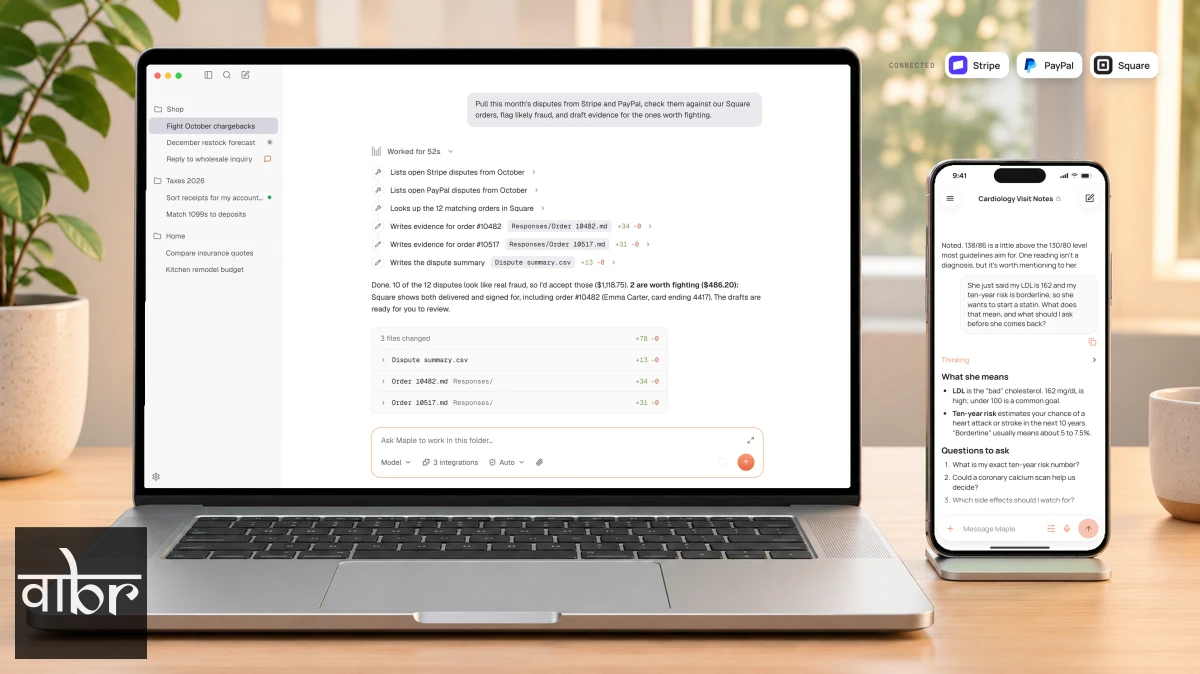
Maple Raises $5.3M to Build Encrypted AI Architecture for Total Privacy
Maple secures $5.3M in funding to pioneer private AI development, ensuring zero-knowledge privacy where even the company cannot access user data.