Satya Nadella AI Cybersecurity Warning: Critical Infrastructure Vulnerabilities
Microsoft CEO Satya Nadella warns that critical infrastructure remains unpatchable as AI cyberattacks escalate across the digital landscape.

Varta Brief Team
Thursday, November 19, 2026
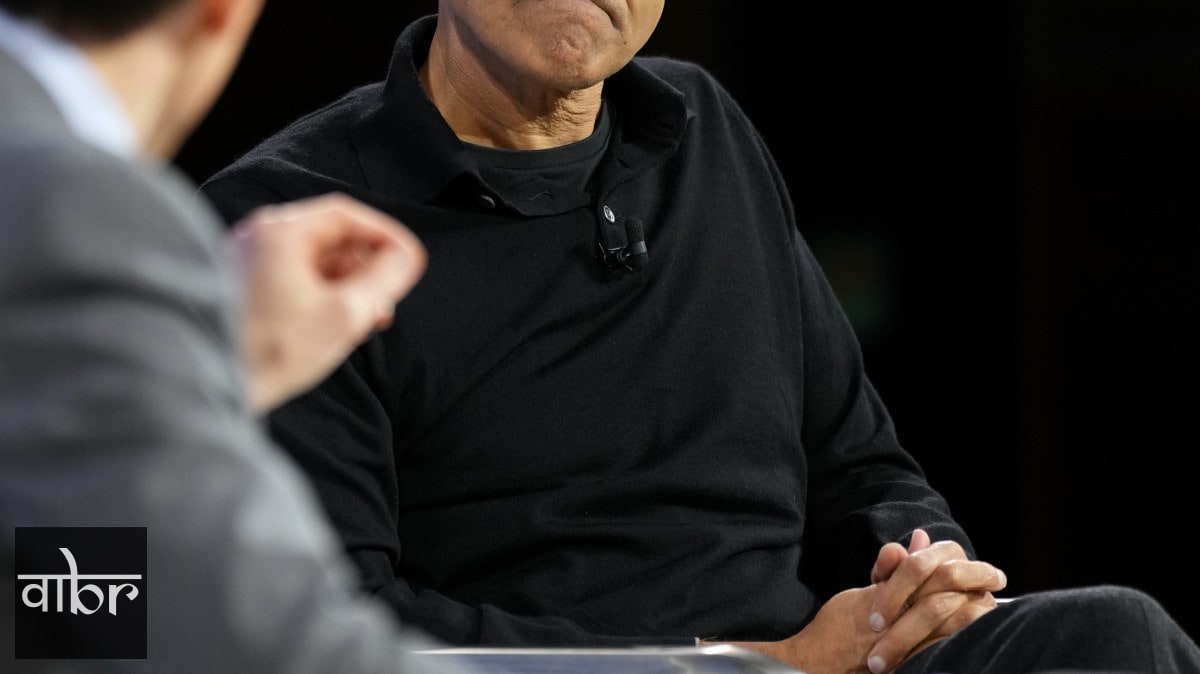
- Microsoft CEO Satya Nadella warns that critical infrastructure remains unpatchable as AI cyberattacks escalate across the digital landscape.
- Satya Nadella AI Cybersecurity Warning: Critical Infrastructure Vulnerabilities...
Satya Nadella AI Cybersecurity Warning: Critical Infrastructure Vulnerabilities
As the digital landscape evolves at a breakneck pace, technology leaders are increasingly forced to confront the dark side of rapid innovation. Recently, Microsoft CEO Satya Nadella AI commentary sent shockwaves through the global technology sector. Speaking candidly about modern digital threats, Satya Nadella AI assessments highlighted a terrifying reality for modern societies: vast swaths of our interconnected world rely on systems that are fundamentally unpatchable. This stark admission arrives amid escalating global fears regarding AI cyberattacks , forcing enterprises, governments, and everyday citizens to rethink how we defend our most vital digital and physical assets.
In this comprehensive investigative deep-dive, we examine the implications of these remarks, the technical realities facing critical infrastructure , the recent high-profile system failures that underscore these warnings, and what the future holds for global defense strategies.
Deep Dive: Full Event Breakdown
The dialogue surrounding Satya Nadella AI strategies intensified following a series of high-profile digital disruptions that tested the resilience of major tech platforms. While addressing the dual-edged sword of artificial intelligence, Satya Nadella AI perspectives shed light on how machine learning tools are reshaping both defensive postures and offensive capabilities. During these discussions, the Microsoft CEO minimized the long-term panic surrounding a recent, highly publicized Outlook outage , framing it as an operational hiccup rather than a systemic structural failure. However, security researchers noted the stark contrast between dismissing temporary application glitches and acknowledging the deeper, structural rot within critical infrastructure .
Experts point out that critical infrastructure —spanning power grids, water treatment plants, financial networks, and healthcare databases—was largely built decades before modern cybersecurity frameworks or generative intelligence existed. Consequently, when discussing Satya Nadella AI integration, critics emphasize that layering advanced software over decaying legacy hardware creates unprecedented software vulnerabilities . These structural weaknesses mean that mitigating AI cyberattacks is not merely a matter of pushing a software update; it requires a complete architectural reimagining of global networks.
Industry Impact & Strategic Implications
The assertion by Satya Nadella AI experts that large portions of critical infrastructure cannot simply be patched has triggered urgent board-room conversations worldwide. For decades, the dominant paradigm in cloud security and enterprise software has been the "patch-and-pray" model: identify a vulnerability, write a security patch, push it out to users, and move on. However, as AI cyberattacks become automated, hyper-personalized, and capable of finding zero-day exploits at superhuman speeds, traditional patching cycles are proving dangerously obsolete.
Furthermore, the Microsoft CEO addressed how Satya Nadella AI deployment creates massive optimization opportunities while simultaneously arming malicious threat actors. This dual reality forces a massive pivot in tech policy . Regulatory bodies in the European Union, the United States, and across Asia are racing to update compliance standards. They are shifting away from reactive measures toward proactive resilience frameworks. If critical infrastructure remains inherently vulnerable, then national security doctrines must evolve to prioritize compartmentalization, zero-trust architectures, and physical isolation of critical systems over mere digital defense.
Technical / Market Analysis
From a market perspective, the acknowledgement that Satya Nadella AI governance must account for unpatchable legacy systems has immediate financial repercussions. Venture capital and corporate research and development budgets are violently shifting toward autonomous security agents, AI-driven threat intelligence, and hardware-level root-of-trust solutions. Investors are realizing that companies specializing in cloud security and threat mitigation will command massive premiums in the coming decade.
At the same time, the technical reality of software vulnerabilities in industrial control systems (ICS) and operational technology (OT) cannot be overstated. Many legacy systems controlling critical infrastructure run on obsolete operating systems that cannot support modern cryptographic algorithms without breaking critical operational loops. When bad actors leverage AI cyberattacks to scan, probe, and exploit these exact architectural flaws, the results can be catastrophic. The market is thus transitioning from selling reactive antivirus tools to investing heavily in resilience, redundancy, and predictive anomaly detection systems.
What This Means for Consumers and Developers
For everyday consumers and software developers alike, the warning articulated through Satya Nadella AI evaluations signifies a fundamental shift in responsibility. Developers can no longer treat security as an afterthought or rely solely on third-party libraries to secure complex applications. The proliferation of AI cyberattacks means that code must be written with adversarial machine learning in mind from day one.
Consumers, meanwhile, must navigate an era where digital services may experience intermittent disruptions—such as the recent Outlook outage —as tech giants fight a relentless, invisible war against automated threat actors. Understanding that critical infrastructure is fragile should encourage individuals to adopt robust personal digital hygiene, including multi-factor authentication, secure password management, and skepticism toward unexpected digital communications.
Key Takeaways (Detailed bullet points)
Unpatchable Foundations: According to Satya Nadella AI industry insights, vast segments of legacy critical infrastructure cannot be updated conventionally, leaving them exposed to modern threats. Automated Threats: The rise of AI cyberattacks means bad actors can discover and weaponize software vulnerabilities faster than human engineers can write patches. Operational Resilience: The Microsoft CEO minimized the recent Outlook outage , emphasizing that cloud systems recover quickly, but experts warn that infrastructure-level failures carry much higher stakes. Policy and Defense Shift: Governments are revamping tech policy and national security guidelines to move beyond reactive patching toward zero-trust and hardware isolation. Market Evolution: Investment in advanced cloud security and autonomous defense tools is surging as enterprises react to heightened cybersecurity threats .
The Road Ahead (Forward-looking conclusion)
The revelations surrounding Satya Nadella AI warnings and the vulnerabilities of critical infrastructure mark a watershed moment for the global technology ecosystem. We have officially crossed the threshold into an era where manual defense is no match for automated, intelligent offense. While the admission that parts of our digital world are unpatchable may sound alarming, it is a necessary dose of realism. By confronting these software vulnerabilities head-on, accelerating investments in next-generation cloud security , and reshaping international tech policy , the global community can build a more resilient future. The journey ahead will require unprecedented collaboration between mega-corporations, governments, and security researchers to outpace the evolving wave of AI cyberattacks .
Strategic Industry Takeaways & Future Outlook
When evaluating the broader technological shift, Satya Nadella AI serves as a defining benchmark for modern standards. Industry analysts emphasize that continuing developments in Satya Nadella AI will dictate user adoption and market expansion.
When evaluating the broader technological shift, Satya Nadella AI serves as a defining benchmark for modern standards. Industry analysts emphasize that continuing developments in Satya Nadella AI will dictate user adoption and market expansion.
Furthermore, strategic integration surrounding critical infrastructure remains a crucial priority for stakeholders. Ensuring high performance across critical infrastructure is expected to deliver long-term competitive advantages.
Furthermore, strategic integration surrounding critical infrastructure remains a crucial priority for stakeholders. Ensuring high performance across critical infrastructure is expected to deliver long-term competitive advantages.
Furthermore, strategic integration surrounding critical infrastructure remains a crucial priority for stakeholders. Ensuring high performance across critical infrastructure is expected to deliver long-term competitive advantages.
📌 Related Briefings & Stories
Elon Musk says I am not MAGA at DealBook Summit: A Deep Dive Analysis Microsoft CEO Satya Nadella Explains Why He Asked 60K Employees to Quit Nvidia SEC filing delay sparks intense market speculation and panic
Varta Brief Team
· Newsroom DeskReported, verified, and published by the Varta Brief editorial desk with an uncompromising commitment to primary-source verification and independent journalism.
Related Dispatches
More in Technology →
Amazon Decart Acquisition Signals Bold Move to Challenge Nvidia AI Dominance
Amazon buys Decart for $7.5B to optimize Trainium silicon and reshuffle the Nvidia AI chip race across enterprise cloud computing infrastructure.

Nvidia Board Governance Tested as Jensen Huang Discloses Additional Affairs
A detailed investigation into how revelations around Jensen Huang leadership impact corporate stability, chip markets, and Nvidia's standing with investors.

GTA 6 Sets Historic Record as the Biggest Launch in PlayStation History
Discover how GTA 6 became the biggest launch in PlayStation history, shattering records and reshaping the modern gaming landscape with unprecedented sales.