Why Virtual Reality Gaming Remains Trapped as an Emerging VR Market
Discover why virtual reality gaming struggles to expand. Owlchemy CEO explains how virtual reality gaming fails the cafe test and drives studio layoffs.

Varta Brief Team
Sunday, November 8, 2026
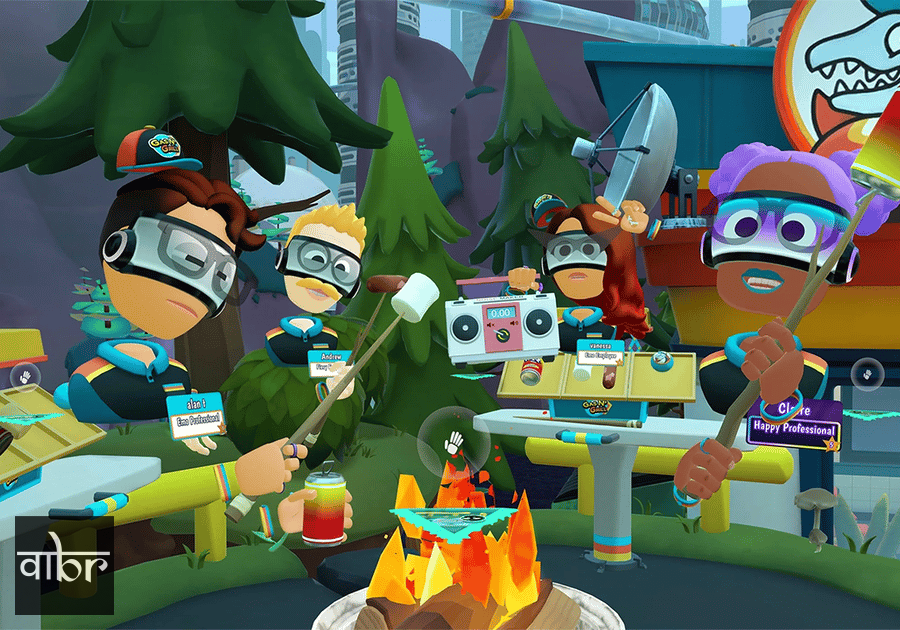
- Discover why virtual reality gaming struggles to expand. Owlchemy CEO explains how virtual reality gaming fails the cafe test and drives studio layoffs.
- Why VirtualReality Gaming Remains Trapped as an Emerging VR Market...
Why VirtualReality Gaming Remains Trapped as an Emerging VR Market
Virtual reality gaming has captivated technology enthusiasts and hard-core gamers for over a decade, promising a revolutionary leap beyond traditional flat screens. Yet, despite hardware advancements and billion-dollar investments by major tech conglomerates, the medium continues to fight for mainstream relevance. According to recent insights from Owlchemy Labs CEO Andrew Eiche, virtual reality gaming remains stubbornly categorized as an emerging vr market because it has continuously failed what he dubs the 'cafe test.'
As the broader interactive entertainment sector navigates a tumultuous era defined by budget cuts and studio closures, the intersection of virtual reality gaming and economic sustainability reveals deep structural issues. Eiche’s provocative commentary sheds light on a persistent industry blind spot: many studios build experiences that fail to meet consumers where they actually are. In this comprehensive deep dive, we examine why virtual reality gaming struggles to achieve ubiquitous cultural adoption, the systemic factors fueling ongoing vr industry layoffs, and what the future holds for this transformative yet fragile medium.
Deep Dive: Full Event Breakdown
The critique delivered by the leadership at owlchemy labs brings fresh urgency to ongoing discussions regarding the health and trajectory of spatial computing. During recent industry panels, Andrew Eiche articulated a compelling framework for evaluating mass-market viability. The core of his thesis centers around the 'cafe test'—a conceptual benchmark questioning whether a consumer could effortlessly slip on a headset in a public setting, such as a coffee shop, just as easily as they pop in wireless earbuds or pull out a smartphone.
Right now, virtual reality gaming fails this test miserably. Hardware bulk, intricate setup procedures, social awkwardness, and the complete occlusion of the user's physical surroundings create immense barriers to entry. When an emerging vr market relies on hardware that isolates users entirely from their immediate environment, spontaneous adoption becomes nearly impossible. Eiche points out that until hardware manufacturers and software architects solve this fundamental friction, virtual reality gaming will remain an enthusiast niche rather than a mass-market staple.
Furthermore, this hardware and psychological friction directly impacts commercial viability. When studios invest heavily in creating complex titles for an audience that cannot easily access or comfortably use the devices, financial returns fall short. This disconnect is a primary catalyst behind the wave of studio contractions and painful restructuring events affecting the broader landscape.
Industry Impact & Strategic Implications
The economic reality of developing interactive titles for an emerging vr market has grown increasingly grim. Across the board, vr industry layoffs have become commonplace, leaving many talented creators searching for stability. Eiche’s analysis highlights that these workforce reductions are not merely symptomatic of post-pandemic economic corrections; they are fundamentally tied to strategic miscalculations by leadership teams refusing to acknowledge consumer realities.
Many developers persist in designing games that clash with what audiences actually want, chasing high-end graphical fidelity or complex mechanical depth at the expense of accessibility and intuitive onboarding. In an emerging vr market, every layer of friction multiplied by steep hardware costs drives potential users away. When companies misread consumer demand, development budgets balloon while user acquisition stagnates. Consequently, venture capital dries up, leading directly to the distress and layoffs currently plaguing studios worldwide.
To reverse this trend, leadership across the sector must rethink their product strategies. Instead of forcing heavy, stationary mechanics into lightweight ecosystems, developers must align their creative visions with the pragmatic limitations of everyday players. Addressing consumer hardware friction through smarter design choices is no longer optional; it is a matter of survival.
Technical / Market Analysis
Analyzing the technical trajectory of virtual reality gaming reveals a persistent tug-of-war between raw processing capability and user comfort. Modern headsets have certainly evolved, offering higher resolution displays, inside-out tracking, and improved ergonomic designs. However, the foundational physics of wearing a display strapped directly to one's face have not changed. Thermal management, battery weight, and optical stack thickness continue to present formidable engineering hurdles.
From a market analysis perspective, the growth rate of virtual reality gaming has plateaued relative to mobile and traditional console gaming. While immersive tech trends occasionally spike following the release of landmark titles or discounted hardware bundles, retention rates often suffer. Users buy headsets, experience the initial novelty, and gradually let the devices gather dust on their shelves because the daily friction of engaging with virtual reality gaming outweighs the convenience.
For an emerging vr market to mature into a self-sustaining ecosystem, hardware must undergo a paradigm shift toward augmented reality integration or hyper-lightweight mixed reality formats. Until users can interact with virtual spaces without feeling disconnected from the real world or physically fatigued after thirty minutes, the market ceiling will remain stubbornly low.
What This Means for Consumers and Developers
For consumers, the current state of virtual reality gaming means navigating a landscape filled with incredible technical ambition offset by recurring software droughts and high hardware investment costs. Enthusiasts will undoubtedly continue supporting the medium, but casual gamers have little incentive to dive in.
For developers, the message from industry veterans like Andrew Eiche is a stark wake-up call. Game developer challenges in this space require unprecedented creativity. Teams must learn to craft engaging, bite-sized experiences that respect the user's time and physical comfort. Designing games that bypass traditional onboarding barriers and embrace intuitive interaction models will separate successful studios from those caught in future downsizing waves.
Key Takeaways
The Cafe Test: Virtual reality gaming fails public usability metrics because current hardware isolates users and lacks everyday convenience. Economic Realities: Persistent studio contractions and vr industry layoffs stem from misaligned development strategies and failing to meet actual consumer desires. Hardware Friction: Consumer hardware friction remains the single largest obstacle preventing the transition from a niche hobby to mass-market adoption. Strategic Shifts: Developers working within an emerging vr market must prioritize accessibility, intuitive design, and comfort over raw graphical complexity.
The Road Ahead
The journey toward sustainable mainstream success for virtual reality gaming is undeniably long and challenging. As industry leaders continue to debate hardware form factors and software design philosophies, the voice of experience from studios actively shipping titles remains invaluable. By confronting uncomfortable truths about consumer friction, market limitations, and economic sustainability, the sector can slowly build a foundation robust enough to weather future storms. Ultimately, passing the cafe test will not happen overnight, but acknowledging the distance remaining is the essential first step forward.
Strategic Industry Takeaways & Future Outlook
When evaluating the broader technological shift, virtual reality gaming serves as a defining benchmark for modern standards. Industry analysts emphasize that continuing developments in virtual reality gaming will dictate user adoption and market expansion.
When evaluating the broader technological shift, virtual reality gaming serves as a defining benchmark for modern standards. Industry analysts emphasize that continuing developments in virtual reality gaming will dictate user adoption and market expansion.
Furthermore, strategic integration surrounding emerging vr market remains a crucial priority for stakeholders. Ensuring high performance across emerging vr market is expected to deliver long-term competitive advantages.
Furthermore, strategic integration surrounding emerging vr market remains a crucial priority for stakeholders. Ensuring high performance across emerging vr market is expected to deliver long-term competitive advantages.
Furthermore, strategic integration surrounding emerging vr market remains a crucial priority for stakeholders. Ensuring high performance across emerging vr market is expected to deliver long-term competitive advantages.
Furthermore, strategic integration surrounding emerging vr market remains a crucial priority for stakeholders. Ensuring high performance across emerging vr market is expected to deliver long-term competitive advantages.
Furthermore, strategic integration surrounding emerging vr market remains a crucial priority for stakeholders. Ensuring high performance across emerging vr market is expected to deliver long-term competitive advantages.
Key factors influencing this sector also include vr cafe test , each playing an essential role in ongoing development and implementation.
📌 Related Briefings & Stories
Epic's Disney Project Embraces AI-First Development for Future Games Stop Doomscrolling With These Essential Digital Wellness Apps Today Solving Global Grid Disturbances: How Researchers Unlocked Power Drops
Varta Brief Team
· Newsroom DeskReported, verified, and published by the Varta Brief editorial desk with an uncompromising commitment to primary-source verification and independent journalism.
Related Dispatches
More in Technology →
Amazon Decart Acquisition Signals Bold Move to Challenge Nvidia AI Dominance
Amazon buys Decart for $7.5B to optimize Trainium silicon and reshuffle the Nvidia AI chip race across enterprise cloud computing infrastructure.

Nvidia Board Governance Tested as Jensen Huang Discloses Additional Affairs
A detailed investigation into how revelations around Jensen Huang leadership impact corporate stability, chip markets, and Nvidia's standing with investors.

GTA 6 Sets Historic Record as the Biggest Launch in PlayStation History
Discover how GTA 6 became the biggest launch in PlayStation history, shattering records and reshaping the modern gaming landscape with unprecedented sales.