Waymo Toyota Partnership Brings Autonomous Vehicles to Japan and UK
Discover how the Waymo Toyota partnership will deploy autonomous vehicles in Japan and the UK, transforming global autonomous driving markets.

Varta Brief Team
Friday, October 30, 2026
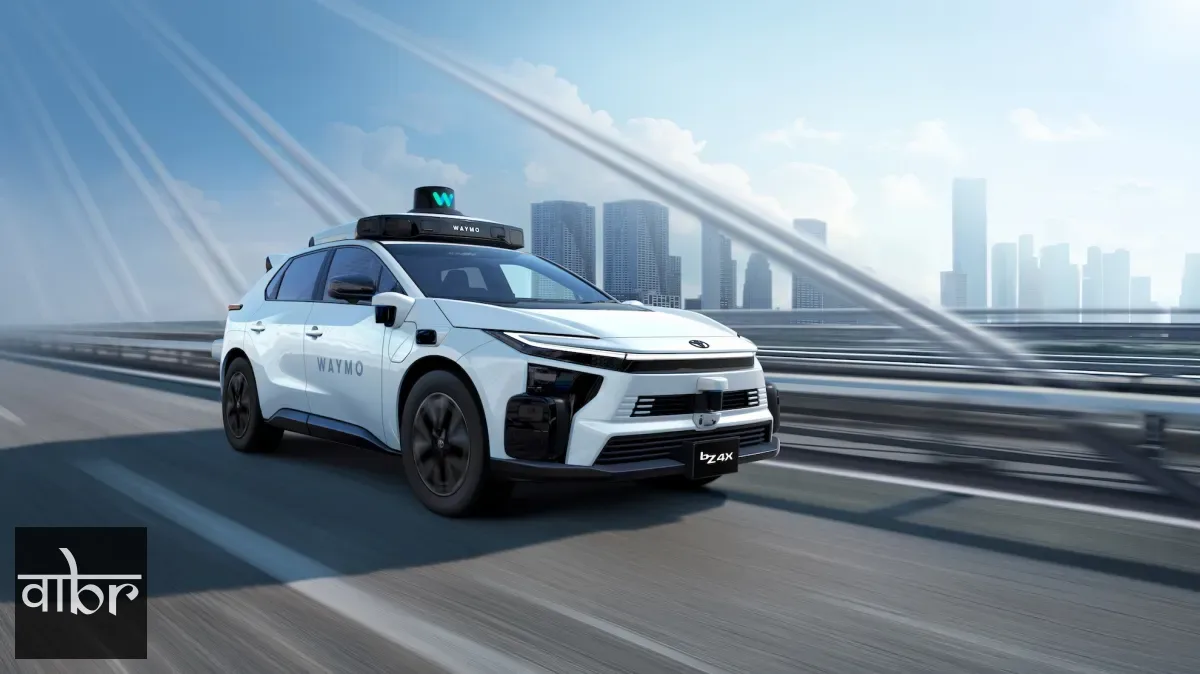
- Discover how the Waymo Toyota partnership will deploy autonomous vehicles in Japan and the UK, transforming global autonomous driving markets.
- Waymo Toyota Partnership Brings Autonomous Vehicles to Japan and UK...
Waymo Toyota Partnership Brings Autonomous Vehicles to Japan and UK
The landscape of global transportation is undergoing a profound structural evolution as software giants and legacy automotive manufacturers forge unprecedented alliances. In a landmark announcement that is set to reshape the future of urban mobility, Waymo has officially announced a massive strategic alliance with global automotive titan Toyota. Central to this monumental Waymo Toyota partnership is the integration of Waymo's cutting-edge autonomous driving technology into Toyota's popular electric platforms, specifically targeting international markets. Beginning next year, the initiative will introduce specialized autonomous vehicles onto public roads in Japan and the United Kingdom, marking a colossal milestone for robotaxi fleet expansion and global commercial deployment.
For years, critics and industry skeptics have questioned whether localized autonomy leaders could successfully scale their operations across international borders, given the complex regulatory hurdles, distinct road infrastructure, and unique driving behaviors found outside the United States. However, this new collaboration effectively bridges Silicon Valley's advanced software prowess with Nagoya's legendary manufacturing excellence. By leveraging the robust build quality of the Toyota bZ4X robotaxi platform, Waymo is positioning itself for a successful global rollout that bypasses the limitations of single-platform reliance. As urban planners and commuters alike look toward a future dominated by mobility as a service, this strategic synergy promises to redefine safety, efficiency, and passenger comfort on a global scale.
Deep Dive: Full Event Breakdown
The genesis of this transformative agreement stems from months of rigorous behind-the-scenes negotiations between Alphabet's self-driving division and Toyota Motor Corporation's advanced mobility engineering teams. Under the terms of the initial agreement, Waymo will begin testing modified, highly secure versions of Toyota's all-electric bZ4X SUV in controlled environments and designated public sectors in Japan starting next year. This phase will later expand to encompass rigorous UK robotaxi trials, marking a critical beachhead in the European market.
The technical blueprint of the program requires integrating Waymo's sixth-generation hardware suite—featuring advanced LiDAR, radar, and ultra-high-definition camera arrays—directly into the production pipeline of the Toyota bZ4X robotaxi. Unlike previous retrofitting approaches that required tearing down existing consumer vehicles, this collaboration involves deeper manufacturing-level integration. This ensures that the electrical architecture, thermal management systems, and safety redundancy protocols are natively optimized for the demanding compute loads required by modern autonomous vehicles.
Industry insiders note that Japan autonomous testing will initially focus on navigating dense urban centers characterized by intricate alleyways, complex pedestrian flows, and strict adherence to localized traffic laws. Concurrently, the subsequent UK robotaxi trials will tackle left-hand traffic configurations, providing Waymo's engineers with invaluable datasets regarding mirror-image driving environments. Through this comprehensive testing matrix, the Waymo Toyota partnership aims to prove that scalable autonomy can be deployed universally rather than remaining confined to select American cities like Phoenix, San Francisco, and Los Angeles.
Industry Impact & Strategic Implications
The ripple effects of the Waymo Toyota partnership will undoubtedly be felt across the entire automotive and tech sectors. For decades, traditional automakers viewed Silicon Valley tech firms with a mixture of apprehension and skepticism, often attempting to build proprietary autonomous driving technology internally with varying degrees of success. Many legacy car companies invested billions into autonomous driving technology only to encounter insurmountable software bottlenecks, soaring research and development costs, and fierce regulatory scrutiny. By teaming up with Waymo, Toyota has chosen a pragmatic path, outsourcing the complex perception and planning stack to an established market leader while focusing its immense manufacturing might on vehicle production and durability.
This strategic pivot is expected to trigger a wave of copycat alliances across the globe. Competitors who have lagged in software development will face mounting pressure to form similar coalitions with software giants, or risk being marginalized in an era where software-defined vehicles dominate consumer preference. Furthermore, this move accelerates Waymo international expansion significantly, transforming the company from a domestic American mobility provider into a formidable global superpower. As these autonomous vehicles hit international thoroughfares, municipal governments will be forced to accelerate their smart-city infrastructure investments, upgrading road markings, cellular communication networks, and digital signage to accommodate the needs of modern robotaxis.
Technical / Market Analysis
From a technical standpoint, adapting the Toyota bZ4X platform for fully driverless operations presents unique engineering challenges and rewards. The vehicle's battery electric architecture provides an ideal power envelope for high-draw compute hardware, minimizing the range anxiety that plagued earlier hybrid or internal combustion retrofits. However, achieving Level 4 autonomy requires rigorous fail-operational steering, braking, and power supply systems. The engineering teams within the Waymo Toyota partnership have reportedly developed proprietary secondary redundancy networks to ensure that if a primary system encounters a fault, the vehicle can execute a safe maneuver or pull over smoothly without human intervention.
From a market valuation perspective, the integration of electric vehicle autonomous tech into mainstream crossover platforms lowers the per-unit deployment cost substantially. Mass-manufacturing efficiencies derived from Toyota's legendary production lines mean that the capital expenditure required for each vehicle in the robotaxi fleet expansion will be drastically lower than previous boutique builds. As economies of scale kick in, the unit economics of operating a driverless taxi service in densely populated international megacities become increasingly attractive, paving the way for sustainable long-term profitability and widespread commercialization.
What This Means for Consumers and Developers
For everyday consumers in Tokyo, London, and surrounding metropolitan areas, the arrival of these autonomous vehicles signals the dawn of a safer, more reliable, and ultimately more affordable commuting paradigm. Traffic congestion, parking scarcity, and rising transportation costs have long plagued urban dwellers; the introduction of an efficient on-demand robotaxi service promises to alleviate these pressures. Passengers will experience state-of-the-art cabin interiors equipped with intuitive infotainment controls, climate management, and seamless app-based hailing capabilities, all backed by a safety record that consistently outperforms human drivers.
For software developers and AI engineers, the expansion into international territories opens up vast new horizons for machine learning research. Training autonomous systems to navigate the unpredictable nuances of British roundabouts or the ultra-dense pedestrian walkways of Japanese shopping districts generates invaluable edge-case data. This continuous feedback loop ensures that the underlying neural networks grow smarter, more adaptable, and more resilient with every mile driven.
Key Takeaways (Detailed bullet points)
Strategic Alliance: The groundbreaking Waymo Toyota partnership combines Waymo's world-class autonomy software with Toyota's peerless vehicle manufacturing expertise. Initial Rollout: Testing of the modified Toyota bZ4X platform is scheduled to commence in Japan next year, followed closely by rigorous trials in the United Kingdom. Technical Excellence: The initiative utilizes advanced manufacturing-level integration to ensure deep hardware compatibility, robust power management, and fail-operational safety redundancies. Global Scale: This move marks a definitive turning point for Waymo international expansion, proving that safe urban autonomy can cross international borders and adapt to diverse regulatory frameworks. Economic Efficiency: Leveraging mass-market electric vehicle platforms significantly reduces per-unit costs, accelerating the financial viability of commercial robotaxi deployments worldwide.
The Road Ahead (Forward-looking conclusion)
As the ink dries on this historic agreement, the automotive and technology worlds stand on the precipice of a new era. The convergence of hardware manufacturing and software intelligence through the Waymo Toyota partnership demonstrates that the future of transportation is inherently collaborative. By addressing the logistical complexities of international markets head-on, Waymo and Toyota are not merely launching a new fleet of robotaxis; they are establishing the universal blueprint for how humanity will move, commute, and interact with urban environments in the decades to come. As testing begins next year, all eyes will be locked on the streets of Japan and the UK, watching as the next chapter of autonomous mobility unfolds in real time.
Strategic Industry Takeaways & Future Outlook
When evaluating the broader technological shift, Waymo Toyota partnership serves as a defining benchmark for modern standards. Industry analysts emphasize that continuing developments in Waymo Toyota partnership will dictate user adoption and market expansion.
When evaluating the broader technological shift, Waymo Toyota partnership serves as a defining benchmark for modern standards. Industry analysts emphasize that continuing developments in Waymo Toyota partnership will dictate user adoption and market expansion.
When evaluating the broader technological shift, Waymo Toyota partnership serves as a defining benchmark for modern standards. Industry analysts emphasize that continuing developments in Waymo Toyota partnership will dictate user adoption and market expansion.
When evaluating the broader technological shift, Waymo Toyota partnership serves as a defining benchmark for modern standards. Industry analysts emphasize that continuing developments in Waymo Toyota partnership will dictate user adoption and market expansion.
When evaluating the broader technological shift, Waymo Toyota partnership serves as a defining benchmark for modern standards. Industry analysts emphasize that continuing developments in Waymo Toyota partnership will dictate user adoption and market expansion.
When evaluating the broader technological shift, Waymo Toyota partnership serves as a defining benchmark for modern standards. Industry analysts emphasize that continuing developments in Waymo Toyota partnership will dictate user adoption and market expansion.
Furthermore, strategic integration surrounding autonomous vehicles remains a crucial priority for stakeholders. Ensuring high performance across autonomous vehicles is expected to deliver long-term competitive advantages.
Furthermore, strategic integration surrounding autonomous vehicles remains a crucial priority for stakeholders. Ensuring high performance across autonomous vehicles is expected to deliver long-term competitive advantages.
Furthermore, strategic integration surrounding autonomous vehicles remains a crucial priority for stakeholders. Ensuring high performance across autonomous vehicles is expected to deliver long-term competitive advantages.
Furthermore, strategic integration surrounding autonomous vehicles remains a crucial priority for stakeholders. Ensuring high performance across autonomous vehicles is expected to deliver long-term competitive advantages.
Furthermore, strategic integration surrounding autonomous vehicles remains a crucial priority for stakeholders. Ensuring high performance across autonomous vehicles is expected to deliver long-term competitive advantages.
Furthermore, strategic integration surrounding autonomous vehicles remains a crucial priority for stakeholders. Ensuring high performance across autonomous vehicles is expected to deliver long-term competitive advantages.
Furthermore, strategic integration surrounding autonomous vehicles remains a crucial priority for stakeholders. Ensuring high performance across autonomous vehicles is expected to deliver long-term competitive advantages.
📌 Related Briefings & Stories
Malaysia Considers Strict Online Gaming Rules for Roblox Apple Adapts macOS Controls for Touch Input on MacBook Pro Ex-Palantir Execs Launch Dream With $17M a16z Funding For AI World Models
Varta Brief Team
· Newsroom DeskReported, verified, and published by the Varta Brief editorial desk with an uncompromising commitment to primary-source verification and independent journalism.
Related Dispatches
More in Technology →
Amazon Decart Acquisition Signals Bold Move to Challenge Nvidia AI Dominance
Amazon buys Decart for $7.5B to optimize Trainium silicon and reshuffle the Nvidia AI chip race across enterprise cloud computing infrastructure.

Nvidia Board Governance Tested as Jensen Huang Discloses Additional Affairs
A detailed investigation into how revelations around Jensen Huang leadership impact corporate stability, chip markets, and Nvidia's standing with investors.

GTA 6 Sets Historic Record as the Biggest Launch in PlayStation History
Discover how GTA 6 became the biggest launch in PlayStation history, shattering records and reshaping the modern gaming landscape with unprecedented sales.