AI Voice Cloning Reclaims Geralt in The Witcher 3 After Stroke
Discover how AI voice cloning helped Polish voice actor Jacek Rozenek reprise his legendary role as Geralt in The Witcher 3 after a stroke.

Varta Brief Team
Sunday, November 15, 2026
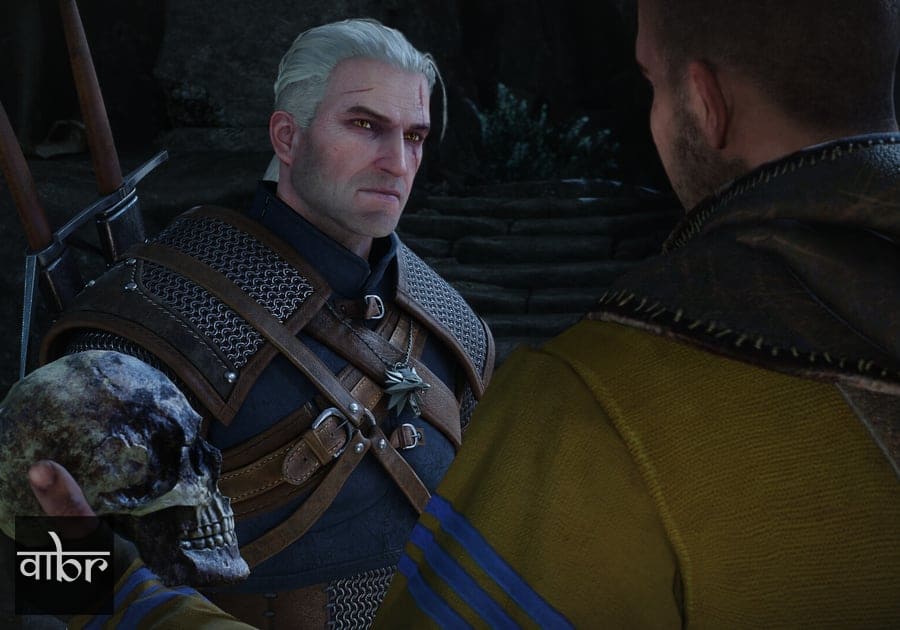
- Discover how AI voice cloning helped Polish voice actor Jacek Rozenek reprise his legendary role as Geralt in The Witcher 3 after a stroke.
- AI Voice Cloning Reclaims Geralt in The Witcher 3 After Stroke...
AI Voice Cloning Reclaims Geralt in The Witcher 3 After Stroke
In the rapidly evolving landscape of video game development, the convergence of human artistry and machine learning has sparked intense global debate. Yet, beyond the commercial anxieties and union strikes, a profound human narrative has emerged from Poland. When legendary Polish voice actor Jacek Rozenek suffered a debilitating stroke that fundamentally altered his speech patterns, the iconic role of the White Wolf in The Witcher 3 seemed permanently closed to him. However, cutting-edge technology intervened. Through the ethical application of AI voice cloning, Rozenek successfully returned to his signature role in The Witcher 3 expansions, paving a compassionate new pathway for voice actor health and digital preservation.
This landmark development transcends a simple technological milestone; it redefines how the industry handles disability, career longevity, and creative continuity. As studios continuously seek innovative ways to scale production, this specific implementation of AI voice cloning in The Witcher 3 demonstrates that artificial intelligence can serve as a therapeutic bridge rather than a wholesale replacement for human talent. By securing explicit consent and actively collaborating with the original artist, developers have established a blueprint for respectful, artist-centered synthetic media usage.
Deep Dive: Full Event Breakdown
Jacek Rozenek is widely celebrated by Polish gamers as the definitive voice of Geralt of Rivia. His gravelly, authoritative delivery defined the atmospheric depth of The Witcher 3. Tragedy struck when Rozenek experienced a severe stroke, which left him with significant physical challenges that directly impacted his vocal capabilities. For many performers, such a medical emergency spells the definitive end of a voice-acting career, particularly for demanding roles requiring intense emotional projection and physical stamina.
Rather than casting an entirely new actor—which would have created a jarring discontinuity for Polish fans deeply attached to Rozenek’s interpretation—CD Projekt Red and allied audio production teams explored pioneering avenues. Utilizing advanced AI voice cloning models trained on archival recordings of Rozenek's pristine performances, engineers were able to reconstruct new dialogue lines. Crucially, this was not done behind closed doors or through exploitative scraping. Rozenek gave full, informed consent, working hand-in-hand with technicians to ensure the synthesized lines maintained his emotional cadence, artistic intent, and unmistakable persona within The Witcher 3 universe.
The process required meticulous oversight. Generative artificial intelligence models ingested historical audio files, allowing neural audio synthesis to map the unique timbre of Rozenek's voice. When new lines were recorded—often with Rozenek providing modified vocalizations or guiding the inflection—the AI architecture translated these inputs into the classic Geralt tone. This harmonious blend of human direction and technological scaffolding ensured that The Witcher 3 maintained its artistic integrity without compromising the dignity of its original star.
Industry Impact & Strategic Implications
The implementation of AI voice cloning inside a AAA masterwork like The Witcher 3 arrives at a pivotal crossroads for the interactive entertainment sector. For years, labor unions and industry guilds have raised alarm bells regarding generative artificial intelligence, fearing that studios will utilize digital replicas to undercut living wages, eliminate background talent, and bypass fair compensation structures.
However, the Rozenek case study provides a compelling counter-narrative, illustrating how AI voice cloning can be utilized ethically to champion voice actor health and career preservation. Instead of displacing a healthy worker, the technology acted as an assistive medical and creative device, allowing a beloved artist to retain ownership of his professional identity despite physical adversity. This nuance is critical for industry strategists mapping out future video game localization and narrative expansion projects.
Major studios are now re-evaluating their legal and ethical frameworks concerning synthetic media. Where previously blanket bans or unbridled adoption were the dominant industry postures, nuanced consent models are taking root. If executed with transparency, fair remuneration, and direct artist participation, AI voice cloning can secure a performer's digital legacy while protecting them from unauthorized exploitation.
Technical / Market Analysis
From a technical standpoint, the deployment of neural audio synthesis in The Witcher 3 highlights the astonishing maturation of modern speech-to-speech and text-to-speech architectures. Replicating a gritty, nuanced fantasy protagonist requires far more than basic pitch-shifting; it demands sophisticated understanding of micro-pauses, emotional resonance, breath control, and gravel texture.
Market analysts note that the demand for scalable voice generation is skyrocketing. Video game localization pipelines, in particular, face immense financial and logistical bottlenecks when translating massive open-world RPGs into dozens of languages. While automated dubbing often sounds robotic and sterile, hybrid workflows—where human artists guide sophisticated AI models—are proving to be commercially viable and critically acceptable.
Furthermore, the valuation of voice actor portfolios is shifting. Performers are beginning to view their vocal data not merely as temporary work-for-hire assets, but as proprietary intellectual property. Licensing agreements for AI voice cloning are becoming standard legal battlegrounds, with agents fighting to ensure that artists retain veto power over how their digital replicas are deployed across future iterations of franchises like The Witcher 3.
What This Means for Consumers and Developers
For consumers, the successful return of Jacek Rozenek via AI voice cloning in The Witcher 3 offers a deeply emotional victory. Fans feared losing the iconic voice that anchored hundreds of hours of gameplay. Knowing that the original artist consented to and guided this technological resurrection fosters a sense of trust between the player base and the development studio.
For developers, the takeaway is clear: transparency and consent are paramount. Synthetic media ethics cannot be an afterthought. Studios that adopt collaborative, artist-first policies will mitigate public backlash and foster goodwill, whereas predatory attempts to clone voices without permission will continue to face fierce resistance from unions, consumers, and legal bodies.
Key Takeaways (Detailed bullet points)
Consensual Technological Restoration: Jacek Rozenek provided full, informed consent for AI voice cloning, ensuring his artistic autonomy was fully respected. Medical and Career Resilience: The application within The Witcher 3 demonstrates how AI can assist performers facing health setbacks rather than simply displacing them. Nuanced Industry Standards: The case sets a powerful precedent for synthetic media ethics, contrasting sharply with exploitative, non-consensual AI cloning practices. Quality and Continuity: Neural audio synthesis preserved the iconic tone of Geralt, maintaining seamless immersion for fans of The Witcher 3.
The Road Ahead (Forward-looking conclusion)
The integration of AI voice cloning into a masterpiece like The Witcher 3 marks an unalterable turning point for interactive storytelling. As the technology continues to advance, the entertainment industry must codify rigorous legal protections that prioritize human artists while embracing innovative accessibility tools. By following the collaborative, respectful blueprint established by Jacek Rozenek and his production team, developers can forge a future where technology heals, preserves, and elevates human creativity rather than rendering it obsolete.
Strategic Industry Takeaways & Future Outlook
When evaluating the broader technological shift, AI voice cloning serves as a defining benchmark for modern standards. Industry analysts emphasize that continuing developments in AI voice cloning will dictate user adoption and market expansion.
When evaluating the broader technological shift, AI voice cloning serves as a defining benchmark for modern standards. Industry analysts emphasize that continuing developments in AI voice cloning will dictate user adoption and market expansion.
When evaluating the broader technological shift, AI voice cloning serves as a defining benchmark for modern standards. Industry analysts emphasize that continuing developments in AI voice cloning will dictate user adoption and market expansion.
Furthermore, strategic integration surrounding The Witcher 3 remains a crucial priority for stakeholders. Ensuring high performance across The Witcher 3 is expected to deliver long-term competitive advantages.
Furthermore, strategic integration surrounding The Witcher 3 remains a crucial priority for stakeholders. Ensuring high performance across The Witcher 3 is expected to deliver long-term competitive advantages.
📌 Related Briefings & Stories
Uncovering Indie Game Development Secrets Behind Dressmaker's Success Digital Fairness Act Threatens Free-To-Play Games in EU Market Is Bad News For Jensen Huang Also Bad News For The AI Industry?
Varta Brief Team
· Newsroom DeskReported, verified, and published by the Varta Brief editorial desk with an uncompromising commitment to primary-source verification and independent journalism.
Related Dispatches
More in Technology →
Amazon Decart Acquisition Signals Bold Move to Challenge Nvidia AI Dominance
Amazon buys Decart for $7.5B to optimize Trainium silicon and reshuffle the Nvidia AI chip race across enterprise cloud computing infrastructure.

Nvidia Board Governance Tested as Jensen Huang Discloses Additional Affairs
A detailed investigation into how revelations around Jensen Huang leadership impact corporate stability, chip markets, and Nvidia's standing with investors.

GTA 6 Sets Historic Record as the Biggest Launch in PlayStation History
Discover how GTA 6 became the biggest launch in PlayStation history, shattering records and reshaping the modern gaming landscape with unprecedented sales.