AI Voice Replication in Gaming: The Witcher 3 Case Study
Discover how AI voice replication in gaming allowed Jacek Rozenek to return as Geralt in The Witcher 3 after a stroke. Ethics, tech, and future impact.

Varta Brief Team
Monday, November 23, 2026
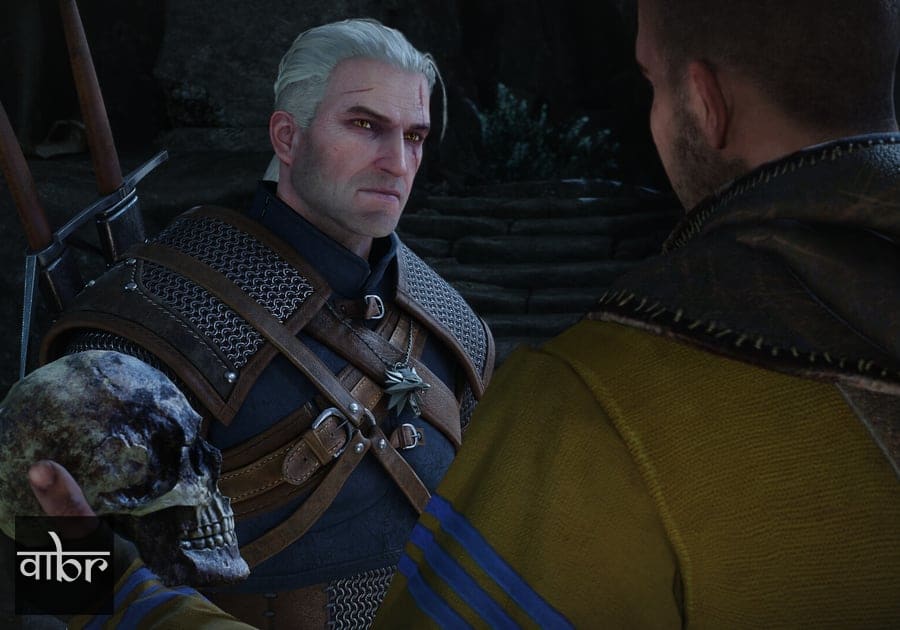
- Discover how AI voice replication in gaming allowed Jacek Rozenek to return as Geralt in The Witcher 3 after a stroke. Ethics, tech, and future impact.
- AI Voice Replication in Gaming: The Witcher 3 Case Study...
AI Voice Replication in Gaming: The Witcher 3 Case Study
In the rapidly evolving landscape of interactive entertainment, few intersections between human artistry and machine learning have sparked as much profound debate as AI voice replication in gaming. While the industry frequently approaches automated audio with skepticism, a groundbreaking development involving CD Projekt Red showcases a compassionate, highly nuanced application of this technology. When iconic Witcher 3 voice actor Jacek Rozenek suffered a debilitating stroke that threatened to permanently sideline his career, fans and creators alike feared the legendary monster slayer would never speak with his familiar Polish timbre again. However, through mutual consent, technical innovation, and careful oversight, developers utilized advanced AI voice replication in gaming to bring Rozenek back for the game's expansion.
This landmark event challenges standard narratives surrounding synthetic media. Rather than displacing a healthy performer, AI voice replication in gaming served as a restorative bridge, enabling a beloved artist to reclaim his signature role. As we analyze this monumental achievement through an investigative lens, we explore how CD Projekt Red navigated technical hurdles, ethical boundaries, and the future of voice performance in modern AAA video game development.
Deep Dive: Full Event Breakdown
The genesis of this story lies in a personal health crisis that shook the Polish gaming community. Jacek Rozenek, whose gravelly, authoritative delivery defined Geralt of Rivia for millions of Polish-speaking fans, suffered a severe stroke. The medical emergency drastically impacted his speech faculties, making traditional recording sessions physically impossible. For any other project, a studio might have recast the role outright, losing an irreplaceable artistic identity. However, CD Projekt Red and Rozenek explored an unprecedented alternative leveraging AI voice replication in gaming.
Working closely with the actor, who fully consented and actively participated in the process, the production team utilized existing archival vocal data alongside newly feasible utterances to train a specialized neural network. The primary objective of utilizing AI voice replication in gaming here was not to cut costs or bypass talent unions, but to preserve Rozenek's artistic legacy and personal livelihood. The process required immense precision. Sound engineers fed cleaned archival samples of the Witcher 3 voice actor into machine learning algorithms, meticulously tweaking cadence, inflection, and emotional resonance to match the intense tone required for Geralt.
The resulting performance was seamlessly integrated into the expansion, fooling even die-hard fans who could not distinguish between the pre-stroke archival recordings and the synthetically assisted output. This case study stands apart because the original Witcher 3 voice actor retained total creative control and financial compensation, setting a gold standard for consent-driven synthetic voice production.
Industry Impact & Strategic Implications
The broader games industry is currently grappling with widespread anxiety regarding automated media tools. Voice actors worldwide have staged walkouts and demanded robust protections against unauthorized cloning. Yet, the successful deployment of AI voice replication in gaming in this specific context proves that the technology holds immense therapeutic and restorative potential.
When examining the strategic implications for studios, executives must recognize that AI voice replication in gaming transcends simple cost-efficiency. It opens new avenues for accessibility, localization, and continuity. If a performer falls ill, passes away, or experiences vocal strain during a multi-year development cycle, studios now have a technological precedent to maintain creative continuity without exploiting labor. Nevertheless, the industry must institute strict regulatory frameworks to ensure that the empowering nature of AI voice replication in gaming does not devolve into predatory corporate cost-cutting.
Labor unions and talent agencies are watching these developments closely. The success of this project hinges entirely on voluntary participation. If future implementations follow this collaborative blueprint, we could witness a harmonious era where synthetic tools protect performers rather than threaten them.
Technical / Market Analysis
From a technical standpoint, implementing AI voice replication in gaming requires sophisticated neural voice synthesis models capable of mapping subtle phonetic nuances. Generating a convincing fantasy protagonist involves far more than stringing words together; it demands variable grit, heavy breathing sounds, combat grunts, and dynamic emotional shifts ranging from cynical weariness to fierce determination.
Market analysts note that the audio production sector within game development is undergoing a massive valuation shift. Tools supporting AI voice replication in gaming are attracting millions in venture capital and internal research budgets. Companies specializing in voice cloning ethics and secure digital vocal assets are suddenly among the most sought-after partners for major publishers. CD Projekt Red's gamble demonstrates that when executed with top-tier technical fidelity, consumers embrace the output enthusiastically, provided transparency and fairness guide the production pipeline.
Furthermore, the Polish voiceover market has gained unprecedented global attention. By demonstrating that sophisticated machine learning can honor local talent rather than replace it with generic English-to-foreign translations or cheap substitutes, this project elevates the standard for localized gaming content across Eastern Europe and beyond.
What This Means for Consumers and Developers
For consumers, the takeaway is clear: the future of interactive storytelling will increasingly blend human performance with advanced computational assistance. As game development technology advances, players should expect more projects to explore synthetic vocal augmentation for medical accommodations, dynamic NPC generation, and expansive dialogue trees.
For developers, the mandate is equally clear. Transparency, consent, and compensation must remain at the forefront of any audio pipeline utilizing machine learning. Ignoring the human element will inevitably lead to severe consumer backlash and legal liabilities. By treating synthetic audio as an extension of the artist rather than a replacement, studios can build greater trust with their communities.
Key Takeaways (Detailed bullet ponds)
Restorative Power: AI voice replication in gaming allowed Jacek Rozenek to reprise his iconic role after suffering a career-threatening stroke. Unprecedented Consent: The project relied entirely on the informed consent and active collaboration of the original Witcher 3 voice actor, setting a vital industry benchmark. Technical Precision: Advanced neural audio models successfully replicated Geralt's signature gravelly tone, combat grunts, and emotional cadence. Labor Protection: Experts emphasize that voice cloning ethics must prioritize artist compensation and creative control to prevent industry exploitation. Market Growth: Investment in cutting-edge audio production and synthetic voice tools is accelerating rapidly across the AAA development sector.
The Road Ahead (Forward-looking conclusion)
The integration of machine learning into creative fields is no longer a distant sci-fi scenario; it is an active reality shaping today's blockbusters. The story of Jacek Rozenek and CD Projekt Red proves that technology can be harnessed for empathy and preservation rather than mere disruption. As game developers look toward the next generation of hardware and software, the lessons learned from this Polish voiceover milestone will guide best practices worldwide. By honoring the human soul behind the digital performance, the industry can step confidently into a future where innovation and artistic integrity walk hand in hand.
Strategic Industry Takeaways & Future Outlook
When evaluating the broader technological shift, AI voice replication in gaming serves as a defining benchmark for modern standards. Industry analysts emphasize that continuing developments in AI voice replication in gaming will dictate user adoption and market expansion.
When evaluating the broader technological shift, AI voice replication in gaming serves as a defining benchmark for modern standards. Industry analysts emphasize that continuing developments in AI voice replication in gaming will dictate user adoption and market expansion.
When evaluating the broader technological shift, AI voice replication in gaming serves as a defining benchmark for modern standards. Industry analysts emphasize that continuing developments in AI voice replication in gaming will dictate user adoption and market expansion.
Furthermore, strategic integration surrounding Witcher 3 voice actor remains a crucial priority for stakeholders. Ensuring high performance across Witcher 3 voice actor is expected to deliver long-term competitive advantages.
Furthermore, strategic integration surrounding Witcher 3 voice actor remains a crucial priority for stakeholders. Ensuring high performance across Witcher 3 voice actor is expected to deliver long-term competitive advantages.
Furthermore, strategic integration surrounding Witcher 3 voice actor remains a crucial priority for stakeholders. Ensuring high performance across Witcher 3 voice actor is expected to deliver long-term competitive advantages.
Furthermore, strategic integration surrounding Witcher 3 voice actor remains a crucial priority for stakeholders. Ensuring high performance across Witcher 3 voice actor is expected to deliver long-term competitive advantages.
Furthermore, strategic integration surrounding Witcher 3 voice actor remains a crucial priority for stakeholders. Ensuring high performance across Witcher 3 voice actor is expected to deliver long-term competitive advantages.
Furthermore, strategic integration surrounding Witcher 3 voice actor remains a crucial priority for stakeholders. Ensuring high performance across Witcher 3 voice actor is expected to deliver long-term competitive advantages.
Furthermore, strategic integration surrounding Witcher 3 voice actor remains a crucial priority for stakeholders. Ensuring high performance across Witcher 3 voice actor is expected to deliver long-term competitive advantages.
Key factors influencing this sector also include Jacek Rozenek stroke , CD Projekt Red AI , synthetic voice acting , each playing an essential role in ongoing development and implementation.
📌 Related Briefings & Stories
Inside the Development Secrets of Dressmaker With Ruan Rothmann Digital Fairness Act Threatens Free-To-Play Games Across Global Markets Inside Anthropic Investment Strategies Before the Massive IPO
Varta Brief Team
· Newsroom DeskReported, verified, and published by the Varta Brief editorial desk with an uncompromising commitment to primary-source verification and independent journalism.
Related Dispatches
More in Technology →
CORTAO Ambient Occlusion Transforms EVE: Frontier and Indie Development
Discover how CORTAO ambient occlusion, featured in EVE: Frontier, empowers indie developers with high-end real-time rendering and advanced graphics tech.

Aliens Leaving Netflix: Why James Cameron's Sci-Fi Masterpiece Is Disappearing
Discover why Aliens leaving Netflix is shaking up streaming. Explore the digital distribution landscape as James Cameron's sci-fi masterpiece departs.

Uber Recorded Rides Debut: How Default Video Safety Changes Commuting
Discover how Uber Recorded Rides and default video safety features are transforming passenger security and modern urban commuting landscapes.