Export-Banned Nvidia Chips Fuel China's Most Powerful AI Models
New investigative findings reveal export-banned Nvidia chips are powering China's most advanced AI models, threatening global trade policies and tech dominance.

Varta Brief Team
Sunday, November 15, 2026
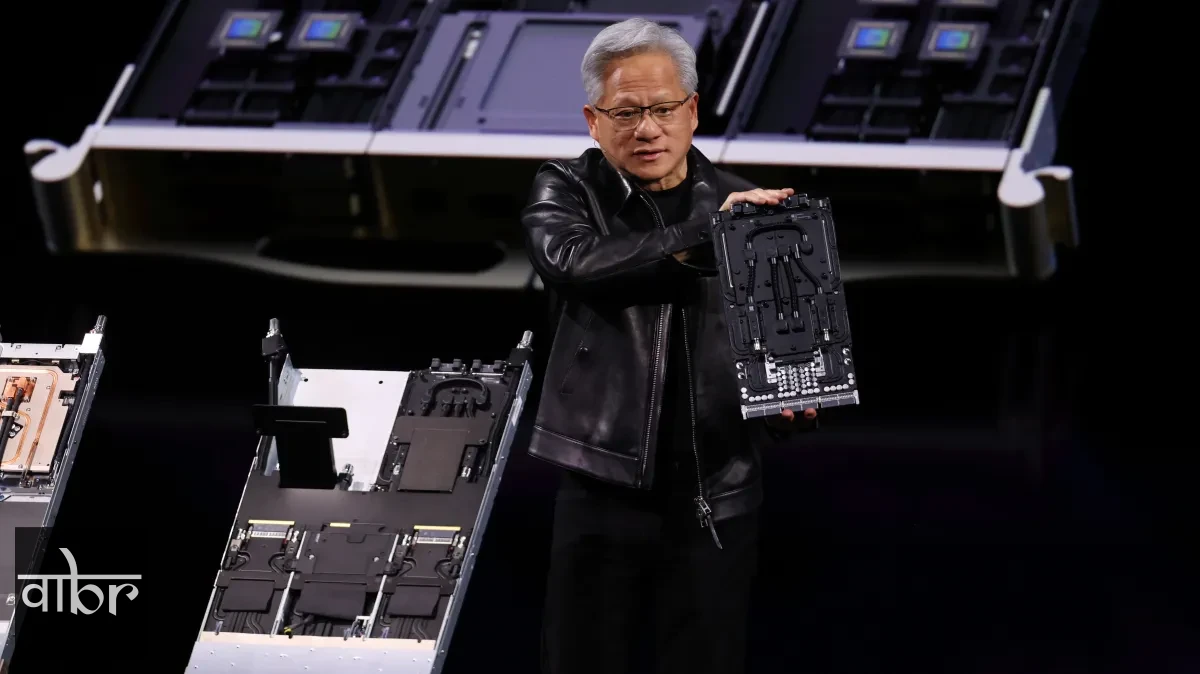
- New investigative findings reveal export-banned Nvidia chips are powering China's most advanced AI models, threatening global trade policies and tech dominance.
- Export-Banned Nvidia Chips Fuel China's Most Powerful AI Models...
Export-Banned Nvidia Chips Fuel China's Most Powerful AI Models
Recent revelations across the global tech sector have confirmed a startling reality: export-banned Nvidia chips are actively driving the development of the most sophisticated China AI models seen to date. Despite aggressive federal controls and tightening regulatory frameworks implemented by Washington lawmakers, state-of-the-art neural networks within mainland laboratories continue to rely heavily on restricted graphics processing units. This ongoing phenomenon has sent shockwaves through Silicon Valley, prompting intense scrutiny over supply chain vulnerabilities and the true efficacy of modern semiconductor sanctions.
The implications of these findings extend far beyond corporate compliance. As the geopolitical race for technological supremacy accelerates, the presence of export-banned Nvidia chips inside major computing clusters challenges the foundational premises of American foreign policy. How advanced engineering teams managed to procure, assemble, and operate these restricted components at scale remains a central question for industry analysts and intelligence agencies alike. The rise of these cutting-edge China AI models demonstrates an extraordinary level of resilience within foreign research and development ecosystems, proving that technological innovation can adapt even under severe hardware restrictions.
Deep Dive: Full Event Breakdown
The narrative surrounding semiconductor trade controls has always centered on containment. When regulatory bodies introduced strict limitations targeting high-performance processors, the core objective was starving foreign competitors of the silicon necessary to train next-generation artificial intelligence systems. However, investigative reports and technical audits indicate that export-banned Nvidia chips have continuously found their way into clandestine server farms. Through elaborate intermediary networks, grey-market distribution channels, and decentralized procurement strategies, state-backed entities bypassed standard compliance checks.
These export-banned Nvidia chips form the computational backbone for several prominent China AI models that currently rival Western counterparts in natural language processing, computer vision, and multimodal reasoning. Observers note that while the acquisition process involves immense logistical hurdles and inflated capital costs, the strategic necessity of maintaining computational parity has justified the expense. Consequently, the deployment of export-banned Nvidia chips has allowed domestic laboratories to bypass the lag typically associated with domestic silicon alternatives, keeping their leading China AI models competitive on the global stage.
Industry Impact & Strategic Implications
The revelation that export-banned Nvidia chips are operating at the core of major China AI models places immense pressure on corporate leadership and federal regulators. For Jensen Huang and other industry executives, these developments complicate corporate positioning regarding global compliance and market access. While public statements emphasize strict adherence to trade laws, the widespread circulation of export-banned Nvidia chips highlights the limits of corporate oversight when secondary and tertiary markets are involved.
Furthermore, the long-term viability of current US trade policy faces severe questioning. If export-banned Nvidia chips can be successfully integrated into massive training clusters without immediate detection, policymakers must reevaluate how hardware restrictions are enforced. The competitive advantage that these export-banned Nvidia chips provide to emerging China AI models threatens to erode the technological lead long held by Western developers, altering the economic landscape of artificial intelligence for years to come.
Technical / Market Analysis
From a technical perspective, training frontier artificial intelligence architectures requires monumental computational throughput, massive memory bandwidth, and low-latency interconnects. Alternative domestic silicon options within the region have historically struggled to match the efficiency and software ecosystem maturity of established hardware. This performance gap explains why procuring export-banned Nvidia chips remains a top priority for developers building advanced China AI models.
Market analysts suggest that the persistent demand for export-banned Nvidia chips has created a lucrative shadow economy. Prices for these restricted components routinely command massive premiums on secondary exchanges. Despite the financial burden, the return on investment for training competitive China AI models outweighs the initial acquisition costs. As long as export-banned Nvidia chips deliver superior training speeds and seamless software compatibility, the underground supply chain is expected to persist, adapting dynamically to every new regulatory tweak.
What This Means for Consumers and Developers
For everyday consumers and independent software developers, the ongoing saga surrounding export-banned Nvidia chips and elite China AI models signals a fractured technological ecosystem. Rather than a unified global standard for artificial intelligence research, we are witnessing the entrenchment of distinct regional technological blocks. Developers operating within different jurisdictions must navigate divergent compliance mandates, hardware availability issues, and API standards.
Moreover, the competitive pressure exerted by these efficient China AI models is driving Western companies to innovate faster, potentially accelerating the overall pace of artificial intelligence breakthroughs. However, it also introduces fragmentation, security concerns regarding supply chain integrity, and potential vulnerabilities within enterprise infrastructure that relies on components of uncertain provenance. The presence of export-banned Nvidia chips ensures that hardware pedigree will remain a central point of audit for global tech deployment.
Key Takeaways (Detailed bullet points)
Pivotal Findings: Investigative research confirms that export-banned Nvidia chips are actively powering the most advanced China AI models. Regulatory Challenges: Current semiconductor sanctions face severe implementation hurdles due to complex grey-market distribution networks and covert procurement methods. Competitive Advantage: Despite strict hardware restrictions, developers utilizing export-banned Nvidia chips maintain performance parity with leading Western artificial intelligence systems. Economic Realities: The high cost of acquiring export-banned Nvidia chips through alternative channels is offset by the critical need to maintain leadership in China AI models. Industry Pressure: Corporate leadership and federal regulators face renewed scrutiny regarding the effectiveness of existing trade policies and supply chain oversight.
The Road Ahead (Forward-looking conclusion)
As the geopolitical landscape of artificial intelligence continues to shift, the reliance on export-banned Nvidia chips by foreign laboratories serves as a sobering reminder of the limits of hardware containment. Policymakers are expected to introduce even more aggressive monitoring frameworks, potentially encompassing stricter end-user verification and real-time telemetry for high-performance processors. Yet, as history has repeatedly shown, technical ingenuity often finds pathways around bureaucratic barriers.
The race to dominate the future of artificial intelligence will not be decided by legislation alone, but by the resilience, adaptability, and resourcefulness of engineering teams worldwide. Whether future regulatory measures can successfully curb the flow of export-banned Nvidia chips remains to be seen, but one reality is clear: the evolution of top-tier China AI models will continue to challenge assumptions, reshape global markets, and redefine the boundaries of international technology competition.
Strategic Industry Takeaways & Future Outlook
Furthermore, strategic integration surrounding China AI models remains a crucial priority for stakeholders. Ensuring high performance across China AI models is expected to deliver long-term competitive advantages.
Furthermore, strategic integration surrounding China AI models remains a crucial priority for stakeholders. Ensuring high performance across China AI models is expected to deliver long-term competitive advantages.
Key factors influencing this sector also include GPU smuggling , each playing an essential role in ongoing development and implementation.
📌 Related Briefings & Stories
LangChain Hits $3B Valuation as Enterprise AI Agent Adoption Explodes Floating Data Centers Powered by Ocean Heat Are Coming Soon Flaming Hydras Kickstarter Campaign Rethinks E-Book Ownership and Digital Lending
Varta Brief Team
· Newsroom DeskReported, verified, and published by the Varta Brief editorial desk with an uncompromising commitment to primary-source verification and independent journalism.
Related Dispatches
More in Technology →
Amazon Decart Acquisition Signals Bold Move to Challenge Nvidia AI Dominance
Amazon buys Decart for $7.5B to optimize Trainium silicon and reshuffle the Nvidia AI chip race across enterprise cloud computing infrastructure.

Nvidia Board Governance Tested as Jensen Huang Discloses Additional Affairs
A detailed investigation into how revelations around Jensen Huang leadership impact corporate stability, chip markets, and Nvidia's standing with investors.

GTA 6 Sets Historic Record as the Biggest Launch in PlayStation History
Discover how GTA 6 became the biggest launch in PlayStation history, shattering records and reshaping the modern gaming landscape with unprecedented sales.