Clair Obscur Expedition 33 and Game Funding Models
Discover how Clair Obscur Expedition 33 narrative lead Jennifer Svedberg-Yen aims to revolutionize traditional game funding models for developers.

Varta Brief Team
Thursday, November 19, 2026
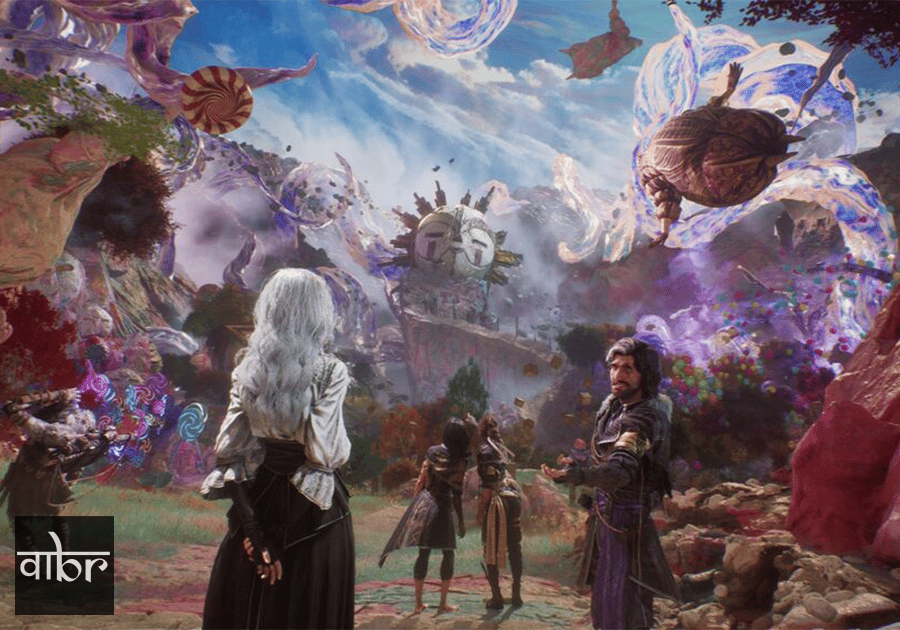
- Discover how Clair Obscur Expedition 33 narrative lead Jennifer Svedberg-Yen aims to revolutionize traditional game funding models for developers.
- Clair Obscur Expedition 33 and Game Funding Models...
Clair Obscur Expedition 33 and Game Funding Models
As the interactive entertainment landscape continuously evolves, traditional economic structures are increasingly buckling under the weight of runaway budgets and risk-averse financial backing. Amidst this shifting paradigm, game funding models are coming under intense scrutiny by industry veterans who believe that capital allocation needs a radical overhaul. Enter Jennifer Svedberg-Yen, the narrative lead behind the critically acclaimed and visually stunning project, Clair Obscur Expedition 33. Following widespread critical acclaim and numerous accolades, Svedberg-Yen has stepped forward to challenge the status quo. Her advocacy is not merely about securing bigger budgets for upcoming titles; rather, it is a profound philosophical statement regarding how indie game development is financed, sustained, and valued in a market dominated by massive corporate conglomerates. By analyzing the current state of game funding models, industry stakeholders can better understand why creative freedom requires completely reimagined financial pipelines.
The conversation surrounding game funding models has reached a boiling point as developers grapple with ballooning development costs and compressed profit margins. In the realm of indie game development, securing reliable backing without compromising artistic vision has always been a tightrope walk. Through her leadership on Clair Obscur Expedition 33, Svedberg-Yen has demonstrated that compelling storytelling and artistic ambition can resonate deeply with global audiences. However, the path to bringing such ambitious concepts to life often exposes deep-seated flaws in contemporary game funding models. Traditional investors frequently prioritize hyper-commercial, data-driven formulas over innovative narrative design, stifling genuine creativity. To overcome these systemic barriers, visionary creators are advocating for alternative game funding models that place trust, creative autonomy, and narrative integrity at the very forefront of financial agreements.
Deep Dive: Full Event Breakdown
The momentum behind this pivotal discussion accelerated following the immense public reception of Clair Obscur Expedition 33. Developed by Sandfall Interactive, the title captured the imagination of players and critics alike, proving that mid-to-large-scale projects can successfully blend AAA production values with the soul of indie game development. However, getting the project funded required navigating a labyrinth of traditional venture capitalism and cautious publishers. During recent industry panels and post-mortem discussions, Jennifer Svedberg-Yen articulated her frustrations with existing game funding models. She pointed out that financial institutions often view game development strictly through a transactional lens, failing to recognize the cultural and artistic value inherent in bold narrative experimentation. This mismatch between creator aspirations and investor metrics forms the core of why current game funding models urgently need restructuring.
Furthermore, the discourse highlights a systemic fear of failure within corporate boardrooms. Traditional game funding models are engineered to mitigate risk by replicating past successes rather than fostering unprecedented innovation. Svedberg-Yen emphasized that true artistic breakthroughs within indie game development only happen when financiers are willing to embrace uncertainty. By reshaping game funding models, the industry can create safe harbors for experimental concepts, ensuring that unique artistic voices are not drowned out by homogenized market trends. This deep dive into the financial mechanics of modern game creation reveals that structural reform is no longer optional; it is an absolute necessity for long-term industry health.
Industry Impact & Strategic Implications
The implications of Svedberg-Yen's call to action extend far beyond a single studio or a single title. As publishers and investors take note of the success of Clair Obscur Expedition 33, conversations regarding sustainable game funding models are taking center stage in executive boardrooms across the globe. For indie game development teams striving to break into the mainstream, the adoption of modernized financial structures could mean the difference between realizing a visionary masterpiece and succumbing to financial precarity. Strategic analysts suggest that future game funding models must incorporate profit-sharing mechanisms, community-backed crowdfunding hybrid systems, and grants that reward narrative innovation rather than mere commercial scalability.
Moreover, the strategic shift towards flexible game funding models empowers developers to retain intellectual property rights, a crucial factor in maintaining long-term studio independence. When creators have a direct stake in the financial success of their projects, the dynamic between risk and reward shifts dramatically. This realignment encourages sustainable studio growth, reduces burnout among creative talent, and fosters a healthier ecosystem for indie game development as a whole. Consequently, forward-thinking venture firms are beginning to re-evaluate their investment criteria, aligning their portfolios with sustainable game funding models that champion artistic merit alongside profitability.
Technical / Market Analysis
From a technical and market standpoint, the economics of modern gaming demand a sophisticated approach to capital deployment. High fidelity graphics, complex physics engines, and expansive narrative branches require substantial upfront capital. Traditional game funding models often front-load financial pressure onto developers, forcing premature launches or heavy feature-cutting to appease short-term investors. In contrast, progressive game funding models leverage milestone-based disbursements and cooperative publisher agreements that safeguard the integrity of indie game development cycles.
Market analysis indicates a growing consumer appetite for distinct, narrative-driven experiences that stand apart from repetitive live-service loops. As players gravitate toward quality single-player and co-operative adventures, the market valuation of creative risks within indie game development continues to rise. Financial institutions that fail to adapt their game funding models risk missing out on the most lucrative and culturally significant hits of the decade. By integrating flexible financial frameworks, the gaming sector can bridge the gap between technical ambition and economic viability, ensuring robust returns for investors while safeguarding the artistic freedom of developers.
What This Means for Consumers and Developers
For the end consumer, the evolution of game funding models translates directly into a richer, more diverse portfolio of available titles. When indie game development is supported by equitable financial structures, players receive games crafted with passion and uncompromised vision rather than corporate focus-group metrics. Developers, on the other hand, gain a renewed sense of agency. They can experiment with intricate narrative arcs, complex character studies, and unconventional gameplay mechanics without the suffocating fear of immediate commercial failure.
Ultimately, Jennifer Svedberg-Yen's advocacy serves as a rallying cry for the entire interactive entertainment sector. The ongoing dialogue surrounding game funding models is shaping a future where creativity and commerce can coexist harmoniously. As more studios adopt innovative financing approaches, the landscape of indie game development will undoubtedly mature, paving the way for unprecedented storytelling milestones and artistic triumphs that redefine what video games can achieve.
Key Takeaways (Detailed bullet points)
Reforming Financial Frameworks: Traditional game funding models must evolve to support creative risk-taking and artistic integrity over hyper-commercialized formulas. Empowering Creative Vision: Modernizing game funding models ensures that indie game development studios retain crucial intellectual property rights and artistic autonomy. Consumer Benefits: Flexible financial structures directly yield higher-quality, deeply engaging narrative experiences for global players. Investor Evolution: Forward-thinking venture capitalists are increasingly recognizing the long-term profitability of backing bold, unconventional projects within the industry.
The Road Ahead (Forward-looking conclusion)
As we look toward the horizon of interactive entertainment, the dialogue initiated by Jennifer Svedberg-Yen marks a watershed moment for the industry. The collective push to overhaul existing game funding models will likely catalyze a new golden era for indie game development, where financial innovation matches technological and artistic progress. By embracing collaborative, transparent, and flexible financing strategies, the gaming community can ensure that brilliant storytelling and groundbreaking design continue to thrive for generations to come.
Strategic Industry Takeaways & Future Outlook
Furthermore, strategic integration surrounding indie game development remains a crucial priority for stakeholders. Ensuring high performance across indie game development is expected to deliver long-term competitive advantages.
Furthermore, strategic integration surrounding indie game development remains a crucial priority for stakeholders. Ensuring high performance across indie game development is expected to deliver long-term competitive advantages.
Furthermore, strategic integration surrounding indie game development remains a crucial priority for stakeholders. Ensuring high performance across indie game development is expected to deliver long-term competitive advantages.
Key factors influencing this sector also include RPG narrative design , video game investment , AAA development , gaming industry trends , narrative lead insights , each playing an essential role in ongoing development and implementation.
📌 Related Briefings & Stories
Palmer Luckey Prepper Comments Spark Silicon Valley Debate Anthropic IPO Valuation Soars as AI Market Enters Unprecedented Territory Satya Nadella AI Agents Vision Reshapes Web Economics and Digital Advertising
Varta Brief Team
· Newsroom DeskReported, verified, and published by the Varta Brief editorial desk with an uncompromising commitment to primary-source verification and independent journalism.
Related Dispatches
More in Technology →
Amazon Decart Acquisition Signals Bold Move to Challenge Nvidia AI Dominance
Amazon buys Decart for $7.5B to optimize Trainium silicon and reshuffle the Nvidia AI chip race across enterprise cloud computing infrastructure.

Nvidia Board Governance Tested as Jensen Huang Discloses Additional Affairs
A detailed investigation into how revelations around Jensen Huang leadership impact corporate stability, chip markets, and Nvidia's standing with investors.

GTA 6 Sets Historic Record as the Biggest Launch in PlayStation History
Discover how GTA 6 became the biggest launch in PlayStation history, shattering records and reshaping the modern gaming landscape with unprecedented sales.