Jensen Huangs Departure Shocks AI Startup Funding Ecosystem
Discover how Jensen Huangs departure impacts the AI startup funding landscape, venture capitalists, valuations, and the broader tech industry.

Varta Brief Team
Sunday, November 15, 2026
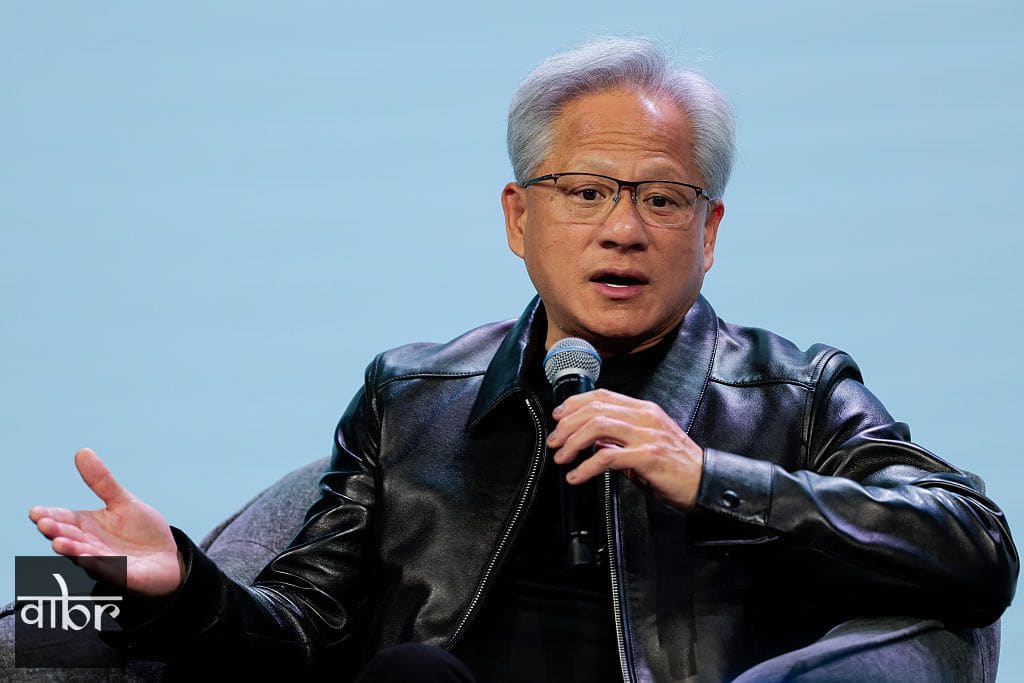
- Discover how Jensen Huangs departure impacts the AI startup funding landscape, venture capitalists, valuations, and the broader tech industry.
- Jensen Huangs Departure Shocks AI Startup Funding Ecosystem...
Jensen Huangs Departure Shocks AI Startup Funding Ecosystem
For more than a decade, the engine powering the generative AI boom has been fueled not just by raw code, but by the relentless vision and sovereign-grade balance sheet of Nvidia under its iconic leader. Now, with jensen huangs departure sending shockwaves through the tech ecosystem, founders and investors are waking up to a chilling new reality. The era of unchecked corporate venture capital is hitting a massive roadblock, leaving ai startup funding in a precarious position. This comprehensive market investigation explores the catastrophic void left by jensen huangs departure, examining how venture capital firms and emerging tech enterprises are bracing for a future defined by austere checks and deflated market valuations.
Deep Dive: Full Event Breakdown
The ripple effects of jensen huangs departure cannot be overstated. Under his guidance, Nvidia functioned as more than a semiconductor manufacturer; it operated as the de facto central bank for artificial intelligence. By pouring tens of billions of dollars directly into early-stage and growth-stage enterprises, Nvidia ensured a steady, captive pipeline of demand for its elite hardware. The mechanics of ai startup funding under his stewardship relied heavily on symbiotic loops: Nvidia provided capital, the startups bought high-end server hardware, and the entire AI ecosystem soared to historic heights.
When news of jensen huangs departure broke across Silicon Valley, emergency partner meetings were called overnight. Venture capital firms that had happily ridden the coattails of Nvidia-backed rounds suddenly realized that the safety net underpinning hyper-inflated valuations had vanished. Without jensen huangs departure being cushioned by a clear succession strategy regarding corporate venture investments, the entire paradigm of ai startup funding is facing an existential reckoning. Startups that budgeted for massive seed extensions and Series B expansions are now rewriting their runway calculations.
Industry Impact & Strategic Implications
The broader technology sector is currently reeling from the strategic vacuum. For years, ai startup funding acted as a barometer for market health, consistently breaking records quarter after quarter. With jensen huangs departure altering the risk appetite of major technology conglomerates, venture capital is undergoing a violent contraction. Founders who once commanded nine-figure valuations with little more than a slide deck and a dream are finding that traditional investors are demanding rigorous unit economics and demonstrable path-to-profitability metrics.
Furthermore, the hardware ecosystem is inextricably tied to these financial shifts. As ai startup funding slows down, the procurement cycles for advanced hardware infrastructure face severe delays. Venture capital firms are shifting their deployment mandates, moving away from capital-intensive foundational model developers toward hyper-specialized application layers. The long-term implications of jensen huangs departure suggest a much more disciplined, albeit brutal, market correction across the entire artificial intelligence landscape.
Technical / Market Analysis
From a quantitative perspective, the withdrawal of Nvidia's aggressive balance-sheet deployment exposes the fragile foundation upon which modern ai startup funding was built. During the peak years, early-stage enterprises relied on hardware subsidies and direct equity infusions to mask inefficient algorithmic architectures. Without jensen huangs departure being mitigated by alternative liquidity sources, startups must now optimize their codebases to run efficiently on legacy hardware rather than brute-forcing solutions through infinite compute.
Market valuation models are shifting away from speculative future-state projections back to traditional discounted cash flow analyses. Venture capital deployment data indicates a sharp pivot: while overall dry powder remains historically high, general partners are hoarding capital to support existing portfolio companies rather than backing unproven entities. Consequently, ai startup funding has transformed from a wild-west gold rush into a heavily guarded fortress where only the most technically resilient survive the post-jensen huangs departure fallout.
What This Means for Consumers and Developers
For everyday consumers and independent developers, the shockwaves of jensen huangs departure will manifest in subtle yet profound ways. The democratization of advanced AI tooling may slow down as cloud providers and hardware vendors tighten their enterprise subsidies. Developers accustomed to endless free API credits and subsidized sandbox environments will likely see pricing models normalize to reflect true operational costs.
Simultaneously, the contraction in ai startup funding forces developers to focus on lean, highly optimized software engineering. Instead of relying on massive foundational models that demand exorbitant compute overhead, the next generation of applications will prioritize efficiency, edge computing, and specialized domain models. While the immediate aftermath of jensen huangs departure creates immense anxiety, it ultimately paves the way for a more sustainable software ecosystem driven by genuine utility rather than speculative hype.
Key Takeaways (Detailed bullet points)
The sudden realization of jensen huangs departure has instantly vaporized the safety net that once guaranteed inflated valuations for early-stage tech enterprises. Venture capital firms are radically recalibrating their deployment strategies, drastically reducing check sizes across the board for ai startup funding. Startups can no longer rely on corporate balance-sheet subsidies to mask inefficient software architectures and poor unit economics. The hardware procurement cycle is experiencing friction as downstream venture investments slow down significantly. Founders must now prove concrete profitability pathways rather than relying on endless capital injections.
The Road Ahead (Forward-looking conclusion)
The technology industry stands at a historic crossroads. The departure of one of the most influential executives of the modern computing era marks the definitive end of the initial hyper-growth phase of the generative AI revolution. While the immediate contraction in ai startup funding causes widespread turbulence, it also purges the market of speculative excess. As venture capital embraces a disciplined, value-driven approach, the survivors of this transition will emerge leaner, stronger, and fundamentally more resilient. The legacy of Jensen Huang will endure, but the future of artificial intelligence now rests on the ability of founders and investors to adapt to a reality defined by financial gravity rather than boundless corporate generosity.
Strategic Industry Takeaways & Future Outlook
When evaluating the broader technological shift, ai startup funding serves as a defining benchmark for modern standards. Industry analysts emphasize that continuing developments in ai startup funding will dictate user adoption and market expansion.
When evaluating the broader technological shift, ai startup funding serves as a defining benchmark for modern standards. Industry analysts emphasize that continuing developments in ai startup funding will dictate user adoption and market expansion.
Furthermore, strategic integration surrounding jensen huangs departure remains a crucial priority for stakeholders. Ensuring high performance across jensen huangs departure is expected to deliver long-term competitive advantages.
Key factors influencing this sector also include nvidia graphics cards , tech investments , gpu compute , chipmaker strategy , each playing an essential role in ongoing development and implementation.
📌 Related Briefings & Stories
Amazon Kindle Colorsoft Review: The Next-Gen E-Reader Analyzed Top Holiday Tech Gifts 2026: The Ultimate Black Friday Shopping Guide Asian Governments Scramble Following Nvidia CEO Jensen Huangs Exit
Varta Brief Team
· Newsroom DeskReported, verified, and published by the Varta Brief editorial desk with an uncompromising commitment to primary-source verification and independent journalism.
Related Dispatches
More in Technology →
Amazon Decart Acquisition Signals Bold Move to Challenge Nvidia AI Dominance
Amazon buys Decart for $7.5B to optimize Trainium silicon and reshuffle the Nvidia AI chip race across enterprise cloud computing infrastructure.

Nvidia Board Governance Tested as Jensen Huang Discloses Additional Affairs
A detailed investigation into how revelations around Jensen Huang leadership impact corporate stability, chip markets, and Nvidia's standing with investors.

GTA 6 Sets Historic Record as the Biggest Launch in PlayStation History
Discover how GTA 6 became the biggest launch in PlayStation history, shattering records and reshaping the modern gaming landscape with unprecedented sales.