Meta Abandons Its Meta Net-Zero Goal in Shocking Corporate Shift
Meta officially rewrites climate pledges in its latest tech sustainability report, sparking fierce backlash across Silicon Valley as AI computing demands surge.

Varta Brief Team
Tuesday, November 24, 2026
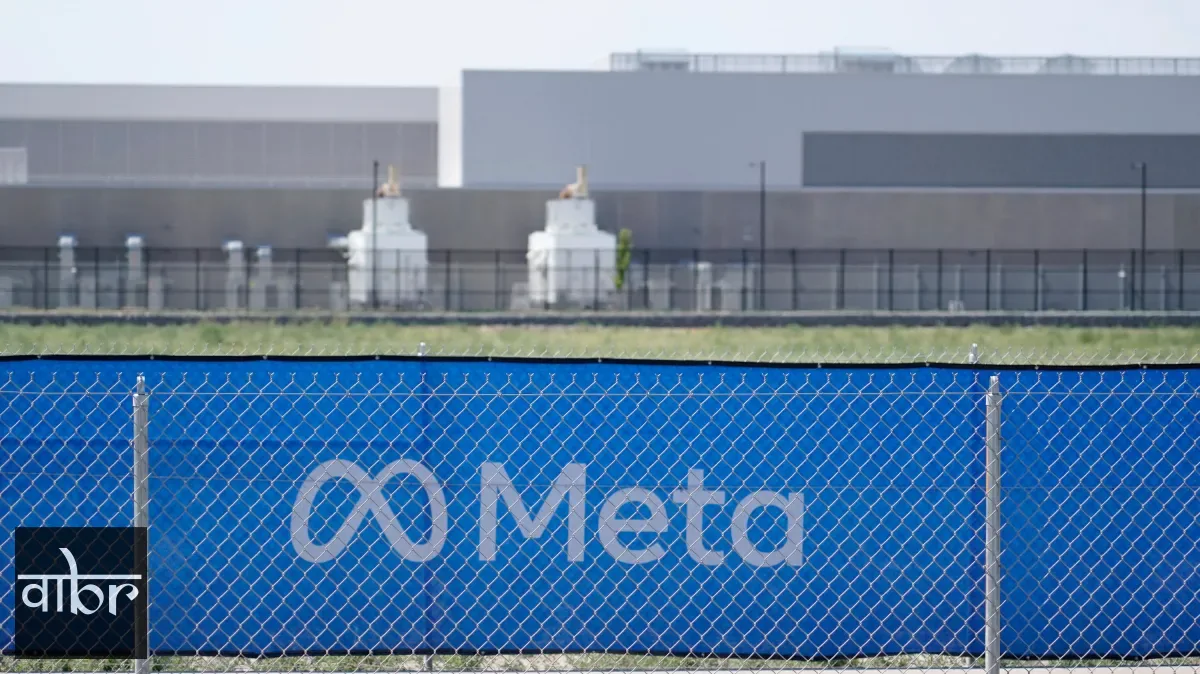
- Meta officially rewrites climate pledges in its latest tech sustainability report, sparking fierce backlash across Silicon Valley as AI computing demands surge.
- In an unprecedented corporate shift that is sending shockwaves throughout Silicon Valley, Mark Zuckerberg’s tech empire has formally abandoned its Meta net-zero goal for 2030. Quie...
In an unprecedented corporate shift that is sending shockwaves throughout Silicon Valley, Mark Zuckerberg’s tech empire has formally abandoned its Meta net-zero goal for 2030. Quietly disclosed in its latest annual tech sustainability report , the social media and artificial intelligence giant revealed that aggressive AI compute expansion has rendered its previous decarbonization timeline completely unattainable. As hyperscale hardware deployment outpaces clean energy supply lines, Meta’s decision highlights an agonizing trade-off facing modern enterprise technology: the irreconcilable conflict between state-of-the-art model training and long-term environmental commitments.
For years, major tech platforms competed on who could offer the most ambitious environmental roadmaps. However, the release of the updated tech sustainability report makes it clear that the era of idealistic corporate greening has encountered a massive bottleneck. By walking away from the Meta net-zero goal , Meta has drawn a clear line in the sand, signaling to investors and market competitors that raw computational dominance will take absolute precedence over climate targets.
Deep Dive: Full Event Breakdown
The complete disassembly of the Meta net-zero goal did not happen overnight, but its official confirmation within the latest tech sustainability report marks a historic retreat. Originally established during a period of steady cloud growth, the original pledges assumed incremental annual efficiency gains and steady access to clean power. However, the rapid acceleration of generative AI architectures completely altered that baseline formula.
According to details published in the new tech sustainability report , building and maintaining massive GPU clusters requires unprecedented levels of baseline power. In previous years, signing a renewable energy PPA (Power Purchase Agreement) allowed companies to offset regional operational loads. Yet as Meta builds out megawatt-scale and gigawatt-scale infrastructure, regional green power production simply cannot keep up with the physical energy demands of continuous model training.
Consequently, leadership concluded that maintaining the public illusion of the Meta net-zero goal was no longer viable. In the narrative accompanying the tech sustainability report , company strategists noted that continuing to pursue the 2030 target would mandate artificial limits on hardware acquisitions and server deployment rates. Choosing computing throughput over environmental benchmarks, Meta opted to scrub the target entirely from its forward-looking guidance.
Industry Impact & Strategic Implications
The decision to dismantle the Meta net-zero goal has infuriated rival technology firms who are currently pouring capital into Big Tech decarbonization . Enterprise leaders such as Microsoft, Google, and Apple have spent billions securing renewable power assets, retrofitting facilities, and redesigning hardware pipelines to satisfy their own publicized climate roadmaps.
By discarding the Meta net-zero goal , Meta essentially relieves itself of a multi-billion-dollar operational expenditure tax. While competitors continue paying premium rates to secure scarce clean power supplies, Meta can reallocate those funds directly toward next-generation chip procurement and server buildouts. The operational freedom detailed throughout the tech sustainability report creates an unlevel playing field where the company sacrificing environmental compliance gains a distinct cost and speed advantage in AI research.
Industry analysts stress that this strategic divergence could trigger a wider unraveling of corporate climate targets across the technology sector. If one of the largest tech companies in human history can drop its Meta net-zero goal without immediate legal penalties, executive boards elsewhere will face intense investor pressure to follow suit. The disclosures within the tech sustainability report threaten to undermine years of international progress regarding standardized environmental governance .
Technical / Market Analysis
From a technical perspective, the primary culprit behind discarding the Meta net-zero goal stems from the staggering power consumption of modern AI data centers . Next-generation generative models require custom silicon running continuously across tens of thousands of interconnected nodes. This hardware density places extreme strain on local energy grid capacity , forcing facility managers to rely on natural gas or dual-fuel secondary generation when local renewables are insufficient.
Furthermore, the comprehensive metrics inside the tech sustainability report underscore the immense burden of Scope 3 emissions . While operational electricity (Scope 1 and Scope 2) can theoretically be mitigated through carbon credits, Scope 3 emissions—which cover global supply chain logistics, silicon wafer manufacturing, and facility construction—scale directly with physical expansion. As Meta scales its hardware purchases, its upstream supply chain carbon footprint explodes exponentially.
Attempting to meet the original Meta net-zero goal while expanding AI infrastructure would have required purchasing unmanageable volumes of carbon offsets, many of which face growing skepticism from independent auditors. Rather than relying on financial engineering to mask its true impact, Meta used the tech sustainability report to present a realistic, albeit controversial, accounting of its environmental trajectory.
What This Means for Consumers and Developers
For software engineers, platform architects, and AI developers, Meta's retreat from the Meta net-zero goal delivers a complex set of incentives. On one hand, developers leveraging Meta’s open-weight AI models will benefit from faster training iterations, lower latency, and greater overall model availability. On the other hand, every API request and model execution carries a higher real-world carbon footprint than previously assumed.
For consumers reviewing the broader implications of the tech sustainability report , the situation represents a troubling shift in corporate transparency. While platforms like Instagram, WhatsApp, and Facebook remain functional and free to access, the hidden environmental cost of their underlying backend infrastructure is expanding rapidly. The abandonment of the Meta net-zero goal reveals that everyday digital services are becoming significantly more carbon-intensive as AI features are embedded into every layer of consumer applications.
Moreover, the strategic shift outlined in the tech sustainability report places open-source advocates in a tricky spot. While open access to foundational models democratizes software innovation, the massive power footprint required to generate those models is no longer mitigated by corporate net-zero commitments. The elimination of the Meta net-zero goal forces the developer community to confront the environmental reality of high-performance computing.
Key Takeaways
Goal Abandoned : Meta has officially eliminated its 2030 Meta net-zero goal in its latest official filing. AI Expansion Pressure : The updated tech sustainability report confirms that massive AI hardware rollouts made climate timelines mathematically unfeasible. Competitive Advantage : By abandoning the Meta net-zero goal , Meta avoids costly environmental offsets, gaining financial flexibility over rivals adhering to strict green mandates. Grid & Supply Strain : Scaling AI data centers and managing upstream Scope 3 emissions continue to test physical power limits globally. Regulatory Backlash : Dismantling key corporate climate targets sets a dangerous precedent for tech industry standardizations and regulatory oversight.
The Road Ahead
As Silicon Valley digests the ramifications of the new tech sustainability report , the fallout from discarding the Meta net-zero goal will likely trigger intense debate among shareholders, regulators, and climate advocates. Meta’s decisive turn signals that the decade-long consensus aligning corporate profitability with green policy has officially broken down under the immense weight of the AI boom.
Looking forward, competitors will face a pivotal dilemma: do they double down on expensive sustainability pledges to maintain ESG leadership, or do they follow Meta's lead and abandon their targets to keep pace in the AI arms race? One thing is certain: the retirement of the original Meta net-zero goal marks the beginning of a stark new era in corporate technology policy—one where power demands and computational dominance dictate the rules of engagement.
Strategic Industry Takeaways & Future Outlook
When evaluating the broader technological shift, Meta net-zero goal serves as a defining benchmark for modern standards. Industry analysts emphasize that continuing developments in Meta net-zero goal will dictate user adoption and market expansion.
Furthermore, strategic integration surrounding tech sustainability report remains a crucial priority for stakeholders. Ensuring high performance across tech sustainability report is expected to deliver long-term competitive advantages.
Furthermore, strategic integration surrounding tech sustainability report remains a crucial priority for stakeholders. Ensuring high performance across tech sustainability report is expected to deliver long-term competitive advantages.
Furthermore, strategic integration surrounding tech sustainability report remains a crucial priority for stakeholders. Ensuring high performance across tech sustainability report is expected to deliver long-term competitive advantages.
📌 Related Briefings & Stories
Amazon AI optimization acquisition transforms cloud infrastructure Jensen Huang Senate Hearing: Nvidia CEO Testifies After Reinstatement Google Search AI Mode Integrates Drive and Wallet for Hyper-Personalization
Varta Brief Team
· Newsroom DeskReported, verified, and published by the Varta Brief editorial desk with an uncompromising commitment to primary-source verification and independent journalism.
Related Dispatches
More in Technology →
Amazon AI optimization acquisition transforms cloud infrastructure
Amazon acquires Decart for $7.5B, supercharging Amazon AI optimization and preparing for mass deployment of custom Trainium chips.

Jensen Huang Senate Hearing: Nvidia CEO Testifies After Reinstatement
Discover the fallout as Jensen Huang Senate Hearing approaches following his shocking Nvidia CEO reinstatement and Chinese spy investigation controversy.

Google Search AI Mode Integrates Drive and Wallet for Hyper-Personalization
Discover how Google Search AI Mode now connects with Google Drive and Google Wallet, transforming everyday queries with deep personal intelligence.