Robots vs Humans A/B Testing: The Ultimate Autonomous Transport Showdown
Discover how robots vs humans A/B testing is reshaping autonomous mobility, artificial intelligence deployment, and the future of transport technology.

Varta Brief Team
Sunday, November 22, 2026
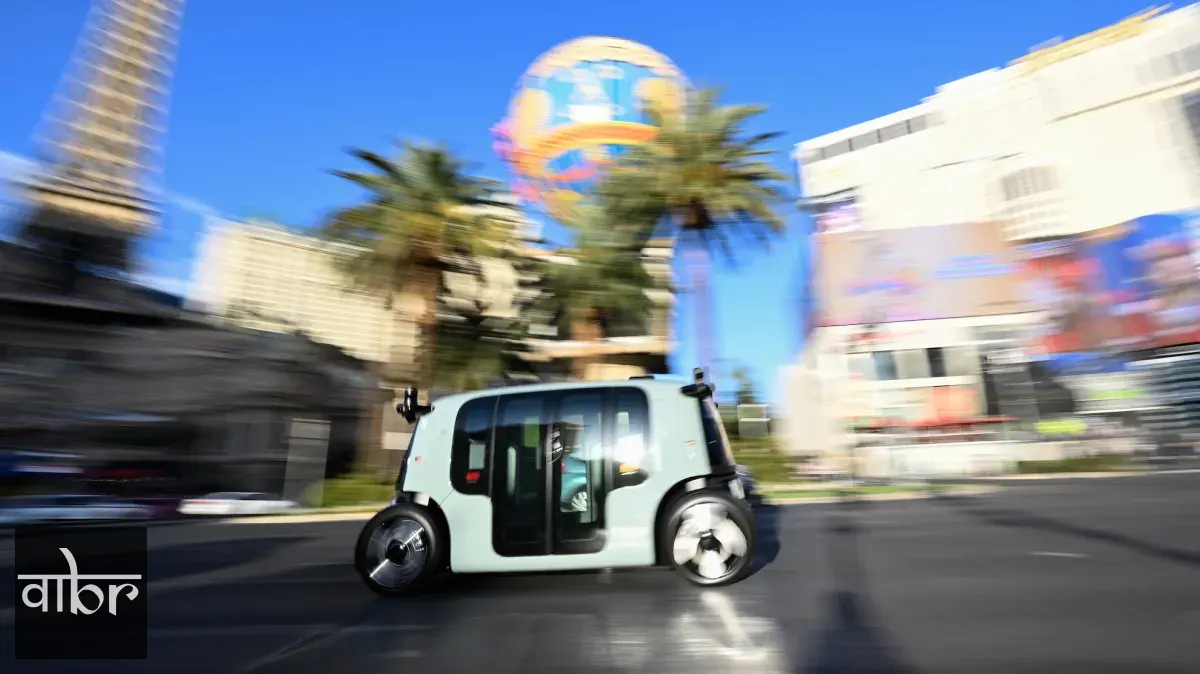
- Discover how robots vs humans A/B testing is reshaping autonomous mobility, artificial intelligence deployment, and the future of transport technology.
- The landscape of modern infrastructure is shifting at an unprecedented velocity, bringing the grand experiment of robots vs humans to the forefront of global discourse. As metropol...
The landscape of modern infrastructure is shifting at an unprecedented velocity, bringing the grand experiment of robots vs humans to the forefront of global discourse. As metropolitan areas struggle with congestion, safety regulations, and labor shortages, developers are turning to rigorous empirical validation methodologies. Central to this paradigm shift is the concept of deploying robots vs humans in controlled, real-world trials to evaluate efficiency, reliability, and economic viability. In the realm of autonomous transport, pitting silicon intelligence against biological cognition has transformed from a speculative science fiction trope into an essential operational benchmark.
Throughout the rapidly evolving tech sector, stakeholders are recognizing that theoretical metrics alone cannot validate complex deployment models. The core debate of robots vs humans centers on adaptability versus consistency. While human operators bring nuanced situational awareness and instinctive problem-solving capabilities, automated systems driven by artificial intelligence offer tireless endurance and rapid data processing. By implementing sophisticated A/B testing frameworks, transport companies can now quantify the exact trade-offs of deploying autonomous transport solutions across diverse geographic and demographic sectors. This deep-dive investigation explores the methodologies, implications, and future trajectory of this technological arms race.
Deep Dive: Full Event Breakdown
The implementation of A/B testing frameworks in urban environments represents a monumental leap in how companies validate transport automation. In recent trials evaluating robots vs humans, engineers have set up rigorous comparative environments. One cohort of delivery routes and passenger services is managed entirely by traditional human operators, while the competing cohort relies on autonomous transport vehicles powered by cutting-edge artificial intelligence.
During these trials, the metrics being analyzed go far beyond simple speed and delivery times. Researchers are closely tracking energy consumption, route deviations, customer satisfaction scores, and edge-case handling. When robots vs humans face unpredictable urban hazards—such as sudden pedestrian jaywalking, unexpected construction zones, or erratic traffic signals—the divergence in decision-making becomes stark. The human drivers often rely on social signaling and empathetic eye contact, whereas the robotic systems depend on millisecond-level neural network optimization to calculate probabilities and brake force.
Furthermore, the logistics behind setting up these experiments require massive data pipelines. Fleet management systems ingest millions of telemetry data points daily, allowing engineers to run comparative statistical analyses on robots vs humans performance metrics. The results of these trials are not merely academic; they dictate multi-million-dollar capital allocation decisions within the global robotics industry.
Industry Impact & Strategic Implications
The commercial implications of the ongoing robots vs humans showdown extend far beyond localized delivery logistics. Major automotive and tech conglomerates are restructuring their long-term roadmaps based on the empirical data harvested from these trials. As urban mobility demands continue to surge, municipalities are looking for scalable solutions that reduce carbon footprints while enhancing public safety.
In the sphere of transport automation, the integration of advanced machine learning algorithms has created a divide between traditional logistics firms and tech-first disruptors. Companies that fail to adapt to the efficiencies proven through robots vs humans testing risk becoming obsolete. However, this transition is not without friction. Labor unions and city planners frequently voice concerns regarding job displacement and the ethical dimensions of replacing human workforces with automated hardware.
Strategically, market leaders are utilizing these comparative studies to refine human computer interaction protocols. If a delivery robot or autonomous taxi fails to communicate its intentions effectively to pedestrians and fellow human drivers, public trust plummets. Therefore, the robots vs humans dynamic is as much about psychological acceptance and social engineering as it is about raw hardware capability and software sophistication.
Technical / Market Analysis
From a purely technical standpoint, the ongoing evaluation of robots vs humans provides invaluable insights into the limitations of current artificial intelligence architectures. While modern neural network optimization has drastically improved computer vision and path planning, autonomous transport units still struggle with highly chaotic, unstructured environments where human intuition thrives.
Market analysts note that the financial investments pouring into autonomous transport solutions are directly tied to the success rates demonstrated in these comparative trials. Venture capital firms and institutional investors scrutinize the operational expenditures of running robotic fleets versus maintaining human-operated payrolls. Although upfront hardware and sensor costs for automated units remain high, the long-term projections favor silicon systems due to the absence of fatigue, mandatory rest breaks, and escalating insurance liabilities associated with human error.
Yet, technical bottlenecks remain persistent. Sensor degradation in severe weather conditions, complex regulatory frameworks across different jurisdictions, and the immense computational power required for real-time decision-making continue to challenge developers. Consequently, many forward-thinking enterprises are adopting a hybrid approach, using insights from robots vs humans benchmarks to design collaborative systems where machines handle repetitive, high-volume tasks while humans supervise complex edge cases.
What This Means for Consumers and Developers
For everyday consumers, the escalating race between robots vs humans translates to tangible shifts in how goods and services are delivered. On-demand deliveries are becoming faster, more predictable, and increasingly automated, fundamentally altering consumer expectations. However, users must also adapt to interacting daily with automated systems, whether accepting a package from a sidewalk delivery droid or riding in a driverless rideshare vehicle.
For software and hardware developers, these developments dictate a rigorous new standard of engineering accountability. Developing robust autonomous transport systems requires an obsessive focus on data integrity, fail-safe redundancy, and ethical programming. Developers can no longer rely on closed-loop simulations; they must subject their code to the unforgiving realities of public streets where robots vs humans share the same physical space. This environment fosters a rapid iteration cycle, pushing the boundaries of what machine learning algorithms can achieve in high-stakes scenarios.
Key Takeaways (Detailed bullet points)
Empirical Validation : The widespread adoption of A/B testing methodologies allows companies to scientifically evaluate robots vs humans in real-world urban settings. Operational Efficiency : Trials demonstrate that autonomous transport systems offer superior consistency and reduced long-term operating costs, though human adaptability remains unmatched in complex edge cases. Regulatory and Ethical Challenges : The shift toward transport automation triggers vital debates regarding labor displacement, public safety, and municipal integration. Technical Bottlenecks : Neural network optimization and computer vision continue to evolve, yet adverse weather and unstructured environments pose ongoing challenges for robotic systems. Consumer Experience : The integration of automated fleets is reshaping urban mobility and consumer expectations, demanding improved human computer interaction standards. Strategic Market Shifts : Investment in the robotics industry heavily relies on the comparative performance metrics generated by these high-stakes deployment trials.
The Road Ahead (Forward-looking conclusion)
As we look toward the future, the dialogue surrounding robots vs humans will undoubtedly mature from a binary contest of supremacy into a nuanced orchestration of collaboration. The ultimate goal of modern transport innovation is not to completely eradicate human presence from the logistics chain, but to harmonize artificial intelligence with human expertise. By leveraging continuous A/B testing, developers can refine autonomous transport platforms to operate safely, efficiently, and harmoniously within our shared urban ecosystems. The journey ahead will demand unprecedented cooperation between technologists, policymakers, and the public, ensuring that the evolution of urban mobility serves the collective good while pushing the absolute limits of engineering excellence.
Strategic Industry Takeaways & Future Outlook
When evaluating the broader technological shift, robots vs humans serves as a defining benchmark for modern standards. Industry analysts emphasize that continuing developments in robots vs humans will dictate user adoption and market expansion.
When evaluating the broader technological shift, robots vs humans serves as a defining benchmark for modern standards. Industry analysts emphasize that continuing developments in robots vs humans will dictate user adoption and market expansion.
Furthermore, strategic integration surrounding autonomous transport remains a crucial priority for stakeholders. Ensuring high performance across autonomous transport is expected to deliver long-term competitive advantages.
Furthermore, strategic integration surrounding autonomous transport remains a crucial priority for stakeholders. Ensuring high performance across autonomous transport is expected to deliver long-term competitive advantages.
Furthermore, strategic integration surrounding autonomous transport remains a crucial priority for stakeholders. Ensuring high performance across autonomous transport is expected to deliver long-term competitive advantages.
Furthermore, strategic integration surrounding autonomous transport remains a crucial priority for stakeholders. Ensuring high performance across autonomous transport is expected to deliver long-term competitive advantages.
Furthermore, strategic integration surrounding autonomous transport remains a crucial priority for stakeholders. Ensuring high performance across autonomous transport is expected to deliver long-term competitive advantages.
📌 Related Briefings & Stories
Sunrise on the Reaping Box Office Success Revives The Hunger Games Fortnite Chapter 7 Mini Season Map Fragments Guide: Where to Find Every Piece Fortnite Chapter 7 Sprites Guide: All Abilities and Meta Strategies
Varta Brief Team
· Newsroom DeskReported, verified, and published by the Varta Brief editorial desk with an uncompromising commitment to primary-source verification and independent journalism.
Related Dispatches
More in Technology →
GTA 6 Sets Historic Record as the Biggest Launch in PlayStation History
Discover how GTA 6 became the biggest launch in PlayStation history, shattering records and reshaping the modern gaming landscape with unprecedented sales.

CORTAO Ambient Occlusion Transforms EVE: Frontier and Indie Development
Discover how CORTAO ambient occlusion, featured in EVE: Frontier, empowers indie developers with high-end real-time rendering and advanced graphics tech.

Aliens Leaving Netflix: Why James Cameron's Sci-Fi Masterpiece Is Disappearing
Discover why Aliens leaving Netflix is shaking up streaming. Explore the digital distribution landscape as James Cameron's sci-fi masterpiece departs.