Tesla Cybercab Pre-Orders Open With Strict Personal Use Rules
Discover the latest details as Tesla opens Cybercab pre-orders for personal use with strict geo restrictions and a $299 monthly subscription fee.

Varta Brief Team
Sunday, November 15, 2026
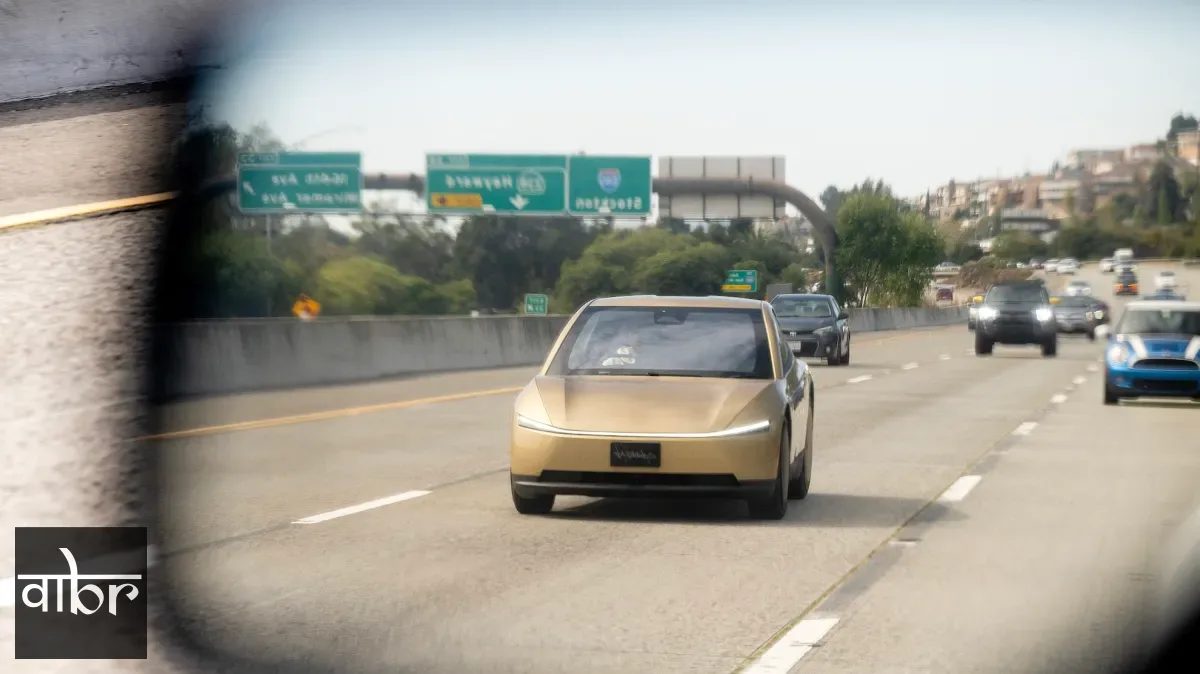
- Discover the latest details as Tesla opens Cybercab pre-orders for personal use with strict geo restrictions and a $299 monthly subscription fee.
- The landscape of urban transportation is undergoing a profound structural shift as automotive manufacturers push the boundaries of automated transit. In a move that has captured th...
The landscape of urban transportation is undergoing a profound structural shift as automotive manufacturers push the boundaries of automated transit. In a move that has captured the attention of global markets, the announcement regarding Tesla Cybercab pre-orders marks a pivotal milestone in the commercialization of autonomous fleets. Consumers and industry analysts alike are scrutinizing what it means when a leading electric vehicle manufacturer opens up access to specialized autonomous platforms outside of strictly commercial ride-hailing networks. By allowing a personal use robotaxi model, the company is testing new waters in consumer subscription economics, geofenced deployment parameters, and the evolving legalities of unsupervised driverless technology. Even company leadership has weighed in, with CEO Elon Musk famously noting that the initial cost structure might be considered high by standard consumer metrics, sparking intense debate across financial and technological sectors.
Deep Dive: Full Event Breakdown
The rollout of Tesla Cybercab pre-orders represents a masterclass in calculated product launches. Historically, autonomous prototypes have remained locked within closed testing environments or restricted corporate test fleets. However, the latest directive shifts the paradigm by offering everyday consumers the opportunity to secure access units. Yet, this accessibility comes tethered to a distinct set of operational boundaries. First and foremost, the acquisition model is structured around a recurring fee rather than traditional outright ownership. Prospective buyers looking to secure a personal use robotaxi must commit to a recurring monthly financial outlay of $299. Furthermore, this expenditure does not grant unrestricted freedom across all roadways; rather, the hardware operates under rigorous geographical boundaries. These geofenced zones ensure that the vehicle functions only within pre-approved municipalities where regulatory approval and high-definition mapping data have been fully established and verified by internal engineering teams.
The inclusion of these geo restrictions highlights the immense technical hurdles still facing autonomous vehicle deployment. While the allure of hands-free, steering-wheel-free commuting is undeniable, safety regulators demand strict containment of unproven algorithms. Consequently, consumers placing Tesla Cybercab pre-orders must acknowledge that their futuristic ride will refuse to operate outside designated metropolitan corridors. Compounding this is the frank admission from executive leadership. During recent investor briefings, Elon Musk pricing commentary revealed an acknowledgment that the $299 monthly fee is currently perceived as steep by the average retail consumer, raising fundamental questions about mass-market adoption rates during the initial rollout phase. Despite this price barrier, demand has surged, fueled by early adopters and enthusiasts eager to experience the next evolution of personal use robotaxi infrastructure.
Industry Impact & Strategic Implications
The ripple effects of opening Tesla Cybercab pre-orders extend far beyond the company's balance sheets, directly challenging legacy automakers and rival tech conglomerates. For decades, the automotive industry operated on a traditional model of vehicle sales and financing. By pivoting toward a subscription model transport strategy, the manufacturer is redefining how recurring revenue streams are generated in the hardware sector. This shift mirrors the software-as-a-service industry, where continuous updates and cloud connectivity justify ongoing payments. Competitors in the autonomous space are now forced to re-evaluate their own go-to-market strategies, realizing that consumer desire for shared or alternative transit modes is rapidly evolving into a demand for dedicated, on-demand autonomous assets.
Moreover, the strategic decision to permit a personal use robotaxi setup introduces a fascinating paradox: consumers are essentially paying to lease a vehicle that is theoretically designed to operate autonomously within a broader network, yet constrained by localized parameters. This creates complex implications for automotive market strategy, forcing insurance companies, municipal planners, and regulatory bodies to draft entirely new frameworks for liability and urban spatial management. As geofenced autonomous rides become more prevalent, cities will need to adapt their infrastructure—from curb management to digital road signage—to accommodate fleets that communicate continuously with central cloud servers. Industry analysts conducting tech investment analysis are closely monitoring these developments, predicting that early success in these localized deployments will dictate which corporations dominate the multitrillion-dollar mobility market of the coming decade.
Technical / Market Analysis
Underneath the sleek, steering-wheel-free exterior of the vehicle lies a complex ecosystem of hardware and software designed to execute full self-driving technology without human intervention. The transition from testing to accepting Tesla Cybercab pre-orders proves that internal confidence in neural network training has reached a critical threshold. Utilizing advanced vision-based processing systems and high-capacity compute modules, the vehicle interprets complex urban environments in real-time, making split-second driving decisions that mimic or exceed human reflexes.
However, market analysts remain divided on the commercial viability of the pricing model. A $299 monthly commitment, while attractive compared to full vehicle ownership and insurance costs in major metropolitan areas, must be weighed against the actual utility provided under strict geographic limitations. If a consumer lives just outside a designated geofenced zone, the personal use robotaxi becomes essentially unusable for daily commuting until network expansions occur. This geographical friction creates a distinct adoption curve, wherein urban dwellers in Tier-1 cities will find immense value, while suburban and rural markets remain entirely locked out. Tech investment analysis suggests that scaling past these limitations will require significant advancements in generalizable AI, allowing vehicles to navigate unfamiliar terrain safely without requiring painstaking manual mapping beforehand.
What This Means for Consumers and Developers
For the everyday consumer, the arrival of Tesla Cybercab pre-orders signals that science-fiction tropes of automated transportation are officially entering mainstream commerce. However, prospective buyers must carefully weigh the financial and operational constraints. Committing to a recurring fee for a personal use robotaxi means accepting that your vehicle's capabilities are tethered to software updates, regulatory approvals, and cellular network connectivity. If local governments revoke operating permits due to traffic incidents or policy shifts, the utility of the vehicle could vanish overnight.
For software developers and AI engineers, this milestone underscores the urgent need for robust, fault-tolerant neural architectures. Developing applications and in-cabin entertainment experiences for a vehicle devoid of traditional controls requires a complete reimagining of the passenger interface. Furthermore, developers working on backend fleet management systems must optimize routing algorithms to ensure that vehicles deployed for personal use can seamlessly transition into shared networks when not needed by their primary subscribers. The future of mobility hinges on this delicate balance between private accessibility and communal fleet efficiency.
Key Takeaways
Tesla Cybercab pre-orders have officially opened, allowing consumers to secure access to dedicated autonomous hardware. The pricing structure features a $299 monthly subscription fee, which company leadership has acknowledged may be considered high for the current market. Strict geo restrictions limit the operation of the personal use robotaxi to pre-approved metropolitan zones with verified mapping data. The move represents a major evolution in subscription model transport, shifting automotive revenue away from one-off sales. Industry stakeholders are performing extensive tech investment analysis to gauge how regulatory hurdles will impact wider autonomous vehicle deployment.
The Road Ahead
As the automotive world watches these early deployments unfold, the ultimate success of Tesla Cybercab pre-orders will serve as a bellwether for the entire autonomous sector. Overcoming consumer hesitation regarding price and geographic limitations will require continuous software refinement, regulatory advocacy, and strategic infrastructure expansion. Whether this bold experiment paves the way for ubiquitous autonomous transit or merely highlights the premature nature of current technology remains to be seen. What is certain, however, is that the journey toward a fully automated future has officially accelerated, forever altering how society perceives ownership, mobility, and the road ahead.
Strategic Industry Takeaways & Future Outlook
When evaluating the broader technological shift, Tesla Cybercab pre-orders serves as a defining benchmark for modern standards. Industry analysts emphasize that continuing developments in Tesla Cybercab pre-orders will dictate user adoption and market expansion.
When evaluating the broader technological shift, Tesla Cybercab pre-orders serves as a defining benchmark for modern standards. Industry analysts emphasize that continuing developments in Tesla Cybercab pre-orders will dictate user adoption and market expansion.
When evaluating the broader technological shift, Tesla Cybercab pre-orders serves as a defining benchmark for modern standards. Industry analysts emphasize that continuing developments in Tesla Cybercab pre-orders will dictate user adoption and market expansion.
When evaluating the broader technological shift, Tesla Cybercab pre-orders serves as a defining benchmark for modern standards. Industry analysts emphasize that continuing developments in Tesla Cybercab pre-orders will dictate user adoption and market expansion.
When evaluating the broader technological shift, Tesla Cybercab pre-orders serves as a defining benchmark for modern standards. Industry analysts emphasize that continuing developments in Tesla Cybercab pre-orders will dictate user adoption and market expansion.
Furthermore, strategic integration surrounding personal use robotaxi remains a crucial priority for stakeholders. Ensuring high performance across personal use robotaxi is expected to deliver long-term competitive advantages.
Furthermore, strategic integration surrounding personal use robotaxi remains a crucial priority for stakeholders. Ensuring high performance across personal use robotaxi is expected to deliver long-term competitive advantages.
Furthermore, strategic integration surrounding personal use robotaxi remains a crucial priority for stakeholders. Ensuring high performance across personal use robotaxi is expected to deliver long-term competitive advantages.
Furthermore, strategic integration surrounding personal use robotaxi remains a crucial priority for stakeholders. Ensuring high performance across personal use robotaxi is expected to deliver long-term competitive advantages.
Furthermore, strategic integration surrounding personal use robotaxi remains a crucial priority for stakeholders. Ensuring high performance across personal use robotaxi is expected to deliver long-term competitive advantages.
Furthermore, strategic integration surrounding personal use robotaxi remains a crucial priority for stakeholders. Ensuring high performance across personal use robotaxi is expected to deliver long-term competitive advantages.
📌 Related Briefings & Stories
Elon Musk Joins Petition Calling On Nvidia To Reinstate Jensen Huang Where Was Nvidia Security? Inside the Stunning Corporate Crisis GTA 6 Hits Xbox Cloud Gaming for Xbox One and Series X|S
Varta Brief Team
· Newsroom DeskReported, verified, and published by the Varta Brief editorial desk with an uncompromising commitment to primary-source verification and independent journalism.
Related Dispatches
More in Technology →
Amazon Decart Acquisition Signals Bold Move to Challenge Nvidia AI Dominance
Amazon buys Decart for $7.5B to optimize Trainium silicon and reshuffle the Nvidia AI chip race across enterprise cloud computing infrastructure.

Nvidia Board Governance Tested as Jensen Huang Discloses Additional Affairs
A detailed investigation into how revelations around Jensen Huang leadership impact corporate stability, chip markets, and Nvidia's standing with investors.

GTA 6 Sets Historic Record as the Biggest Launch in PlayStation History
Discover how GTA 6 became the biggest launch in PlayStation history, shattering records and reshaping the modern gaming landscape with unprecedented sales.