AI chip materials startup Discovered Materials launches $1M challenge

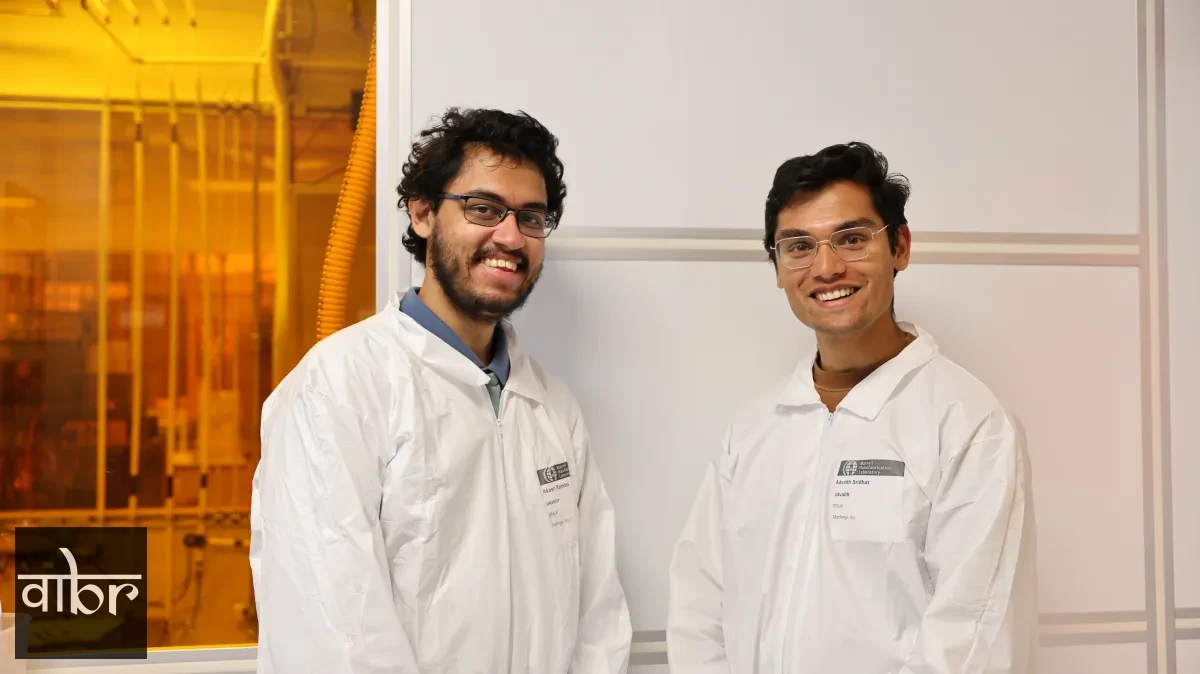
AI chip materials startup Discovered Materials launches $1M challenge
In the relentless race to scale artificial intelligence capabilities, the physical limits of hardware have become the ultimate bottleneck. Enter Discovered Materials, a high-flying Y Combinator-backed startup that has taken a bold step toward rewriting the rules of semiconductor manufacturing. Operating in stealth until recently, the company is now deploying a massive $1 million initiative, offering $200,000 for each definitive solution to five notorious, long-standing materials science problems. As the global demand for advanced computing skyrockets, solving these fundamental bottlenecks in AI chip materials is no longer optional—it is an existential requirement for the tech industry.
The search for novel AI chip materials has historically been bogged down by slow, iterative laboratory experiments and immense trial-and-error costs. However, by weaponizing advanced machine learning models, Discovered Materials aims to drastically compress decades of research into months. This multi-pronged funding announcement represents a watershed moment for hardware innovation, bridging the gap between computational prediction and tangible, high-performance physical chemistry. Industry veterans and academic researchers alike are taking notice as this bold initiative redefines how next-gen hardware is conceptualized, tested, and commercialized.
Deep Dive: Full Event Breakdown
The announcement centers around a curated list of five stubborn materials science problems that have stymied semiconductor engineers for decades. Each of these five challenges represents a specific physical barrier in AI chip materials design, ranging from extreme thermal conductivity management to quantum-level electron mobility degradation. By placing a $200,000 bounty on each challenge, Discovered Materials is effectively crowdsourcing world-class intellect from global academic institutions, independent research laboratories, and rival enterprise labs.
Discovered Materials utilizes proprietary artificial intelligence algorithms to screen millions of hypothetical crystal structures. Yet, computational predictions must ultimately survive real-world physical stress tests. The startup's newly launched $1 million challenge is explicitly designed to bridge this chasm. By incentivizing outside experts to crack these specific materials science problems, Discovered Materials can integrate breakthrough solutions directly into its automated discovery pipeline. This symbiotic approach accelerates the deployment of AI chip materials capable of withstanding the punishing thermal and electrical loads generated by modern large language models and neural network training clusters.
Industry Impact & Strategic Implications
The broader semiconductor manufacturing ecosystem is currently grappling with the twilight of Moore's Law. Traditional silicon scaling is reaching atomic limitations, forcing engineers to look toward exotic compounds, novel substrates, and advanced packaging techniques. The initiative launched by Discovered Materials directly targets these pain points. By focusing intensely on AI chip materials, the startup is positioning itself at the absolute center of the next great hardware revolution.
Furthermore, the strategic implications for venture capitalists and institutional investors are profound. Y Combinator has long backed software disruptors, but its recent portfolio displays an aggressive pivot toward deep tech and hardware innovation. Solving critical materials science problems unlocks immense enterprise value. Companies that control the underlying composition of next-gen hardware dictate the speed, efficiency, and cost structure of the entire artificial intelligence landscape. If Discovered Materials succeeds in validating its pipeline through this bounty, it could establish a definitive industry standard for automated material synthesis.
Technical / Market Analysis
From a technical standpoint, the challenges facing AI chip materials are deeply rooted in quantum mechanics and thermodynamics. As processors pack billions—and soon trillions—of transistors into microscopic footprints, thermal dissipation becomes a catastrophic failure point. Current cooling technologies are nearing their absolute physical limits. Therefore, discovering novel AI chip materials with unprecedented thermal conductivity and low electrical resistivity is paramount for sustaining advanced computing performance.
Market analysts project that the demand for specialized semiconductor manufacturing inputs will surge exponentially over the next decade. Traditional material discovery pipelines take an average of 15 to 20 years and cost hundreds of millions of dollars. By integrating machine learning with high-throughput quantum chemistry simulations, Discovered Materials is slashing this timeline down to mere fractions. However, the theoretical models generated by artificial intelligence must be validated by solving these hard materials science problems in physical reality. The market value for a scalable, AI-driven material discovery platform is virtually limitless, making this $1 million investment a brilliant, high-leverage strategic play.
What This Means for Consumers and Developers
While everyday consumers rarely think about the atomic composition of their processors, the ripple effects of this research will touch every facet of modern digital life. For software developers, breakthroughs in AI chip materials translate directly to faster model training times, reduced cloud computing costs, and the ability to run massive neural networks on edge devices without prohibitive energy consumption.
As hardware innovation accelerates through initiatives like the one spearheaded by Discovered Materials, developers can anticipate a future where advanced computing resources are exponentially more accessible. Lower hardware overhead means more democratized access to artificial intelligence tools, fostering a new wave of innovation across gaming, enterprise software, scientific research, and consumer applications. The ultimate beneficiaries of solving these persistent materials science problems will be the end-users who enjoy faster, smarter, and significantly more energy-efficient digital experiences.
Key Takeaways (Detailed bullet points)
- Massive Financial Incentive: Discovered Materials is putting $1 million behind five unsolved problems, offering $200,000 per solution.
- Targeting Core Bottlenecks: The initiative focuses entirely on critical AI chip materials required to overcome the physical limits of traditional silicon.
- Accelerating Hardware Innovation: The startup leverages artificial intelligence and machine learning to bypass decades of slow, traditional laboratory experimentation.
- Industry-Wide Ripple Effects: Breakthroughs in semiconductor manufacturing and thermal conductivity will directly benefit the entire advanced computing sector.
- Strategic YC Backing: As a prominent Y Combinator startup, Discovered Materials exemplifies the broader venture capital shift toward deep tech and physical sciences.
The Road Ahead (Forward-looking conclusion)
The launch of this $1 million challenge marks only the beginning of a transformative era for semiconductor manufacturing and material science. As global researchers race to claim the bounties offered by Discovered Materials, the convergence of artificial intelligence and physical chemistry will only accelerate. Over the coming years, the successful resolution of these foundational materials science problems will lay the groundwork for a new generation of high-efficiency, ultra-powerful AI chip materials. Ultimately, the companies that master the atomic architecture of next-gen hardware will define the boundaries of what artificial intelligence can achieve.
Strategic Industry Takeaways & Future Outlook
When evaluating the broader technological shift, AI chip materials serves as a defining benchmark for modern standards. Industry analysts emphasize that continuing developments in AI chip materials will dictate user adoption and market expansion.
When evaluating the broader technological shift, AI chip materials serves as a defining benchmark for modern standards. Industry analysts emphasize that continuing developments in AI chip materials will dictate user adoption and market expansion.
When evaluating the broader technological shift, AI chip materials serves as a defining benchmark for modern standards. Industry analysts emphasize that continuing developments in AI chip materials will dictate user adoption and market expansion.
Furthermore, strategic integration surrounding materials science problems remains a crucial priority for stakeholders. Ensuring high performance across materials science problems is expected to deliver long-term competitive advantages.
Furthermore, strategic integration surrounding materials science problems remains a crucial priority for stakeholders. Ensuring high performance across materials science problems is expected to deliver long-term competitive advantages.
Furthermore, strategic integration surrounding materials science problems remains a crucial priority for stakeholders. Ensuring high performance across materials science problems is expected to deliver long-term competitive advantages.
Furthermore, strategic integration surrounding materials science problems remains a crucial priority for stakeholders. Ensuring high performance across materials science problems is expected to deliver long-term competitive advantages.
Furthermore, strategic integration surrounding materials science problems remains a crucial priority for stakeholders. Ensuring high performance across materials science problems is expected to deliver long-term competitive advantages.
📌 Related Briefings & Stories
Varta Brief Editorial Desk
• Newsroom StaffDedicated to objective, deep, and fact-verified reporting across technology, science, world affairs, and modern markets.
Follow Varta Brief on Google
Add Varta Brief as a preferred source to see our verified stories and daily briefings in Google Top Stories and Discover.
Found this briefing insightful?
Share it with your colleagues and community.
Read Next

Underdog Unveils Groundbreaking 32MB Speech Model in New Tech Demo

Physicl Raises $10M to Overcome the Sim-to-Real Gap for Modern Robotics
