Apple Tightens Full Disk Access Controls to Defend Against AI Agents

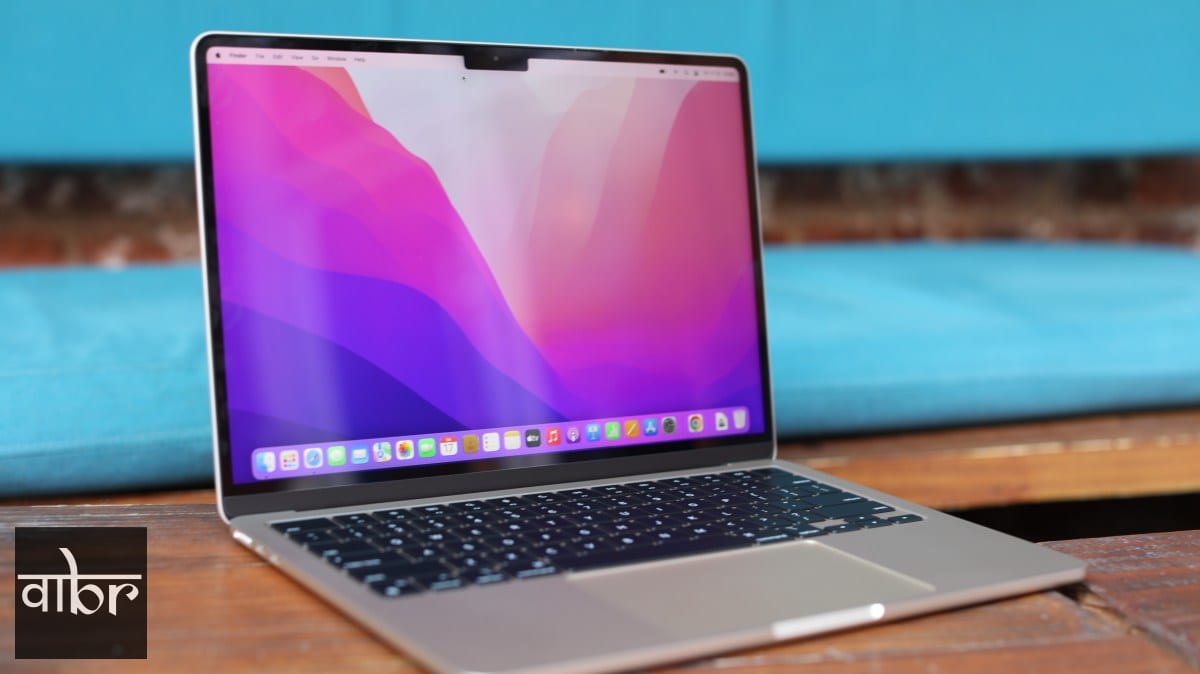
As autonomous computing reshapes the modern desktop, tech giant Apple has officially announced a critical security overhaul to address emerging threat vectors across its desktop operating system. Apple says it is tightening macOS Full Disk Access controls due to new risks from AI agents, marking a paradigm shift in how consumer operating systems handle pervasive permissions. For years, the Full Disk Access capability has served as a master key for utilities, backup tools, and productivity applications, granting them sweeping authorization to scan, read, and modify user files, mail databases, messages, and comprehensive browsing histories. However, the rapid proliferation of sophisticated AI agents has fundamentally altered the threat landscape, forcing platform architects to reconsider long-standing permission paradigms.
In this comprehensive investigative report, we dive deep into the technical mechanics, industry implications, and strategic fallout of Apple's sweeping security updates. As modern machine learning systems gain unprecedented autonomy, the boundary between helpful automation and invasive data harvesting has become dangerously thin. We analyze how Apple's updated security stance impacts software developers, everyday consumers, and the broader enterprise cybersecurity market.
Deep Dive: Full Event Breakdown
The announcement from Cupertino targets a foundational vulnerability in contemporary software ecosystems: over-privileged applications. Historically, Full Disk Access was granted to trusted software packages that required global read-write permissions to perform routine maintenance, system backups, or localized searching. A user would grant Full Disk Access once through the macOS System Settings panel, trusting the application to respect personal privacy boundaries.
Today, however, the rise of AI agents has rendered blanket permission models obsolete. Unlike traditional software that executes deterministic, hardcoded functions, modern AI agents dynamically generate code, interpret unstructured natural language commands, and autonomously chain multiple tools together. If an AI agent running locally on a Mac is compromised via prompt injection, or if a poorly vetted third-party plugin misinterprets an instruction, the agent could theoretically harvest sensitive documents, personal correspondence, and financial records in a matter of seconds.
Apple's engineering teams recognized that Full Disk Access permissions were never designed to accommodate self-directed software capable of reasoning and executing arbitrary system commands. By implementing stricter validation checks, granular prompts, and context-aware permission boundaries, Apple aims to neutralize the risks associated with autonomous AI agents before malicious actors can weaponize them at scale.
Industry Impact & Strategic Implications
The decision by Apple to restrict Full Disk Access sends shockwaves through the broader software development ecosystem. For years, consumer tech companies have raced to integrate generative artificial intelligence into every facet of the desktop experience. Developers of productivity suites, note-taking apps, and automated workflow assistants have routinely requested Full Disk Access to provide seamless, all-encompassing user experiences.
Now, these developers must pivot toward more secure, sandboxed architectural patterns. The era of requesting broad Full Disk Access for convenience is coming to an abrupt end. Companies that rely on indiscriminate file ingestion to train or power their local machine learning models will face fierce pushback from Apple's runtime verification checks.
From a competitive standpoint, this move reinforces Apple's long-standing marketing narrative as the premier defender of consumer privacy. While competitors in the Windows and Linux ecosystems grapple with balancing openness and security, Apple is proactively tightening macOS security to position its hardware as the gold standard for secure enterprise and consumer computing. This strategy may alienate certain power users and boutique developers who enjoy unrestricted system flexibility, but it provides vital reassurance to millions of mainstream users adopting AI agents.
Technical / Market Analysis
From a technical perspective, locking down Full Disk Access requires a delicate balance between operating system hardening and user experience friction. If Apple introduces too many permission prompts, users may experience 'alert fatigue,' mindlessly clicking 'Allow' on every notification dialogue, thereby defeating the purpose of the security measure.
To counter alert fatigue, Apple's updated framework leverages advanced heuristic analysis and semantic monitoring. Instead of treating all file requests equally, the operating system will evaluate the behavior of AI agents in real-time. If an application identified as utilizing machine learning tools attempts to access sensitive directories—such as Safari history databases, Mail archives, or Messages transcripts—macOS will trigger specialized, contextual warnings that explicitly highlight the specific data being targeted.
Market analysts note that this technical pivot will accelerate the adoption of secure enclaves and localized hardware acceleration for AI workloads. Developers will be forced to utilize Apple's native APIs and frameworks, which inherently enforce privacy boundaries, rather than relying on raw file-system access. Consequently, companies specializing in cybersecurity and endpoint protection are already building complementary monitoring tools designed to audit AI agents operating within macOS environments.
What This Means for Consumers and Developers
For everyday consumers, Apple's tightening of Full Disk Access represents a massive win for personal data protection. As artificial intelligence becomes deeply embedded in daily workflows, knowing that your private messages, emails, and financial spreadsheets cannot be silently exfiltrated by a rogue AI agent provides essential peace of mind. Users will notice a more transparent permission management system, offering clearer insights into which applications and autonomous processes are actively interacting with sensitive local files.
For developers, however, the adjustment requires significant code refactoring. Software engineers building AI agents must redesign their applications to operate within stricter permission constraints. Developers can no longer rely on sweeping Full Disk Access to bypass complex API limitations. Instead, they must implement granular, user-consented file selection mechanisms that align with Apple's strict privacy guidelines. Failure to adapt will result in applications being flagged, restricted, or ultimately blocked by modern macOS security safeguards.
Key Takeaways
- Apple is fundamentally overhauling macOS security protocols in response to the rapid rise of autonomous AI agents.
- The traditional Full Disk Access permission model is being updated to prevent unauthorized data harvesting of sensitive files, messages, and browsing histories.
- Developers relying on broad system permissions must refactor their applications to comply with new contextual validation frameworks.
- The update reinforces Apple's market positioning as a privacy-first consumer tech ecosystem amidst growing cybersecurity threats.
- Granular permission prompts aim to protect users from data exfiltration without inducing excessive alert fatigue.
The Road Ahead
As we look toward the future of desktop computing, the intersection of autonomous software and operating system security will remain a fiercely contested battleground. Apple's decision to restrict Full Disk Access is merely the first salvo in a broader industry-wide reckoning. As AI agents grow increasingly autonomous, capable, and persuasive, operating systems must evolve from passive file containers into active guardians of user privacy.
The success of Apple's latest security initiative will depend heavily on developer adoption and consumer education. By setting a rigorous precedent, Apple is challenging the software industry to build smarter, safer, and more transparent machine learning tools. Ultimately, this proactive approach to operating system hardening will help ensure that the promise of artificial intelligence does not come at the devastating expense of personal privacy and digital security.
Strategic Industry Takeaways & Future Outlook
When evaluating the broader technological shift, Full Disk Access serves as a defining benchmark for modern standards. Industry analysts emphasize that continuing developments in Full Disk Access will dictate user adoption and market expansion.
When evaluating the broader technological shift, Full Disk Access serves as a defining benchmark for modern standards. Industry analysts emphasize that continuing developments in Full Disk Access will dictate user adoption and market expansion.
Furthermore, strategic integration surrounding AI agents remains a crucial priority for stakeholders. Ensuring high performance across AI agents is expected to deliver long-term competitive advantages.
Furthermore, strategic integration surrounding AI agents remains a crucial priority for stakeholders. Ensuring high performance across AI agents is expected to deliver long-term competitive advantages.
Furthermore, strategic integration surrounding AI agents remains a crucial priority for stakeholders. Ensuring high performance across AI agents is expected to deliver long-term competitive advantages.
Key factors influencing this sector also include Apple privacy controls, autonomous software risks, each playing an essential role in ongoing development and implementation.
📌 Related Briefings & Stories
Varta Brief Editorial Desk
• Newsroom StaffDedicated to objective, deep, and fact-verified reporting across technology, science, world affairs, and modern markets.
Follow Varta Brief on Google
Add Varta Brief as a preferred source to see our verified stories and daily briefings in Google Top Stories and Discover.
Found this briefing insightful?
Share it with your colleagues and community.