Autonomous Freight Trains: SpaceX Alumni Secure $100M Funding

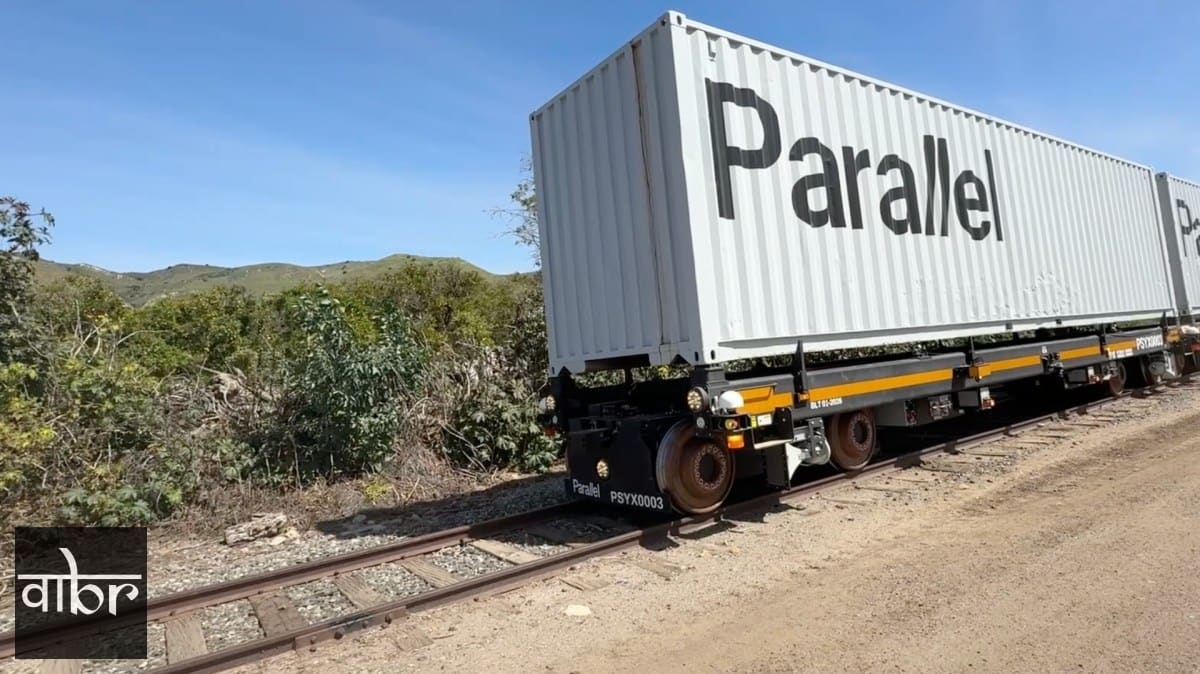
The global supply chain has long suffered from structural inefficiencies, rigid infrastructure, and heavy reliance on fossil fuels. Enter a new era of logistics innovation led by seasoned aerospace engineers. Parallel Systems, a revolutionary mobility startup founded by former SpaceX alumni, has successfully secured a massive $100 million funding round. This capital injection is earmarked to scale the production and deployment of its groundbreaking electric rail vehicle technology, setting the stage for a dramatic transformation of global shipping corridors. By reimagining how heavy goods move across land, the company is positioning autonomous freight trains as the ultimate solution to modern supply chain bottlenecks. In this deep-dive investigative report, we analyze the technology, market forces, and strategic implications of this monumental capital raise for autonomous freight trains.
Deep Dive: Full Event Breakdown
The recent $100 million financing milestone represents a pivotal turning point not just for Parallel Systems, but for the broader rail transportation sector. Traditional rail has remained largely stagnant for over a century, relying on massive locomotives hauling monolithic, mile-long trains. While efficient for bulk commodities over transcontinental routes, this legacy model struggles with flexibility, port congestion, and short-to-medium-haul corridor optimization.
The startup's answer to this logistical crisis is a motorized, self-contained electric rail vehicle designed to operate independently or couple dynamically in platoons. Each unit is built to shuttle thousands of pounds of freight across distances up to 500 miles on a single charge. By decentralizing the traditional train, these autonomous freight trains bypass the congestion of major marshalling yards, offering point-to-point delivery capabilities that rival long-haul trucking while maintaining the carbon-efficiency of rail.
The capital from this recent round will primarily fund manufacturing expansion, regulatory navigation, and commercial pilot programs with major class-1 railroads and port authorities. Having cut their teeth at SpaceX, the founding team brings a culture of rapid iteration, rigorous first-principles thinking, and aerospace-grade propulsion design to an industry historically resistant to rapid technological shifts.
Industry Impact & Strategic Implications
The deployment of an advanced electric rail vehicle fleet carries profound implications for supply chain logistics worldwide. For decades, intermodal shipping has struggled with the 'last-mile' and 'middle-mile' handoff between maritime ports, rail terminals, and highway distribution centers. Because autonomous freight trains can operate on existing rail infrastructure without requiring massive capital investments in new track construction, they instantly unlock unused capacity on secondary and tertiary rail lines.
Furthermore, this development serves as a powerful catalyst for zero emission shipping. As global regulators tighten carbon emission standards, freight operators face immense pressure to decarbonize their fleets. Traditional diesel-electric locomotives, while cleaner than semi-trucks, still burn massive quantities of diesel fuel. Integrating battery electric trains into national rail networks offers a direct pathway toward zero-emission corridors.
From a competitive standpoint, this freight tech investment signals to venture capitalists and institutional investors that hardware-heavy logistics innovation is once again a high-conviction play. The success of autonomous freight trains could trigger a wave of secondary investments, forcing legacy rail operators to modernize or risk obsolescence in an increasingly agile global marketplace.
Technical / Market Analysis
From a technical perspective, designing an electric rail vehicle capable of autonomous operation presents unique engineering hurdles. Unlike autonomous road vehicles that must navigate unpredictable pedestrians, cyclists, and erratic human drivers, autonomous freight trains operate on closed, dedicated rights-of-way. However, the physics of rail braking, variable cargo weight distribution, and harsh weather conditions present severe operational challenges.
Parallel Systems addresses these challenges by outfitting each electric rail vehicle with redundant electric propulsion motors, advanced sensor suites, and sophisticated computer vision algorithms. Each unit can dynamically calculate stopping distances based on its current payload and velocity, communicating securely with surrounding units to form tightly synchronized platoons. This reduction in aerodynamic drag through platooning maximizes battery efficiency, ensuring that the 500-mile operational range is consistently achievable even under heavy load.
From a market analysis viewpoint, the addressable market is staggering. The North American freight market alone represents hundreds of billions of dollars annually, with a significant percentage of short-to-medium-haul freight currently trapped on congested highways. By capturing a fraction of this market, autonomous freight trains can alleviate highway congestion, reduce highway maintenance costs, and drastically lower corporate carbon footprints.
What This Means for Consumers and Developers
For everyday consumers, the mainstream adoption of autonomous freight trains translates to faster delivery times, reduced consumer goods pricing, and cleaner air. Supply chain bottlenecks frequently manifest as inflated retail prices; by streamlining middle-mile cargo mobility, retailers can maintain leaner inventories without sacrificing fulfillment speed.
For software and hardware developers, the rise of autonomous freight trains opens up an entirely new ecosystem of APIs, fleet management software, predictive maintenance algorithms, and safety monitoring tools. As companies like Parallel Systems scale their operations, software engineers specializing in distributed systems, edge computing, and robotics will find unprecedented opportunities within the rail transportation sector.
Key Takeaways (Detailed bullet points)
- Massive Funding Milestone: Parallel Systems secured $100 million from top-tier investors to scale its autonomous electric rail vehicle technology.
- Aerospace-Grade Innovation: Founded by former SpaceX engineers, the company applies rapid iteration and first-principles design to legacy rail infrastructure.
- Range and Capability: Each electric rail vehicle can independently haul thousands of pounds of freight up to 500 miles on a single charge.
- Infrastructure Efficiency: Autonomous freight trains operate on existing tracks, bypassing congested rail yards and offering flexible point-to-point shipping.
- Environmental Impact: The technology accelerates the transition toward zero emission shipping by replacing diesel locomotives with battery-powered units.
- Market Opportunity: By capturing short-to-medium-haul freight currently dominated by trucking, the technology addresses massive supply chain inefficiencies.
The Road Ahead (Forward-looking conclusion)
The journey from venture-backed prototype to national logistics backbone is fraught with regulatory hurdles, union negotiations, and rigorous safety validations. However, the successful closure of this $100 million funding round proves that the appetite for disruptive cargo mobility solutions has never been stronger. As pilot programs expand and regulatory frameworks adapt to accommodate autonomous freight trains, we are witnessing the dawn of a cleaner, smarter, and infinitely more flexible era in global trade. The reinvention of the railroad is no longer a distant sci-fi fantasy—it is rolling down the tracks today.
Strategic Industry Takeaways & Future Outlook
When evaluating the broader technological shift, autonomous freight trains serves as a defining benchmark for modern standards. Industry analysts emphasize that continuing developments in autonomous freight trains will dictate user adoption and market expansion.
When evaluating the broader technological shift, autonomous freight trains serves as a defining benchmark for modern standards. Industry analysts emphasize that continuing developments in autonomous freight trains will dictate user adoption and market expansion.
Furthermore, strategic integration surrounding electric rail vehicle remains a crucial priority for stakeholders. Ensuring high performance across electric rail vehicle is expected to deliver long-term competitive advantages.
Furthermore, strategic integration surrounding electric rail vehicle remains a crucial priority for stakeholders. Ensuring high performance across electric rail vehicle is expected to deliver long-term competitive advantages.
Furthermore, strategic integration surrounding electric rail vehicle remains a crucial priority for stakeholders. Ensuring high performance across electric rail vehicle is expected to deliver long-term competitive advantages.
Furthermore, strategic integration surrounding electric rail vehicle remains a crucial priority for stakeholders. Ensuring high performance across electric rail vehicle is expected to deliver long-term competitive advantages.
📌 Related Briefings & Stories
Varta Brief Editorial Desk
• Newsroom StaffDedicated to objective, deep, and fact-verified reporting across technology, science, world affairs, and modern markets.
Follow Varta Brief on Google
Add Varta Brief as a preferred source to see our verified stories and daily briefings in Google Top Stories and Discover.
Found this briefing insightful?
Share it with your colleagues and community.
Read Next

Grand Theft Ocarina: Why the GTA 6 and Zelda Clash is Gaming's Barbenheimer

TechCrunch Disrupt 2026: Discover Emerging Tech Startups Now
