Bedrock Robotics Secures $600M Funding to Scale Autonomous Excavators

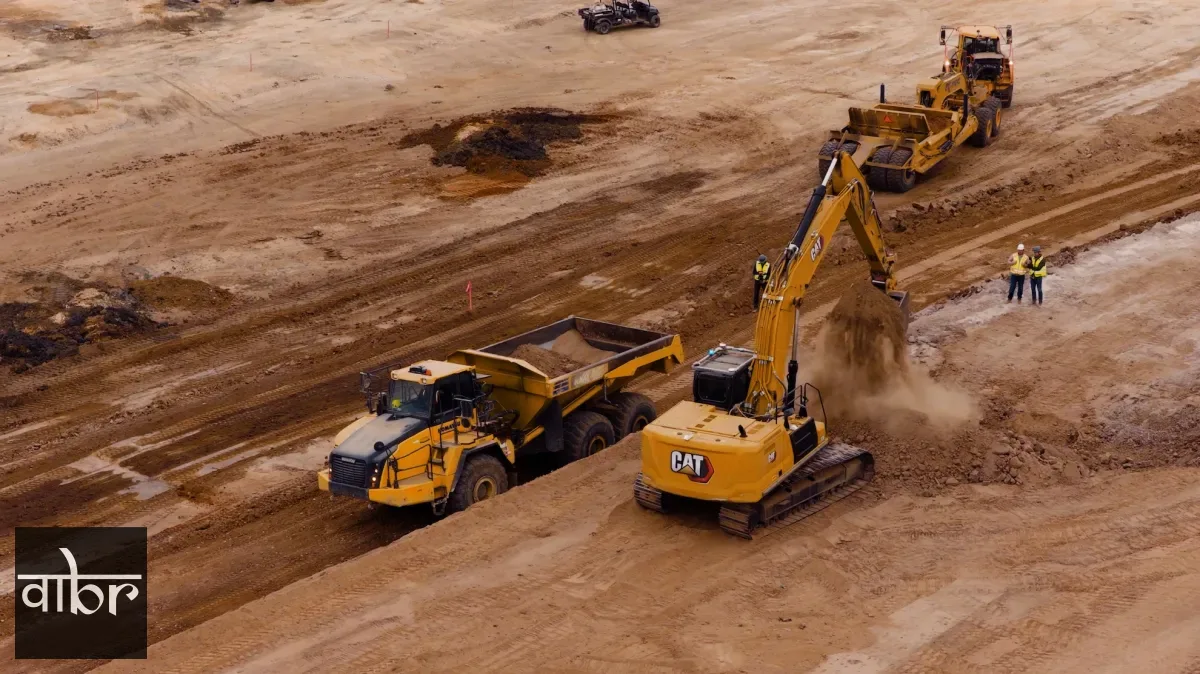
The global construction and earthmoving landscape is undergoing a massive paradigm shift, driven by surging infrastructure demands and a compounding human resource crisis. At the epicenter of this technological transformation is Bedrock Robotics, a trailblazing construction robotics startup that has officially captured the attention of top-tier investors worldwide. By pioneering sophisticated autonomous excavators, the company has successfully closed a monumental $600 million funding round, skyrocketing its corporate valuation to a staggering $4.1 billion. This landmark financial injection highlights a broader industry acknowledgment: traditional earthmoving is hitting its absolute limits, and autonomous excavators represent the definitive path forward for large-scale civil engineering, commercial building, and vital infrastructure development across the globe.
Deep Dive: Full Event Breakdown
The astronomical $600 million capital raise announced by this prominent construction robotics startup stands as one of the largest private funding milestones in the industrial technology sector this decade. Investors ranging from traditional venture capital heavyweights to specialized infrastructure funds poured capital into Bedrock Robotics, pushing its valuation to $4.1 billion. The core catalyst behind this unprecedented investor enthusiasm is the company’s relentless focus on deploying autonomous excavators directly into active, unpredictable job sites. Unlike autonomous passenger vehicles operating on predictable paved roads, autonomous excavators must navigate unstructured dirt, shifting mud, dynamic loads, and constantly changing topography. Bedrock Robotics has managed to conquer these notoriously difficult physics problems through a proprietary blend of advanced computer vision, sensor fusion, and adaptive machine learning models specifically trained for heavy earthmoving tasks.
Furthermore, the sheer magnitude of this venture capital funding underscores a dramatic pivot in how institutional investors perceive industrial hardware-software integration. While software-as-a-service investments faced headwinds, tangible automation that addresses multi-trillion-dollar physical markets continues to command massive premiums. The deployment of autonomous excavators is no longer a futuristic laboratory concept; it is scaling rapidly onto commercial job sites, fundamentally altering how trenches are dug, foundations are graded, and massive quantities of earth are shifted.
Industry Impact & Strategic Implications
The ripple effects of this funding round extend far beyond a single enterprise, shaking up the entire heavy equipment manufacturing and contracting ecosystem. For decades, legacy equipment manufacturers have experimented with remote-controlled machinery and semi-automated grading assists. However, the rise of specialized fleets utilizing autonomous excavators introduces true autonomy to the dirt-moving process. General contractors and civil engineering firms are currently grappling with an acute skilled labor shortage that threatens project timelines and inflates budgets globally. By adopting cutting-edge robotic excavation systems, major construction conglomerates can maintain productivity levels even when qualified human operators are unavailable.
Strategic implications for equipment fleet managers are profound. Integrating autonomous excavators into existing workflows reduces fuel consumption, minimizes operational errors, and dramatically improves site safety. Heavy machinery automation removes human operators from hazardous environments, such as unstable excavation pits, steep trench walls, and zones prone to subterranean utility strikes. Consequently, insurance premiums for general contractors deploying autonomous excavators are projected to decrease, while project delivery speeds experience exponential gains.
Technical / Market Analysis
From a technical standpoint, building reliable autonomous excavators requires overcoming immense engineering barriers that have stymied robotics researchers for years. Excavation is an interaction-heavy task involving high resistive forces, variable soil mechanics, and continuous bucket-to-earth friction. Bedrock Robotics differentiates itself through advanced AI earthmoving technology that constantly evaluates soil composition in real-time, dynamically adjusting breakout force, bucket angle, and swing speed to optimize every single scoop. Market analysts project that the total addressable market for autonomous heavy machinery will expand exponentially over the next decade, with compound annual growth rates outpacing almost every other segment of industrial robotics.
As construction tech trends lean heavily toward uncrewed machinery, early movers like this construction robotics startup hold a formidable competitive moat. The vast amounts of proprietary operational data collected by these autonomous excavators create a continuous feedback loop, perpetually refining the machine learning algorithms. Traditional OEMs are now racing to partner with or acquire nimble software-hardware innovators to avoid being left behind in the race for true job-site autonomy.
What This Means for Consumers and Developers
While the immediate deployment of autonomous excavators targets commercial infrastructure and large-scale industrial projects, the downstream effects directly touch everyday consumers. Faster completion of highway expansions, residential developments, and municipal utility upgrades translates to reduced traffic congestion, lower housing development costs, and improved public infrastructure reliability. For software developers and robotics engineers, the rapid growth of this construction robotics startup opens up a dynamic new frontier. Developing applications for heavy machinery automation requires specialized skill sets combining robotics kinematics, edge computing, and robust safety-critical systems architecture. As billions flow into autonomous excavators, developers will find unprecedented career opportunities at the intersection of heavy machinery and artificial intelligence.
Key Takeaways
- Massive Financial Milestone: Bedrock Robotics secured a $600 million funding round, achieving an impressive $4.1 billion valuation driven by confidence in autonomous excavators.
- Mitigating Labor Crises: The rapid adoption of autonomous excavators directly combats the severe skilled labor shortage plaguing the global construction and earthmoving sectors.
- Advanced Engineering Capabilities: Proprietary AI earthmoving technology allows autonomous excavators to adapt to shifting soils, variable terrains, and complex excavation geometries in real-time.
- Enhanced Safety and Efficiency: Heavy machinery automation removes human workers from dangerous excavation pits, drastically reducing workplace accidents and operational downtime.
The Road Ahead
The unprecedented financial backing secured by Bedrock Robotics signals the dawn of a new era for industrial automation. As autonomous excavators transition from early pilot programs to ubiquitous job-site fixtures, the construction industry will undergo a permanent structural evolution. Over the coming years, we can expect to see deeper integration between autonomous excavators, autonomous haul trucks, and drone-based site-mapping platforms, creating fully synchronized, self-operating earthmoving ecosystems. For a construction robotics startup leading this charge, the $600 million injection is merely the starting block. The ultimate destination is a safer, faster, and infinitely more efficient built environment powered by intelligent machines that out-dig, out-think, and out-perform traditional manual workflows.
Strategic Industry Takeaways & Future Outlook
Furthermore, strategic integration surrounding construction robotics startup remains a crucial priority for stakeholders. Ensuring high performance across construction robotics startup is expected to deliver long-term competitive advantages.
Furthermore, strategic integration surrounding construction robotics startup remains a crucial priority for stakeholders. Ensuring high performance across construction robotics startup is expected to deliver long-term competitive advantages.
Furthermore, strategic integration surrounding construction robotics startup remains a crucial priority for stakeholders. Ensuring high performance across construction robotics startup is expected to deliver long-term competitive advantages.
Furthermore, strategic integration surrounding construction robotics startup remains a crucial priority for stakeholders. Ensuring high performance across construction robotics startup is expected to deliver long-term competitive advantages.
Furthermore, strategic integration surrounding construction robotics startup remains a crucial priority for stakeholders. Ensuring high performance across construction robotics startup is expected to deliver long-term competitive advantages.
📌 Related Briefings & Stories
Varta Brief Editorial Desk
• Newsroom StaffDedicated to objective, deep, and fact-verified reporting across technology, science, world affairs, and modern markets.
Follow Varta Brief on Google
Add Varta Brief as a preferred source to see our verified stories and daily briefings in Google Top Stories and Discover.
Found this briefing insightful?
Share it with your colleagues and community.
Read Next

Xbox Netflix Deal Rejected: Inside the Massive $500M Gaming Fallout

iPhone Duo Cracking Issues Threaten Apple's Foldable Smartphone Dominance