
10 Best Places to Visit in Jodhpur: The Ultimate Blue City Guide
Explore the top places to visit in Jodhpur, from the towering Mehrangarh Fort and Umaid Bhawan Palace to hidden stepwells, vibrant bazaars, and travel tips.

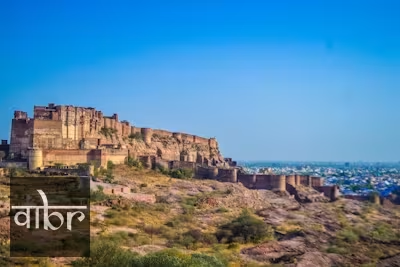
10 Must-See Places to Visit in Jodhpur: Forts, Palaces, and Hidden Gems
Perched at the edge of the Thar Desert, Jodhpur is instantly recognizable by the sea of indigo-washed cubic houses clustered beneath a towering red-sandstone citadel. Founded in 1459 by Rao Jodha, the former capital of the Marwar kingdom balances monumental royal heritage with vibrant, living traditions.
Whether you are planning a weekend stopover or an extensive Rajasthan itinerary, discovering the top places to visit in Jodhpur requires a thoughtful mix of iconic fortresses, intricate stepwells, scenic desert trails, and bustling street markets.
1. Mehrangarh Fort
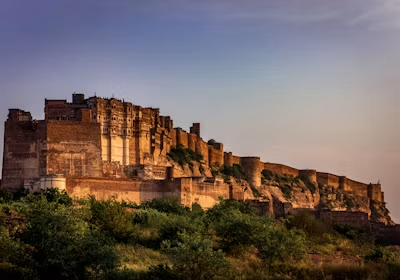
Rising 400 feet on a perpendicular cliff above the city skyline, Mehrangarh Fort is one of the largest and best-preserved fortifications in India.
Inside the complex, you will find expansive courtyards and exquisitely decorated palaces:
- Sheesh Mahal: The Hall of Mirrors, decorated with elaborate mirror mosaics placed beneath painted plasterwork.
- Phool Mahal: A private chamber finished with intricate ceiling paintings and pure gold leaf work sourced from Gujarat.
- Moti Mahal: The Pearl Palace, built with finely pulverized seashell plaster that creates a soft, pearlescent finish.
- The Museum Galleries: An extensive collection of royal palanquins (howdahs), musical instruments, armory, and miniature paintings.
Tip: Head to the fort ramparts during the late afternoon for a bird’s-eye perspective of the blue-painted houses in the old town.
2. Jaswant Thada
Located a short walk downhill from Mehrangarh Fort, Jaswant Thada is an intricate 19th-century royal cenotaph built in memory of Maharaja Jaswant Singh II.
Crafted entirely from thin, polished sheets of Makrana white marble, the structure glows with a warm, translucent hue when struck by the morning sun. The memorial complex features carved jali (lattice) screens, multi-tiered domes, sculpted gardens, and a calm lakeside terrace that offers clear reflection shots of the monument.
3. Umaid Bhawan Palace & Museum
Completed in 1943 on Chittar Hill, Umaid Bhawan Palace represents one of the 20th century’s most ambitious architectural projects, blending classical European Art Deco with traditional Rajput stone masonry.
The 347-room sandstone complex is divided into three distinct wings:
- The private residence of Jodhpur’s erstwhile royal family.
- A luxury heritage hotel operated by the Taj Group.
- A public museum showcasing antique clocks, classic automobiles, royal sporting trophies, and mid-century art deco furniture.
4. Toorji Ka Jhalra (The Stepwell)
Built in the 1740s by Rani Toorji, this historic stepwell is a testament to Marwar’s sophisticated rainwater management systems. Submerged for decades, it has been restored to reveal pyramid-shaped staircases, carved stone jharokhas, and figures of dancing lions and elephants.
Located in the heart of the old city, the area surrounding the stepwell has evolved into a vibrant cultural pocket, lined with rooftop cafes, concept stores, and handicraft boutiques.
5. Clock Tower and Sardar Market
The landmark Ghanta Ghar (Clock Tower) anchors Sardar Market, the bustling epicenter of Jodhpur's old bazaar.
Navigating the narrow alleys reveals dedicated quarters for specific crafts:
- Spices: Freshly ground Mathania red chili powders, turmeric, and royal chai blends.
- Textiles: Bandhani (tie-dye) dupattas, Leheriya fabrics, and hand-embroidered leather juttis (mojaris).
- Handicrafts: Antiques, hand-carved sheesham wood decor, and brass items.
- Street Snacks: Authentic Rajasthani mawa kachori and mirchi bada.
6. Rao Jodha Desert Rock Park
Spanning 70 hectares at the rocky base of Mehrangarh Fort, this ecological park was established in 2006 to restore native Thar Desert flora to a once-barren expanse of volcanic rock.
A network of four distinct walking trails lets visitors observe unique geological formations, native desert shrubs, butterflies, and over 100 species of resident and migratory birds.
7. Mandore Gardens
Before Jodhpur became the royal capital, nearby Mandore was the historic seat of the Parihar and Rathore dynasties. Located roughly 9 kilometers north of the city center, the gardens house elaborate rock-cut cenotaphs (dewals) dedicated to former rulers.
Unlike traditional Rajasthani chhatris, these cenotaphs resemble soaring Hindu temples built with deep-red sandstone. The grounds also house the "Hall of Heroes," featuring high-relief rock statues of local folklore figures and deities.
8. Kaylana Lake & Machiya Safari Park
If you want an escape from the city streets, Kaylana Lake is an artificial reservoir created in 1872 by Pratap Singh. Situated 8 kilometers west of Jodhpur, it is a prime spot for sunset viewing and bird watching during migratory seasons. Adjacent to the lake lies the Machiya Safari Park, home to desert foxes, nilgai (blue bulls), and monitor lizards.
9. Chamunda Mataji Temple
Located at the southern end of Mehrangarh Fort, this temple dates back to the fort’s initial construction in 1460 by Rao Jodha. Housing the patron deity of the Marwar royal household, the shrine remains an active place of worship. Visiting during evening prayer (aarti) allows travelers to witness traditional rituals while taking in sweeping views of the lit city below.
10. Navchokiya (The Blue Quarter)
To experience the true character of the "Blue City," bypass tourist traffic and take a walking exploration through the Navchokiya neighborhood. The vibrant indigo paint—traditionally applied to deter termites and deflect the harsh desert heat—gives these narrow, car-free streets their signature look. The quarter offers exceptional opportunities for architectural photography and candid street scenes.
Comparison of Top Jodhpur Attractions
Attraction | Primary Highlight | Typical Time Needed | Best Time to Visit |
Mehrangarh Fort | Palaces, museum, city vistas | 2.5 to 3.5 Hours | Early Morning (9:00 AM) |
Jaswant Thada | White marble cenotaphs & gardens | 45 to 60 Minutes | Morning or Late Afternoon |
Umaid Bhawan Palace | 20th-century Art Deco architecture | 1 to 1.5 Hours | Afternoon |
Toorji Ka Jhalra | Historic stepwell & cafe scene | 30 to 45 Minutes | Midday / Evening |
Rao Jodha Park | Native desert ecology & hiking | 1.5 to 2 Hours | Morning (7:00 AM – 9:00 AM) |
Mandore Gardens | Ancient royal cenotaphs & ruins | 1.5 to 2 Hours | Late Afternoon |
Practical Travel Tips for Visiting Jodhpur
Ideal Time to Visit
The best window to visit Jodhpur is between October and March, when winter temperatures hover comfortably between 10°C and 27°C. Avoid the peak summer months (April to June), where temperatures frequently cross 42°C.
Recommended Duration
A 2 to 3-day itinerary is sufficient to cover all major architectural landmarks, walk through the old markets, and experience the cultural neighborhoods without rushing.
Getting Around
- Auto-rickshaws: Ideal for navigating between major attractions and the fringe of the old city. Agree on a fare before boarding.
- Walking: The inner alleys of Navchokiya and Sardar Market are best explored on foot due to tight, winding pathways.
Frequently Asked Questions
Why are houses in Jodhpur painted blue?
The indigo wash was originally used by Brahmins to distinguish their homes and reflect the desert sun. Over time, the practice spread across the old quarter because the copper-sulfate and limestone mixture helped insulate houses from summer heat and deter pests.
Is Mehrangarh Fort accessible for travelers with mobility limitations?
Yes. Mehrangarh Fort has an operational elevator service near the main entrance that transports visitors directly to the upper courtyards, bypassing the steep entry ramps.
How far is Jaswant Thada from Mehrangarh Fort?
Jaswant Thada is located approximately 1 kilometer from the main gates of Mehrangarh Fort. It takes less than five minutes by auto-rickshaw or a 10-minute downhill walk.
What are the best day trips from Jodhpur?
Popular excursions include the Bishnoi Village Safari (for wildlife and traditional pottery), the massive 15th-century marble temple complex of Ranakpur, and the historic sand dunes of Osian.
Jodhpur brings Rajasthan's regal past directly into the modern day. Start by securing your entry tickets early for Mehrangarh Fort to beat the tour buses, then spend your afternoon unhurriedly navigating the blue alleys and vibrant bazaars of the old city.