
AI's Thermal and Energy Crunch: Why Liquid Cooling and Power Grids Are the New Frontier

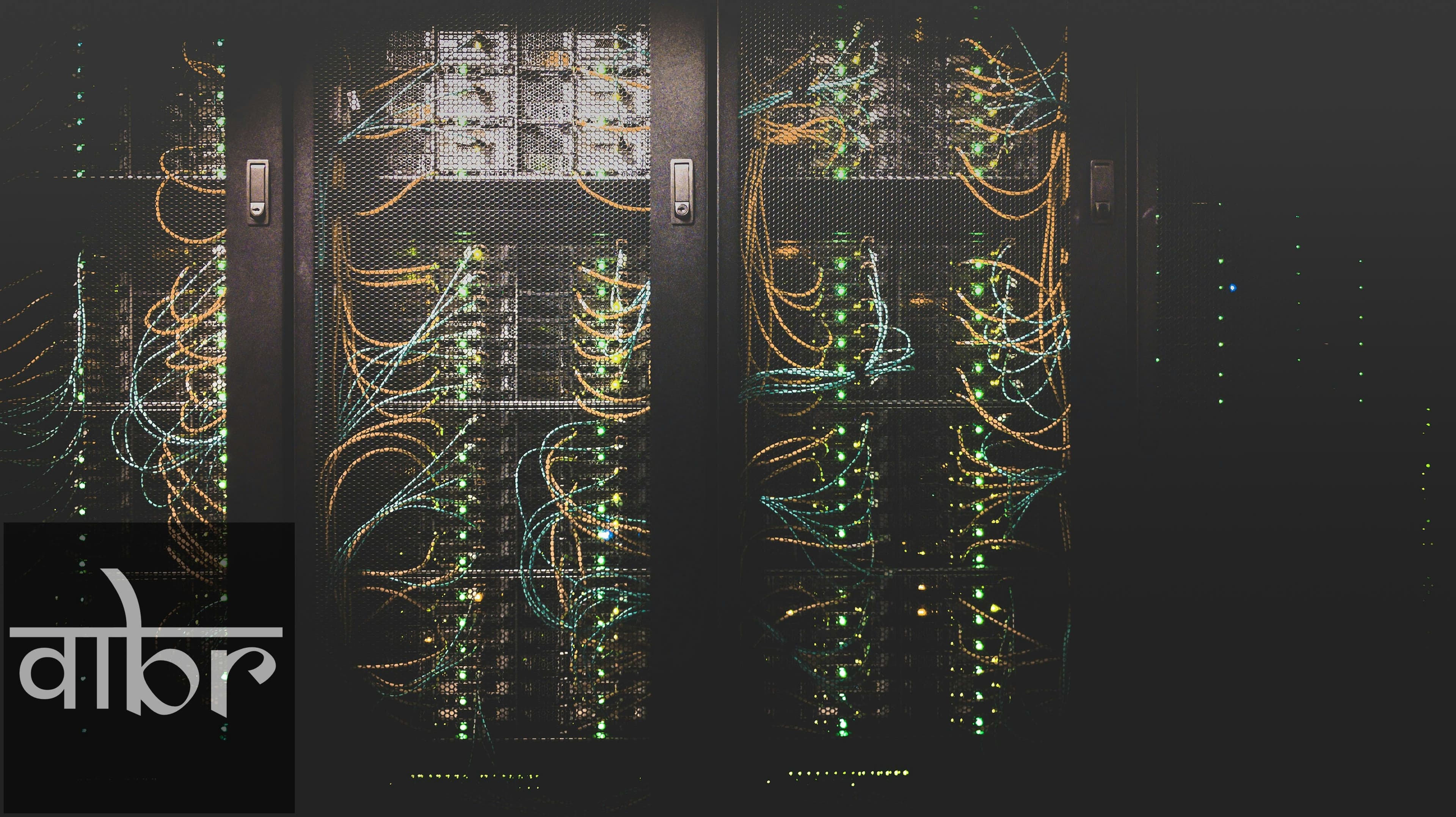
For the first two years of the generative artificial intelligence boom, the primary operational hurdle was straightforward: securing enough high-end accelerator silicon. Today, the operational bottleneck has moved from silicon delivery pipelines directly into substation yards and mechanical plant rooms. The true limiting factor for scaling massive AI training clusters is no longer just finding chips—it is securing power grid capacity and managing unprecedented thermal density.
Legacy enterprise data centers were engineered for average rack densities between 8 and 15 kilowatts (kW). Contemporary accelerator clusters housing dense GPU arrays routinely require 80 to 140 kW per rack, with next-generation platforms projecting thermal loads above 250 kW. That ten-to-fifteenfold jump has shattered traditional mechanical chillers and forced hyperscalers to completely rethink their thermodynamic architectures.
The Power Grid Deficit: Waiting for Gigawatts
The most acute challenge facing developers is electrical interconnect lead time. Across major computing hubs in Northern Virginia, Silicon Valley, Ireland, and Frankfurt, regional utilities report multi-year backlogs for high-voltage transmission tie-ins. Megawatt-scale requests have escalated into multi-hundred-megawatt and gigawatt campus demands, forcing facility operators to confront fundamental grid constraints:
- Substation Lead Times: Procuring large step-down power transformers now frequently takes 24 to 48 months due to supply shortages and specialized core steel manufacturing limits.
- Local Distribution Saturation: Municipal grids struggle to accommodate sudden localized baseload draws without risking voltage instability for surrounding residential and commercial zones.
- Intermittent Renewables Mismatch: Hyperscaler carbon-neutral commitments clash with the 24/7 continuous baseload demand required by uninterrupted foundation model pre-training runs.
To bypass these delays, operators are increasingly investing in behind-the-meter energy generation. Large facilities are co-locating near nuclear generation stations, contracting dedicated geothermal resources, or integrating on-site natural gas microturbines paired with battery energy storage systems (BESS) to smooth out peak inductive loads during training checkpoints.
The Thermodynamic Wall: Why Forced Air Has Failed
Beyond sourcing raw electricity, facilities must expel the equivalent thermal energy. Standard air cooling operates by pulling ambient conditioned air across finned copper heat sinks. However, thermodynamic physics dictates that air has a relatively low heat capacity and volumetric heat transfer coefficient compared to liquids.
When a single node consumes several kilowatts within a compact 2U or 4U chassis, moving enough cubic feet of air per minute (CFM) requires massive, high-RPM blower fans. At extreme densities, this approach encounters severe physical limitations:
- Parasitic Fan Power: In ultra-dense air-cooled configurations, fans consume up to 25% of the chassis power simply to move air across dense heatsinks, drastically inflating Power Usage Effectiveness (PUE) metrics.
- Acoustic and Vibrational Hazards: High-velocity fans generate acoustic noise exceeding 90 decibels, causing high-frequency mechanical vibrations that can loosen cabling or trigger solder fatigue.
- Thermal Throttling: The temperature delta across heat sinks becomes too narrow to keep chip junctions under safe operating ceilings, triggering automatic clock throttling and stalling synchronized parallel matrix calculations.
Cooling Architecture | Typical Rack Capacity | Heat Transfer Efficiency | Primary Infrastructure Requirement |
|---|---|---|---|
Raised-Floor Air Cooling | Up to 15–20 kW | Low (air convection) | CRAC/CRAH air handlers and contained cold aisles |
Rear-Door Heat Exchangers (RDHx) | 30–60 kW | Moderate (air-liquid hybrid) | Chilled-water loop connected to specialized rack doors |
Direct-to-Chip (DTC) Cold Plates | 80–150+ kW | High (liquid conduction) | Coolant Distribution Units (CDUs) and closed-loop fluid manifolds |
Total Immersion (Single/Two-Phase) | 150–300+ kW | Maximum (dielectric liquid submersion) | Specialized tank enclosures and sealed fluid reclamation systems |
The Direct-to-Chip Revolution
To circumvent the air-cooling wall, the industry has rapidly adopted Direct-to-Chip (DTC) liquid cooling as the standard for foundation model superclusters. DTC architectures route treated dielectric fluids or closed-loop deionized water directly across nickel-plated copper microchannel cold plates clamped to the accelerator silicon.
Because water carries roughly 3,000 times more heat per unit volume than air, DTC loops extract heat directly at the component junction. The primary system modules include:
- Coolant Distribution Units (CDUs): Heavy-duty mechanical pump skids that isolate the building's facility water loop from the delicate internal computing loop using titanium plate heat exchangers.
- Secondary Fluid Networks: Stainless-steel or reinforced braided manifolds integrated along rack vertical rails, utilizing blind-mate drip-free quick-disconnect couplers to service individual chassis.
- Warm-Water Cooling Loops: Because direct fluid contact removes heat so efficiently, the facility supply loop can operate at warm inlet temperatures of 32°C to 45°C (90°F to 113°F). This eliminates energy-hungry refrigeration compressors entirely, allowing facilities to rely on evaporative dry coolers year-round.
Operational Complexities: Leaks, Chemistry, and Retrofits
While thermodynamic gains are undeniable, shifting to liquid cooling introduces complex mechanical failure modes previously foreign to enterprise data floors:
- Fluid Chemistry and Corrosion: Operating closed-loop plumbing across varied metals (copper, aluminum, stainless steel) risks galvanic corrosion. Operators must balance biocide inhibitors, maintain glycol percentages, and continuously monitor electrical conductivity.
- Non-Drip Interconnect Reliability: A single O-ring degradation inside a high-pressure manifold risks spraying coolant directly across multi-thousand-dollar circuit boards, requiring optical leak-detection ropes threaded through every tray.
- Floor Loading and Structural Mass: Multi-GPU liquid-cooled racks weigh significantly more than standard server enclosures. Retrofitting legacy facilities frequently requires reinforcing concrete slab floors to bear static loads exceeding 4,000 to 5,000 pounds per enclosure.
Frequently Asked Questions
Can existing air-cooled data centers be converted to support AI clusters?
Only partially. While operators can install rear-door heat exchangers or stand-alone CDUs in retrofitted facilities, older buildings often lack the structural slab capacity, ceiling height for piping runs, and incoming utility service required to run full-scale direct-to-chip infrastructure efficiently.
What is the typical PUE of a modern liquid-cooled AI facility?
By eliminating mechanical chillers and reducing parasitic chassis fan loads, optimized direct-to-chip facilities frequently achieve a Power Usage Effectiveness (PUE) between 1.10 and 1.15, compared to 1.40 or higher for traditional air-cooled enterprise data centers.
Is two-phase immersion cooling replacing direct-to-chip systems?
Two-phase immersion offers superior heat capture, but regulatory scrutiny over PFAS chemicals (often called "forever chemicals") and fluid evaporation costs have slowed widespread enterprise adoption. Direct-to-chip remains the dominant commercial choice for current hyperscale deployments.
The Structural Takeaway
The rapid evolution of generative AI has fundamentally unified hardware engineering, municipal electrical planning, and industrial thermodynamics. Over the next five years, the competitive edge in artificial intelligence will not belong solely to teams with refined algorithmic models—it will belong to the organizations that master megawatts, megapascal plumbing, and thermodynamic dissipation at unprecedented industrial scale.
Varta Brief Editorial Desk
• Newsroom StaffDedicated to objective, deep, and fact-verified reporting across technology, science, world affairs, and modern markets.
Follow Varta Brief on Google
Add Varta Brief as a preferred source to see our verified stories and daily briefings in Google Top Stories and Discover.
Found this briefing insightful?
Share it with your colleagues and community.