
Dubai Flying Taxi Service: Everything You Need to Know
Dubai is rolling out electric flying taxis to turn 45-minute drives into 10-minute flights. Here is everything on vertiports, launch dates, routes, and fares.

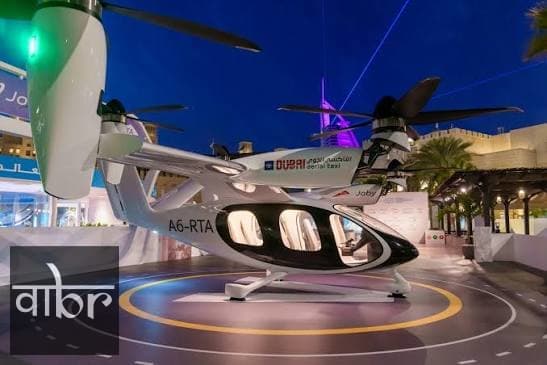
Skipping rush-hour gridlock on Sheikh Zayed Road by boarding an electric aircraft from Dubai International Airport to the Palm Jumeirah is no longer a sci-fi concept.
Through an exclusive six-year commercial agreement with California-based aerospace firm Joby Aviation and vertiport builder Skyports Infrastructure, Dubai's Roads and Transport Authority (RTA) is officially moving electric vertical takeoff and landing (eVTOL) aircraft into daily public transit.
Here is an in-depth breakdown of how Dubai's aerial taxi network functions, where the vertiports are located, how much a ticket will cost, and what passengers can expect during their first flight.
How the Dubai Air Taxi System Works
Unlike traditional helicopters, which are loud, carbon-intensive, and restricted by strict urban airspace rules, Joby’s commercial air taxi is a purpose-built eVTOL aircraft engineered specifically for dense metropolitan centers.
Key technical specifications include:
- Capacity: One commercial pilot and four passengers with standard carry-on luggage.
- Cruising Speed: Up to 320 km/h (200 mph).
- Range: Over 160 km on a single battery charge, handling city hops and inter-emirate runs.
- Acoustic Footprint: Operating at approximately 45 decibels during cruise—roughly 100 times quieter than conventional twin-engine helicopters—blending seamlessly into urban background noise.
- Zero Direct Emissions: Fully electric propulsion powered by high-density lithium-ion battery packs.
The Initial 4 Vertiport Locations
Dubai’s aerial transit network relies on dedicated vertical take-off and landing nodes known as vertiports. Skyports Infrastructure is building the first four hubs to connect the emirate's primary business, transit, and tourist zones:
- Dubai International Airport (DXB): Located adjacent to Terminal 3, enabling direct air transfers for arriving international travelers.
- Downtown Dubai: Positioned near Dubai Mall and the Burj Khalifa district.
- Palm Jumeirah: Situated near the trunk of the Palm to serve major luxury hospitality corridors.
- Dubai Marina: Stationed near the American University in Dubai (AUD) to service high-density residential and tech hubs.
Each vertiport features dedicated security lanes, air-conditioned passenger lounges, automated boarding gates, and ultra-fast charging infrastructure designed to turn around an aircraft in under 10 minutes.
Flight Times and Route Comparisons
The primary value proposition of an urban air taxi is pure time savings. Below is a direct comparison between standard peak-hour road travel and projected eVTOL point-to-point flights:
Corridor | Peak Driving Time | Air Taxi Flight Time | Time Saved |
DXB Airport to Palm Jumeirah | 45–60 Minutes | ~10 Minutes | Up to 50 min |
DXB Airport to Downtown Dubai | 35–45 Minutes | ~7 Minutes | Up to 38 min |
Dubai Marina to Palm Jumeirah | 20–30 Minutes | ~4 Minutes | Up to 26 min |
Downtown Dubai to Yas Island (Abu Dhabi) | 80–95 Minutes | ~22 Minutes | Up to 73 min |
How to Book and Expected Pricing
Booking a Dubai flying taxi is integrated directly into established digital ecosystems. Joby Aviation has a global partnership with Uber, allowing passengers to reserve an air taxi seat seamlessly alongside standard Uber rides in the app. Booking is also integrated into the Dubai RTA S'hail multi-modal transit platform.
Expected Fare Structure
- Launch Phase: Fares will initially reflect premium ground transport (comparable to Uber Black or private limousine services), projected between $50 to $120 (AED 180 to AED 440) depending on route length.
- Mature Phase: As the aircraft fleet expands and battery charging cycles optimize, the RTA plans to scale pricing down to standard taxi rates, making aerial mobility viable for everyday commuters.
Safety Certification and Regulations
Passenger safety in urban airspace is regulated under strict frameworks established by the UAE General Civil Aviation Authority (GCAA) and the US Federal Aviation Administration (FAA):
- Dual-Pilot Capable Systems: All commercial passenger flights operate with a fully certified human commercial pilot onboard during the rollout phase.
- System Redundancy: Joby's aircraft utilizes six independent electric motors with isolated power lines. The aircraft can safely sustain normal flight and landing even if a motor fails.
- Extreme Heat Testing: The airframe and high-efficiency thermal cooling systems have undergone rigorous desert stress-testing in the UAE to guarantee battery reliability in 45°C+ summer conditions.
Frequently Asked Questions
Can anyone book a ride on a Dubai flying taxi?
Yes. The service is open to the general public, business commuters, and tourists. Rides can be booked per seat through the Uber and RTA mobility apps once passenger operations begin.
How much luggage can passengers bring?
Standard allowances permit one carry-on bag and a personal item per passenger, fitting inside dedicated luggage compartments beneath the cabin.
What happens in severe weather or sandstorms?
Air taxis adhere to strict Visual Flight Rules (VFR) and Instrument Flight Rules (IFR) under GCAA oversight. Flights pause during heavy dust storms or severe wind advisories, with passengers automatica lly rerouted via premium road transport.
Dubai's electric air taxi initiative marks the transition of eVTOL technology from prototype demos to regulated municipal infrastructure. As vertiport builds wrap up and flight testing reaches commercial certification, the city is set to establish the operational template for urban air mobility worldwide.