Fire Cargo Into Space: Inside Longshot's Radical Gun Launch Technology

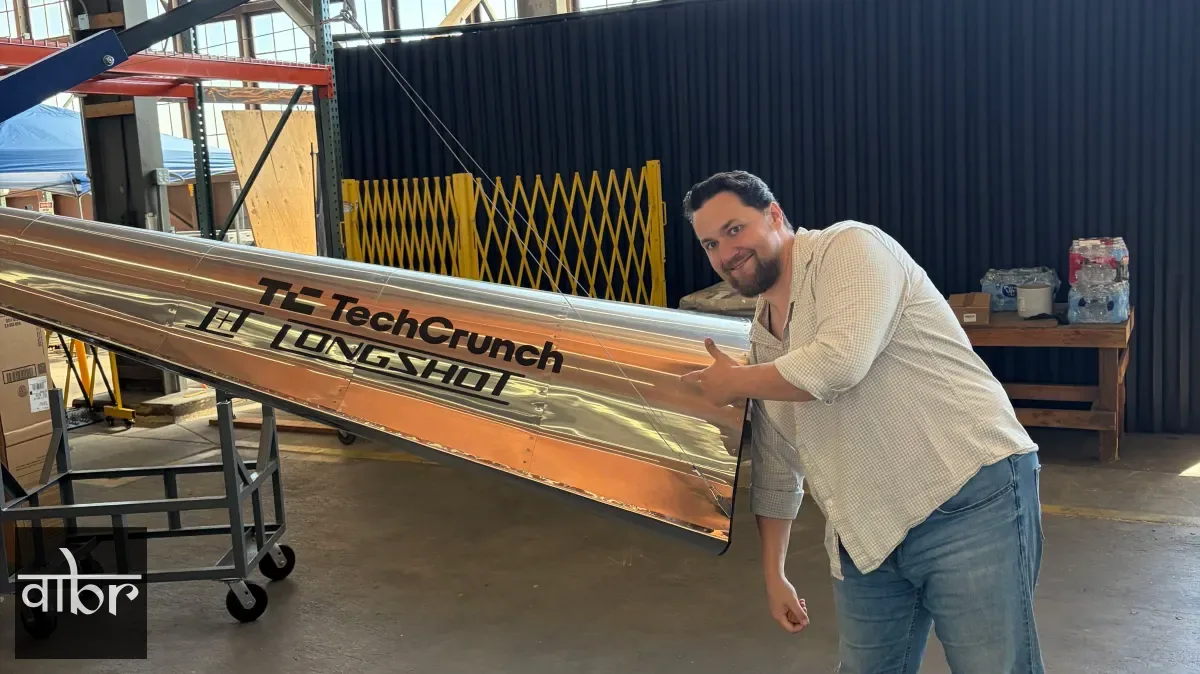
For decades, humanity's quest to escape Earth's deep gravity well has relied on chemical rockets. Massive boosters roar into the sky, burning thousands of tons of propellant to lift mere fractions of their weight into orbit. But as commercial interest in the cosmos skyrockets, visionary aerospace engineers are asking a provocative question: What if we could simply fire cargo into space using a giant gun instead? Enter Longshot, an audacious startup preparing to showcase its revolutionary technology to the world.
Longshot's radical approach proposes to bypass traditional launch economics entirely. By utilizing hypervelocity kinetics and colossal kinetic gun launch systems, the company intends to fire cargo into space with unprecedented efficiency. This paradigm shift could drastically reduce launch costs, opening up entirely new commercial avenues, most notably the establishment of large-scale space data centers in low Earth orbit. As industry leaders gather for TechCrunch Disrupt 2026, Longshot's bold vision is set to take center stage, challenging conventional wisdom and redefining what is possible in modern aerospace engineering.
Deep Dive: Full Event Breakdown
The ambition behind Longshot is as staggering as the engineering challenges it seeks to solve. Traditional rocketry suffers from the tyranny of the rocket equation, where every pound of fuel must also carry the weight of the fuel needed to burn after it. Longshot’s kinetic gun launch concept completely upends this physics problem. Instead of carrying heavy propellants into the upper atmosphere, payloads are subjected to immense, controlled acceleration inside a massive ground-based barrel, allowing them to fire cargo into space at hypervelocity.
At TechCrunch Disrupt 2026, attendees will get an unprecedented look at the hardware making this dream a reality. The startup is set to unveil detailed schematics, scaled prototypes, and preliminary test data demonstrating how its alternative launch systems can withstand the extreme G-forces experienced during barrel transit. Industry analysts watching Longshot space tech closely note that while the physics of firing objects out of guns are well-documented, scaling the velocity up to orbital speeds—roughly 17,500 miles per hour—requires revolutionary materials science and energy management systems.
Industry Impact & Strategic Implications
The implications of being able to reliably fire cargo into space via kinetic systems extend far beyond traditional satellite deployment. The primary commercial driver behind Longshot's ambitious roadmap is the realization of space data centers. As terrestrial data centers face escalating power constraints, cooling crises, and land scarcity, moving compute infrastructure to orbit offers continuous solar power and natural cryogenic cooling in the vacuum of space.
However, building orbital compute clusters requires launching massive amounts of hardware. Current next-gen rockets, while cheaper than their predecessors, still impose cost and cadence bottlenecks. By introducing alternative launch systems that can fire cargo into space at a fraction of the cost per kilogram, Longshot could democratize orbital access. This capability forms the backbone of future orbital infrastructure, enabling corporations to scale compute capacity off-world without breaking corporate balance sheets. Aerospace innovation has rarely seen such a disruptive pivot away from vertical rocket integration.
Technical / Market Analysis
From a market analysis perspective, the economics of space access are undergoing a massive transformation. The addressable market for launching heavy equipment, server racks, and shielding materials to support space data centers is projected to grow exponentially over the next decade. Competitors in the next-gen rockets space are heavily funded, but their reliance on chemical propulsion leaves them vulnerable to cost ceilings dictated by fuel chemistry and hardware reusability limits.
Longshot's kinetic gun launch technology bypasses chemical combustion for the initial launch phase, utilizing advanced electromagnetic or gas-dynamic propulsion to fire cargo into space. This significantly slashes operational expenditures per launch. While payloads must be engineered to survive initial high-G acceleration—ruling out delicate human spaceflight initially—heavy hardware, raw materials, propellants, and hardened servers designed for space data centers are ideal candidates. Market experts at TechCrunch Disrupt 2026 argue that if Longshot successfully proves its hypervelocity kinetics model, venture capital will flood into non-rocket launch architectures, fundamentally altering the competitive landscape of the global space economy.
What This Means for Consumers and Developers
While launching massive objects out of giant barrels sounds like science fiction, the downstream effects will profoundly impact everyday consumers and software developers. The proliferation of space data centers will dramatically reduce latency for global communication networks, enhance earth observation data processing, and enable real-time AI computation running entirely in orbit.
For developers, the ability to deploy compute nodes directly into the cosmos via cheap, high-cadence launches means the ultimate edge computing frontier is finally open. As Longshot continues to refine its ability to fire cargo into space, application developers can begin designing distributed systems that leverage orbital processing power without worrying about exorbitant payload delivery fees. The democratization of aerospace innovation ensures that even smaller tech firms can eventually participate in the orbital economy.
Key Takeaways (Detailed bullet points)
- Radical Launch Paradigm: Longshot is developing a massive kinetic launcher designed to fire cargo into space, bypassing traditional chemical rockets.
- Enabling Space Data Centers: The dramatic reduction in payload delivery costs is specifically engineered to make orbital space data centers economically viable.
- Major Showcase: The company is presenting its revolutionary hardware and strategic roadmap at TechCrunch Disrupt 2026.
- Overcoming G-Force Challenges: Engineering teams are utilizing advanced materials and hypervelocity kinetics to ensure payloads survive the intense initial launch phase.
- Market Disruption: The technology threatens to undercut next-gen rockets by offering significantly lower operational costs for heavy, robust cargo.
The Road Ahead (Forward-looking conclusion)
The journey from theoretical physics to operational hardware is fraught with peril, yet Longshot's presence at TechCrunch Disrupt 2026 signals a maturing market hungry for disruptive solutions. As the company moves closer to full-scale testing of its kinetic gun launch systems, the aerospace industry watches with bated breath.
If Longshot succeeds in its mission to reliably fire cargo into space, it will shatter the boundaries of traditional rocketry and usher in a new era of commercial space utilization. The realization of robust space data centers is no longer an idle sci-fi dream; it is becoming an engineering inevitability. As we look toward the horizon of modern aerospace innovation, the path to the stars may not look like a rising column of fire, but rather a sudden, silent flash of hypervelocity momentum.
Strategic Industry Takeaways & Future Outlook
When evaluating the broader technological shift, fire cargo into space serves as a defining benchmark for modern standards. Industry analysts emphasize that continuing developments in fire cargo into space will dictate user adoption and market expansion.
When evaluating the broader technological shift, fire cargo into space serves as a defining benchmark for modern standards. Industry analysts emphasize that continuing developments in fire cargo into space will dictate user adoption and market expansion.
When evaluating the broader technological shift, fire cargo into space serves as a defining benchmark for modern standards. Industry analysts emphasize that continuing developments in fire cargo into space will dictate user adoption and market expansion.
When evaluating the broader technological shift, fire cargo into space serves as a defining benchmark for modern standards. Industry analysts emphasize that continuing developments in fire cargo into space will dictate user adoption and market expansion.
Furthermore, strategic integration surrounding space data centers remains a crucial priority for stakeholders. Ensuring high performance across space data centers is expected to deliver long-term competitive advantages.
Furthermore, strategic integration surrounding space data centers remains a crucial priority for stakeholders. Ensuring high performance across space data centers is expected to deliver long-term competitive advantages.
Furthermore, strategic integration surrounding space data centers remains a crucial priority for stakeholders. Ensuring high performance across space data centers is expected to deliver long-term competitive advantages.
Furthermore, strategic integration surrounding space data centers remains a crucial priority for stakeholders. Ensuring high performance across space data centers is expected to deliver long-term competitive advantages.
📌 Related Briefings & Stories
Varta Brief Editorial Desk
• Newsroom StaffDedicated to objective, deep, and fact-verified reporting across technology, science, world affairs, and modern markets.
Follow Varta Brief on Google
Add Varta Brief as a preferred source to see our verified stories and daily briefings in Google Top Stories and Discover.
Found this briefing insightful?
Share it with your colleagues and community.
Read Next
Google Play Private Apps Revolutionize Personal Android Software Creation

MIT Startup Transforms Diesel Trucks Into Hydrogen Haulers