OpenAI IPO 2027: Greg Brockman Reveals Public Market Readiness Timeline

OpenAI IPO 2027: Greg Brockman Reveals Public Market Readiness Timeline
As the artificial intelligence landscape undergoes historic financial transformations, speculation has reached fever pitch regarding when the leading generative AI laboratory will finally offer shares to the public. During a recent prominent industry gathering, executive leadership provided the clearest signal yet regarding their long-term financial roadmap. The announcement of a potential OpenAI IPO 2027 has sent shockwaves through Wall Street and Silicon Valley alike, fundamentally altering how investors view the sector.
Speaking publicly at a major media-hosted technology conference, leadership laid out ambitious milestones for the organization. The trajectory toward an OpenAI IPO 2027 highlights an aggressive push to mature their business model, satisfy strict regulatory requirements, and solidify their financial foundation. With massive capital expenditures required to train next-generation models, achieving public market readiness has transformed from a distant possibility into an active corporate objective.
Deep Dive: Full Event Breakdown
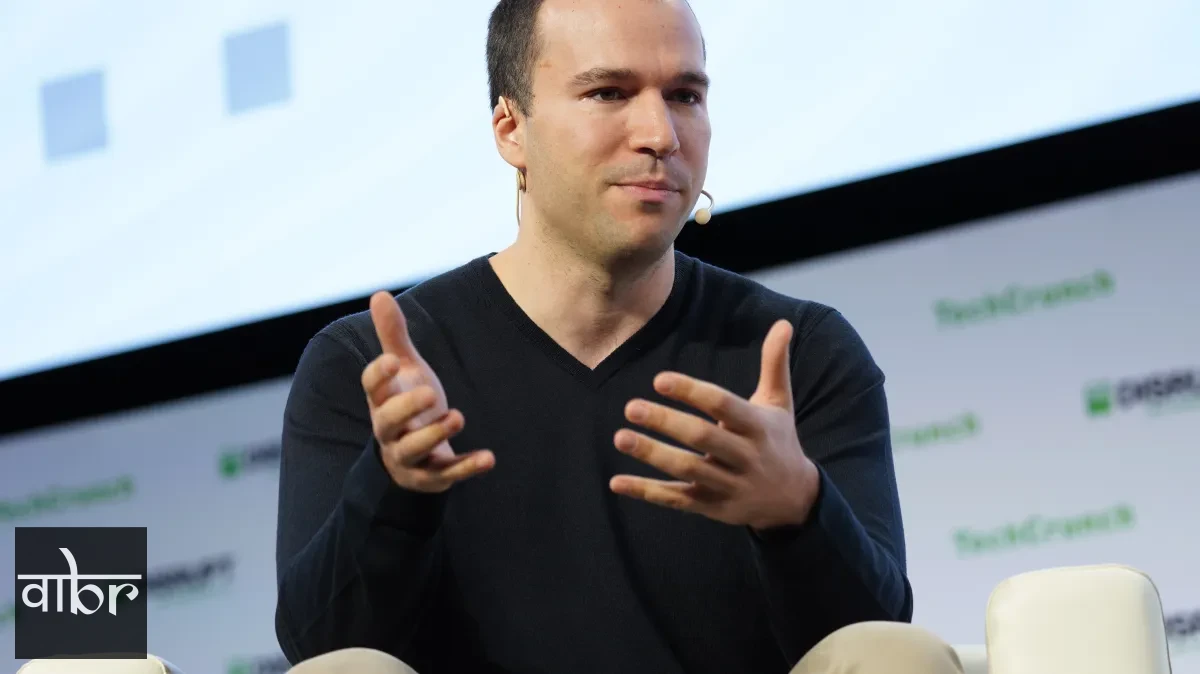
The revelation regarding the OpenAI IPO 2027 occurred during a high-profile fireside chat at the annual Greg Brockman WSJ conference. President and co-founder Greg Brockman took center stage to discuss the company's meteoric rise, monetization strategies, and evolving corporate structure. For months, analysts have scrutinized the artificial intelligence valuation of the firm, especially given its unique nonprofit-to-for-profit governance hybrid. Brockman addressed these structural complexities head-on, suggesting that the organization is actively working through the hurdles required for an eventual OpenAI IPO 2027.
Industry observers at the Greg Brockman WSJ conference noted that the executive appeared remarkably confident about the firm's commercial momentum. While previous discussions focused primarily on research breakthroughs, the conversation has decisively shifted toward revenue generation, cost management, and scalability. This pivot underscores why an OpenAI IPO 2027 is becoming an increasingly logical step for satisfying institutional investors who demand liquidity and financial transparency.
Industry Impact & Strategic Implications
The prospect of an OpenAI IPO 2027 carries massive implications for the broader technology sector. For years, enterprise AI adoption has been accelerating at an unprecedented pace, with corporations worldwide integrating advanced automation tools into their daily workflows. Brockman emphasized that enterprise AI adoption has surged significantly, proving that the company can secure lucrative, long-term B2B contracts rather than relying solely on consumer subscriptions.
However, navigating enterprise AI adoption successfully requires outmaneuvering fierce rivals. The competitive pressure from rival labs, particularly Anthropic competition, has forced OpenAI to refine its enterprise offerings, bolster data privacy compliance, and offer competitive pricing structures. As Anthropic competition heats up in the corporate software space, achieving an OpenAI IPO 2027 will provide the war chest necessary to maintain market dominance against well-funded adversaries.
Technical / Market Analysis
From a financial and technical perspective, executing an OpenAI IPO 2027 requires balancing astronomical computational costs with steady revenue streams. The cost of training state-of-the-art large language models runs into billions of dollars, demanding innovative approaches to hardware infrastructure and energy consumption. Financial analysts note that reaching public market readiness demands meticulous auditing, predictable cash flows, and sustainable profit margins.
Achieving public market readiness is no small feat for a research lab that originated with nonprofit ideals. Corporate restructuring has been a major focus behind the scenes, ensuring that investors in an OpenAI IPO 2027 receive clear equity stakes governed by standard corporate accountability frameworks. Furthermore, strong enterprise AI adoption metrics will serve as the primary valuation driver when underwriters evaluate the firm's worth on Wall Street.
What This Means for Consumers and Developers
While the financial mechanics of an OpenAI IPO 2027 might seem distant from the average user, the shift toward commercial maturity deeply impacts developers and consumers alike. As the company prepares for its tech stock market debut, platform stability, API reliability, and developer tooling are expected to improve dramatically.
Developers relying on robust large language models require predictable pricing and robust uptime guarantees—commitments that become standard operating procedure for publicly traded technology giants. Moreover, accelerated enterprise AI adoption ensures that developer ecosystems will receive expanded funding, better documentation, and richer feature sets as the company scales its commercial operations ahead of the tech stock market debut.
Key Takeaways (Detailed bullet points)
- Timeline Established: Leadership signaled that an OpenAI IPO 2027 is a realistic target, driven by rapid commercial maturation and structural evolution.
- B2B Growth: Rapid enterprise AI adoption has fueled strong revenue growth, positioning the firm to capture significant market share in the corporate software sector.
- Competitive Pressures: Intensifying Anthropic competition has forced the company to sharpen its enterprise strategy and improve customer retention.
- Structural Shift: The pathway to public market readiness necessitates ongoing corporate restructuring to satisfy institutional investor demands.
- Ecosystem Impact: Developers and enterprise clients can expect enhanced infrastructure stability and advanced features as the company prepares for its upcoming tech stock market debut.
The Road Ahead (Forward-looking conclusion)
The journey toward an OpenAI IPO 2027 represents a watershed moment for the artificial intelligence industry. As artificial intelligence valuation models mature and enterprise AI adoption becomes ubiquitous across global industries, the financial markets are bracing for one of the largest tech stock market debuts in history. Whether the company successfully navigates regulatory hurdles, competitive pressures, and infrastructure costs will determine not only its own financial destiny, but the economic future of the entire generative AI revolution.
Strategic Industry Takeaways & Future Outlook
Furthermore, strategic integration surrounding enterprise AI adoption remains a crucial priority for stakeholders. Ensuring high performance across enterprise AI adoption is expected to deliver long-term competitive advantages.
Furthermore, strategic integration surrounding enterprise AI adoption remains a crucial priority for stakeholders. Ensuring high performance across enterprise AI adoption is expected to deliver long-term competitive advantages.
Furthermore, strategic integration surrounding enterprise AI adoption remains a crucial priority for stakeholders. Ensuring high performance across enterprise AI adoption is expected to deliver long-term competitive advantages.
Key factors influencing this sector also include venture capital tech, each playing an essential role in ongoing development and implementation.
📌 Related Briefings & Stories
Varta Brief Editorial Desk
• Newsroom StaffDedicated to objective, deep, and fact-verified reporting across technology, science, world affairs, and modern markets.
Follow Varta Brief on Google
Add Varta Brief as a preferred source to see our verified stories and daily briefings in Google Top Stories and Discover.
Found this briefing insightful?
Share it with your colleagues and community.