Ring Home Security Drone Debuts Alongside New Enterprise Robot

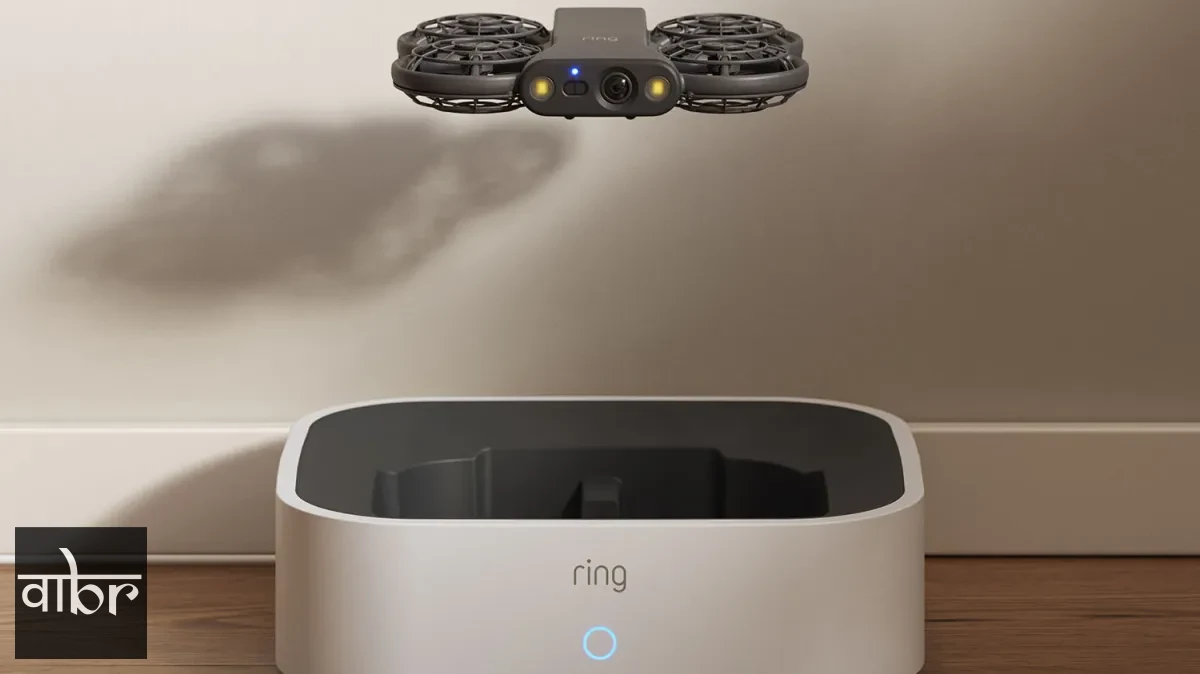
Ring Home Security Drone Debuts Alongside New Enterprise Robot
When Amazon-owned Ring first disrupted the residential property market with its internet-connected video doorbells, it fundamentally redefined how everyday citizens perceived domestic protection. Fast-forward to the current hardware landscape, and the company is pushing the boundaries of automated surveillance even further. In a sweeping hardware announcement, Ring has officially expanded its ecosystem beyond static lenses, introducing both a cutting-edge home security drone for residential properties and a robust enterprise security robot designed for commercial facilities. This bold maneuver signifies a major evolution in how automated surveillance and smart home automation intersect with physical robotics, transforming science-fiction concepts into everyday reality for consumers and businesses alike.
As the smart home sector matures, the demand for proactive defense mechanisms has skyrocketed. Traditional fixed cameras often leave critical blind spots, forcing property owners to deploy multiple units across sprawling estates. By leveraging airborne flight paths and mobile chassis units, Ring is directly addressing these limitations. The newly released home security drone promises to patrol predefined indoor pathways autonomously, giving homeowners a bird's-eye view of potential anomalies without requiring manual piloting. Simultaneously, the new enterprise security robot targets commercial warehouses, corporate campuses, and large-scale industrial sites, offering a tireless mechanical guard dog capable of navigating complex interiors.
Deep Dive: Full Event Breakdown
The unveiling of the home security drone and the enterprise security robot sent immediate shockwaves through the consumer electronics and robotics sectors. For years, rumors have swirled regarding Amazon's broader ambitions in mobile robotics, following early experimental projects like the Astro household assistant. However, this official deployment marks a much more aggressive commercial push into dedicated security patrols.
The residential home security drone is engineered to dock neatly in a charging base when not in use. Upon triggering an alert from a window sensor or door contact, the flying security device dispatches automatically, buzzing along predetermined routing coordinates to investigate the disturbance. It streams live video directly to the owner's smartphone, allowing users to verify false alarms or capture footage of intruders in real time.
On the commercial front, the enterprise security robot approaches protection from a ground-based perspective. Built with heavy-duty mobility treads and an array of thermal imaging sensors, lidar, and optical cameras, the rolling patrol robot can autonomously traverse vast office complexes or manufacturing floors during off-hours. This dual-pronged product launch proves that Amazon Ring hardware is no longer confined to static walls and doorframes, ushering in a brand-new era of dynamic, mobile corporate security solutions and residential watchdogs.
Industry Impact & Strategic Implications
This strategic pivot by Ring carries profound implications for the broader security camera market. For over a decade, competition has largely centered on higher resolution sensors, wider fields of view, and cloud storage subscriptions. By introducing autonomous mobility, Ring is shifting the competitive paradigm entirely toward active patrol capabilities.
Industry analysts note that the commercial viability of an enterprise security robot hinges heavily on reliability, obstacle avoidance, and seamless integration with existing building management systems. If successful, this rolling patrol robot could drastically reduce the operational overhead associated with overnight security guards, altering labor dynamics across warehouse logistics and corporate real estate.
Concurrently, the home security drone normalizes the presence of indoor flying hardware for everyday citizens. While previous iterations faced skepticism regarding noise levels and battery life, engineering refinements have made these units quieter and more efficient. Yet, this expansion also magnifies existing privacy concerns. Critics and consumer advocacy groups have routinely questioned the societal impact of deploying automated recording devices capable of roaming freely through private spaces and shared commercial zones.
Technical / Market Analysis
Beneath the sleek exterior housing, both the home security drone and the enterprise security robot pack advanced navigational architecture. The residential flying unit utilizes simultaneous localization and mapping (SLAM) technologies to build accurate 3D maps of a home interior, ensuring it never collides with walls, furniture, or pets. Its integrated propeller guards and automated return-to-base fail-safes prioritize safety above all else.
Meanwhile, the enterprise security robot boasts ruggedized hardware built to withstand heavy industrial wear and tear. Equipped with enterprise-grade encryption and secure local data processing, it addresses corporate data sovereignty requirements. Market research indicates that demand for autonomous surveillance systems is projected to grow exponentially over the next decade. By capturing both ends of the spectrum—the consumer living room and the commercial warehouse—Ring is positioning itself as a dominant ecosystem provider capable of scaling robotics from micro to macro environments.
What This Means for Consumers and Developers
For everyday consumers, the availability of a home security drone means a higher tier of active protection is finally within reach. Homeowners no longer need to rely purely on passive recording; they can actively investigate disturbances remotely. However, users must weigh these enhanced safety benefits against the reality of having an autonomous flying device operating inside their most private spaces.
For software developers and hardware engineers, Ring's entry into mobile robotics opens exciting new avenues for third-party integrations and application programming interfaces. As smart home automation continues to converge with artificial intelligence, developers will need to build software that harmonizes stationary sensors with mobile agents, creating unified ecosystems where drones, robots, and doorbells communicate effortlessly.
Key Takeaways
- Ring has officially launched a residential home security drone and a commercial enterprise security robot.
- The flying security device autonomously navigates indoor environments using advanced SLAM technology to investigate alerts.
- The rolling patrol robot is engineered for industrial warehouses and corporate campuses, utilizing thermal imaging and lidar.
- This move transforms the security camera market by pivoting from static lenses to dynamic mobile patrols.
- Privacy concerns remain a central point of discussion surrounding the widespread adoption of indoor autonomous surveillance.
- The product line bridges the gap between consumer smart home automation and heavy corporate security solutions.
The Road Ahead
As Amazon Ring rolls out these revolutionary robotic devices, the industry watches with bated breath to see how regulatory bodies, privacy advocates, and everyday users respond. The integration of a home security drone and an enterprise security robot into everyday life marks a monumental turning point in how we approach physical safety. Whether these autonomous machines become standard household and corporate staples will depend heavily on consumer trust, battery innovation, and flawless operational reliability. What remains certain is that the future of protection is no longer stationary—it flies, it rolls, and it is actively patrolling our world.
Strategic Industry Takeaways & Future Outlook
When evaluating the broader technological shift, home security drone serves as a defining benchmark for modern standards. Industry analysts emphasize that continuing developments in home security drone will dictate user adoption and market expansion.
When evaluating the broader technological shift, home security drone serves as a defining benchmark for modern standards. Industry analysts emphasize that continuing developments in home security drone will dictate user adoption and market expansion.
When evaluating the broader technological shift, home security drone serves as a defining benchmark for modern standards. Industry analysts emphasize that continuing developments in home security drone will dictate user adoption and market expansion.
Furthermore, strategic integration surrounding enterprise security robot remains a crucial priority for stakeholders. Ensuring high performance across enterprise security robot is expected to deliver long-term competitive advantages.
Furthermore, strategic integration surrounding enterprise security robot remains a crucial priority for stakeholders. Ensuring high performance across enterprise security robot is expected to deliver long-term competitive advantages.
Furthermore, strategic integration surrounding enterprise security robot remains a crucial priority for stakeholders. Ensuring high performance across enterprise security robot is expected to deliver long-term competitive advantages.
Furthermore, strategic integration surrounding enterprise security robot remains a crucial priority for stakeholders. Ensuring high performance across enterprise security robot is expected to deliver long-term competitive advantages.
📌 Related Briefings & Stories
Varta Brief Editorial Desk
• Newsroom StaffDedicated to objective, deep, and fact-verified reporting across technology, science, world affairs, and modern markets.
Follow Varta Brief on Google
Add Varta Brief as a preferred source to see our verified stories and daily briefings in Google Top Stories and Discover.
Found this briefing insightful?
Share it with your colleagues and community.
Read Next

Cyberattacks Threaten Open Source AI: The New Battleground for Security

France Blames Iran For Grocery Freezer Cyber Attacks And National Security Threats