
Samsung and Verizon Complete AI-Powered 6G ISAC Network Trial

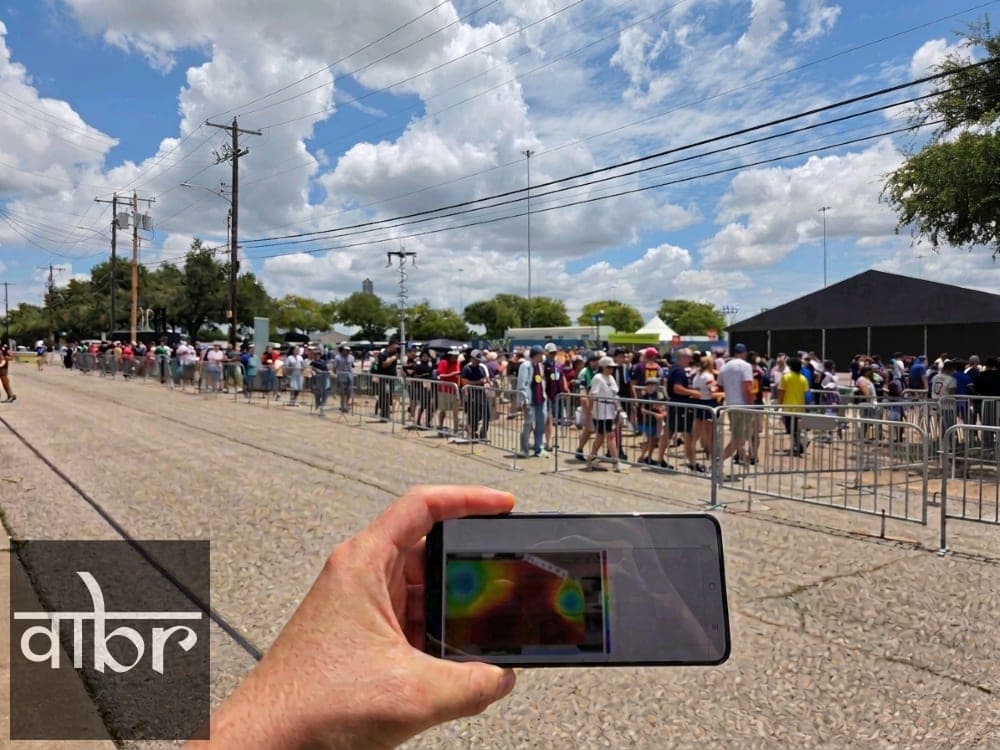
Samsung Electronics and Verizon have completed a successful field trial for Integrated Sensing and Communication (ISAC) over a live commercial virtualized network. Executed at a major international soccer fan event in Dallas, Texas, the trial demonstrated how software-driven telecommunication infrastructure can perceive, analyze, and respond to environmental changes in near-real time.
This landmark achievement represents one of the telecom industry's first practical implementations of ISAC on an AI-powered virtualized Radio Access Network (vRAN). As operators evaluate Top Tech Trends to Watch in 2026, this trial proves that existing 5G infrastructure can support foundational 6G capabilities without requiring specialized hardware overhauls.
Key Highlights & Technical Milestones
- Zero Additional Hardware Required: Deployed entirely on Samsung's Network in a Server (NIS) edge-AI platform using standard 5G connectivity.
- Commercial Spectrum Utilization: Used a CBRS radio unit operating on 40 MHz of spectrum mounted on a Verizon Cell-On-Wheels (COW).
- Near-Real-Time Visuals: Analyzed radio channel variations to generate live crowd density heatmaps.
- Multi-Stakeholder Utility: Delivered actionable insights for event organizers, safety teams, and attendees alike.
Transforming Cellular Infrastructure into Environmental Sensors
Traditionally, mobile networks operate exclusively as conduits for transmitting digital data between endpoints. Integrated Sensing and Communication fundamentally shifts this paradigm by enabling radio waves to double as radar-like environmental sensors. The network constantly interprets how surrounding physical objects and human movement distort wireless signals.
During the Dallas trial, a CBRS radio unit captured subtle channel variations from commercial 5G mobile devices. Samsung's NIS consolidated edge-AI software, vRAN, and virtualized Core (vCore) into a single server, processing the incoming telemetry using accelerated compute resources. The system immediately translated raw RF signal changes into high-resolution crowd heatmaps without invading individual user privacy.
By leveraging flexible vRAN software architectures, Verizon proved that telecom providers can activate advanced sensing capabilities on demand. This approach eliminates the traditional friction of physical equipment upgrades across existing base stations.
Practical Applications for Venue Management and Public Safety
Sensing-driven networks offer concrete operational upgrades for large-scale public venues, transportation hubs, and smart cities. The trial highlighted distinct benefits across three core groups:
- Event Attendees: Visitors can check digital maps to locate less congested restrooms, concessions, and exit routes, minimizing wait times.
- Venue Organizers: Staff gain real-time visibility into crowd bottlenecking, allowing prompt reallocation of personnel and resources.
- Public Safety and Security: First responders receive automated alerts regarding dangerous overcrowding, enabling preventive intervention before incidents escalate.
Capability | Traditional 5G Network | ISAC-Enabled 6G Ready vRAN |
|---|---|---|
Core Function | Voice and Data Transmission | Data Transmission + Environmental Sensing |
Crowd Detection | Requires optical cameras/sensors | Native RF signal distortion tracking |
Hardware Footprint | Dedicated sensor devices | Single-server software consolidation (NIS) |
Deployment Speed | Months (hardware dependent) | Immediate software activation |
Software-Defined Architecture Paves the Way for 6G
This trial highlights the strategic alignment between Samsung's commercial network solutions and advanced research from Samsung Research America (SRA). While Samsung continues integrating consumer intelligence across devices—such as seen in how Samsung Launches Galaxy S26 FE in India With Flagship AI—its network division is aggressively reshaping backend infrastructure.
Industry leadership emphasized the practical value of early investments in flexible software architectures:
"Verizon's strategy has always been focused on building an intelligent, AI-native network that translates into meaningful real-world value for our customers," said Yago Tenorio, Chief Technology Officer and Senior Vice President of Technology Development at Verizon. "Our early investments in flexible, software-driven vRAN architecture are paying off today, giving us the agility to engineer and trial groundbreaking 6G concepts like ISAC over our existing infrastructure."
Ji-Yun Seol, Executive Vice President and Head of Product Strategy at Samsung Electronics Networks Business, noted that adopting software-driven vRAN early on positioned forward-thinking operators at the leading edge of 6G development. Furthermore, Charlie Zhang, Executive Vice President at Samsung Research America, stressed that the trial validates the practical integration of AI-driven sensing into everyday cellular operations.
Conclusion: Beyond Pure Data Connectivity
As a founding member of the Verizon 6G Innovation Forum, Samsung continues to push the boundaries of next-generation wireless communications. The successful Dallas field test establishes a clear blueprint for the commercial transition toward 6G networks. By converting standard radio signals into spatial intelligence, operators are no longer just selling data bandwidth—they are building the perceptive nervous system for future smart cities.
Varta Brief Editorial Desk
• Newsroom StaffDedicated to objective, deep, and fact-verified reporting across technology, science, world affairs, and modern markets.
Follow Varta Brief on Google
Add Varta Brief as a preferred source to see our verified stories and daily briefings in Google Top Stories and Discover.
Found this briefing insightful?
Share it with your colleagues and community.
