
Webb Telescope Decodes Atmospheres of Distant Exoplanets

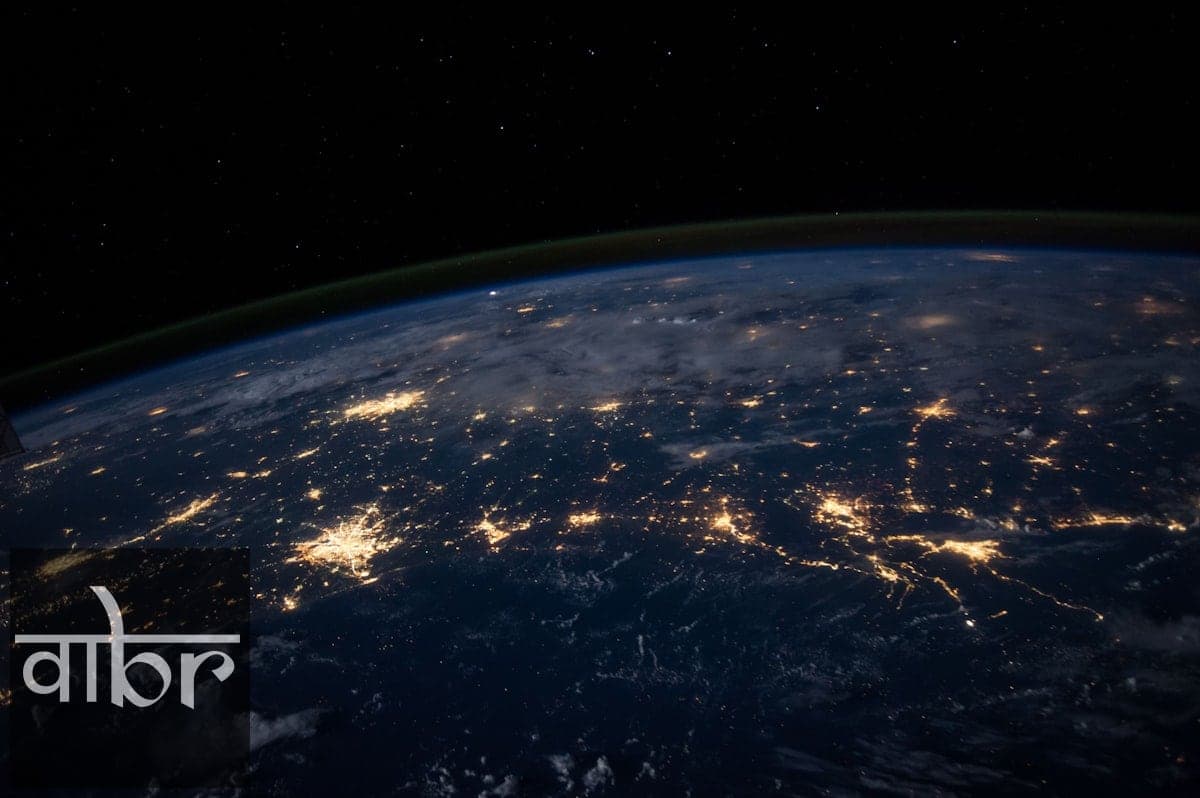
The quest to understand the cosmos has entered a transformative era. Recent deep-space observations from advanced space observatories have bypassed the mere detection of distant worlds to achieve something far more profound: decoding the chemical compositions of their atmospheres. As global space agencies publish these groundbreaking datasets, the Indian scientific community is rapidly positioning itself to leverage this wealth of cosmic information, signaling a new chapter in the country's space exploration trajectory.
For decades, identifying an exoplanet was considered a monumental success. Today, astronomers are utilizing transmission spectroscopy to peer through the gaseous envelopes of planets located hundreds of light-years away. By analyzing how starlight filters through these alien skies, researchers are identifying the building blocks of life, complex weather systems, and unexpected chemical cycles.
The New Frontier: Decoding Alien Skies
The pivot from planetary discovery to atmospheric characterization has been accelerated by the state-of-the-art instruments aboard the James Webb Space Telescope (JWST). These instruments operate primarily in the infrared spectrum, allowing them to pierce through cosmic dust and detect molecular signatures that were previously invisible to older observatories.
Indian astrophysicists at premier institutions, including the Indian Institute of Astrophysics (IIA) in Bengaluru and the Physical Research Laboratory (PRL) in Ahmedabad, are actively participating in the global analysis of these open-access datasets. This research builds directly upon previous breakthroughs where the Webb Telescope Detects Water Vapor on Earth-Sized Exoplanet, offering a foundation for understanding temperate, rocky worlds.
These atmospheric profiles are not uniform. Some planets present highly volatile environments dominated by heavy metals, while others display stable, temperate conditions. Understanding these variations is crucial for determining planetary habitability and mapping the evolution of solar systems.
Key Atmospheric Signatures and What They Mean
The latest findings have highlighted several key exoplanets that challenge our current models of planetary formation. From super-Earths to hot Jupiters, the atmospheric diversity is staggering. For instance, recent studies have revealed that Exoplanet Atmospheres Reveal Complex Methane Cycles, suggesting that carbon chemistry is far more dynamic in outer solar systems than previously theorized.
Exoplanet Name | Key Atmospheric Component | Detection Method | Scientific Significance |
|---|---|---|---|
WASP-39 b | Carbon Dioxide & Sulfur Dioxide | Transmission Spectroscopy | First definitive detection of active photochemistry on an alien world |
K2-18 b | Methane & Carbon Dioxide | Transit Spectroscopy | Indications of a potential liquid-water ocean beneath a hydrogen-rich atmosphere |
LHS 475 b | Silicate Clouds / Carbon Dioxide | Secondary Eclipse | Characterization of a rocky, Earth-sized planet's atmospheric potential |
These discoveries are reshaping the baseline metrics for what constitutes a "habitable" zone. The presence of sulfur dioxide, for example, points to active chemical reactions driven by starlight—akin to the photochemical smog seen in Earth's own atmosphere, albeit under vastly different physical conditions.
India's Growing Stake in Deep-Space Astronomy
While the Indian Space Research Organisation (ISRO) has historically focused on cost-effective planetary missions within our solar system—such as the Chandrayaan and Mangalyaan initiatives—there is a strategic shift toward deep-space observation. The Union Cabinet's steady budgetary support for space sciences, which hovers around ₹13,000 crore annually, is increasingly funding academic research aimed at exoplanetary science.
Moreover, India's active participation in the Thirty Meter Telescope (TMT) project and collaborations on future space-based coronagraphs reflect a long-term vision to lead, rather than just participate in, the next generation of astronomical discoveries.
"The transition from simply cataloging exoplanets to dissecting their atmospheric chemistry is a paradigm shift. Indian researchers are no longer just spectators; we are developing the algorithmic models and laboratory simulations required to interpret these complex spectroscopic signals." — Dr. K. Srimathy, Senior Astrophysicist and Exoplanet Researcher
Key Takeaways of Recent Discoveries
- Photochemical Insights: The detection of sulfur dioxide confirms that active chemistry driven by stellar light is a common feature on gas giants.
- Carbon-Rich Chemistry: Methane and carbon dioxide detections point to complex carbon cycles that mimic, and in some cases exceed, the complexity of our own solar system.
- Indian Academic Integration: Premier Indian institutes are leveraging global deep-space telemetry to train the next generation of data-driven astrophysicists.
- Technological Synergies: The data-processing techniques developed for atmospheric spectroscopy are driving innovations in machine learning and spectral analysis within India's domestic tech sector.
Looking Ahead
As space agencies plan the next wave of dedicated exoplanet missions, the line between astrophysics and astrobiology continues to blur. The search for biosignatures—gaseous indicators of life—is no longer a theoretical exercise but a data-driven pursuit. For India, investing in the intellectual and technological infrastructure to analyze these distant atmospheres is not just about scientific prestige; it is about securing a seat at the table when humanity eventually answers the ultimate question: are we alone in the universe?
Varta Brief Editorial Desk
• Newsroom StaffDedicated to objective, deep, and fact-verified reporting across technology, science, world affairs, and modern markets.
Follow Varta Brief on Google
Add Varta Brief as a preferred source to see our verified stories and daily briefings in Google Top Stories and Discover.
Found this briefing insightful?
Share it with your colleagues and community.
