
Why RAM Prices Are High in 2026: The AI Wafer Squeeze and Supply Realignment

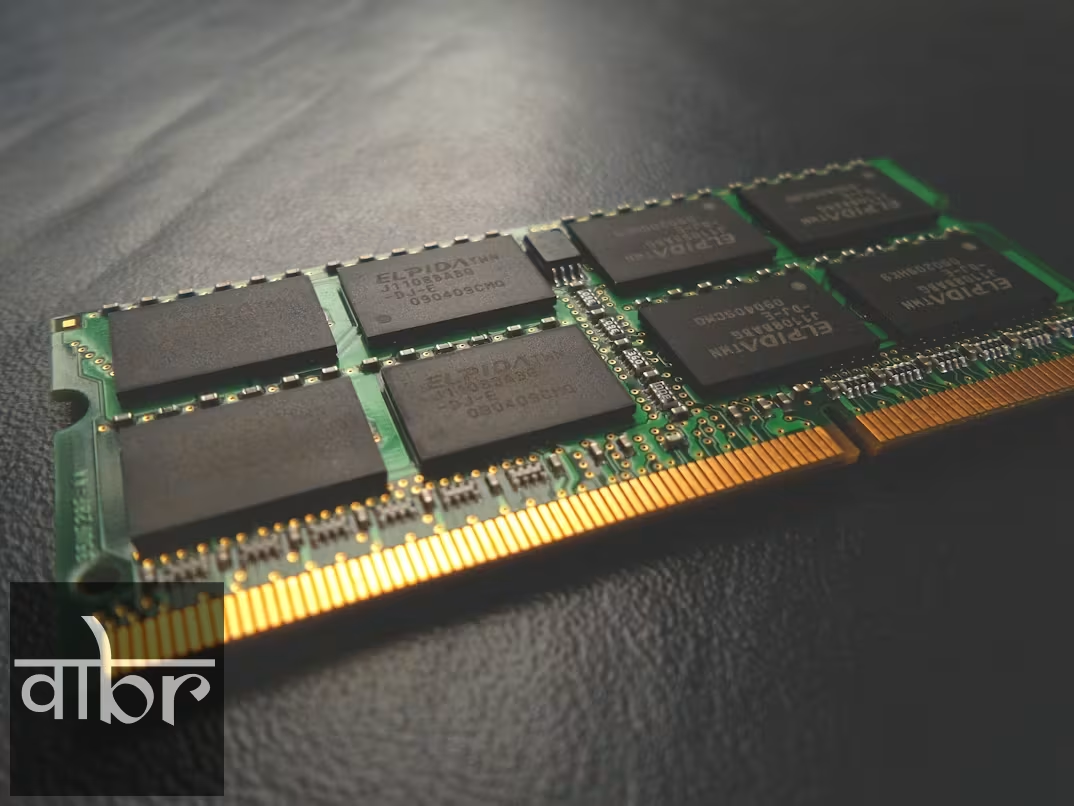
Building or upgrading a PC in 2026 comes with immediate sticker shock the moment memory enters the cart. After a brief period of historic lows, system memory costs have surged across both retail shelves and enterprise channels. Mainstream DDR5 kits that cost significantly less a year ago now command steep premiums, and legacy DDR4 kits offer little financial relief.
This pricing spike is not a random market anomaly or a brief logistics hiccup. Instead, it reflects a structural reallocation of semiconductor fabrication lines worldwide. Memory manufacturers are pivoting their most advanced wafer capacity away from consumer desktop modules to feed a massive enterprise buildout.
The Real Reason: High Bandwidth Memory Is Consuming Wafer Capacity
To understand why desktop memory is expensive, look at what artificial intelligence accelerators require. Modern AI clusters rely on High Bandwidth Memory (HBM) stacked directly alongside processing silicon.
While personal computers rely on conventional standard DDR5 or DDR4 modules, HBM and client DRAM share identical silicon wafer fabrication plants. Fabricating HBM requires significantly larger silicon dies and intricate 3D packaging technologies compared to standard DDR5. As a result, producing a single gigabyte of HBM consumes roughly three times the raw silicon wafer capacity needed for a gigabyte of conventional PC DRAM.
The three dominant memory producers—Samsung, SK Hynix, and Micron—have redirected a major percentage of their advanced wafer allocation directly toward HBM and high-density server RDIMMs. Enterprise memory delivers substantially higher operating margins than consumer enthusiast RAM. When foundries must choose between fabricating a $90 consumer desktop kit or fulfilling million-dollar enterprise contracts, production priority moves to the data center.
The Double Squeeze: Why DDR4 Is Not Saving Buyers Money

In previous generational transitions, buyers looking to save cash could simply step back to the older standard. That strategy no longer works reliably in 2026.
Major memory fabricators began aggressively decommissioning or retooling older DDR4 fabrication lines starting in 2024 to clear space for DDR5 and enterprise memory. Consequently, DDR4 supply has tightened considerably. Meanwhile, demand for DDR4 remains robust across millions of existing corporate office fleets, budget gaming rigs, and industrial platforms that require replacement parts.
With low production volume and steady legacy demand, DDR4 has experienced artificial scarcity, keeping its price uncomfortably close to DDR5.
Memory Category | Market Availability | Pricing Pressure Driver | Primary Use Case |
|---|---|---|---|
HBM3e / HBM4 | Severely constrained | Hyperscaler AI clusters | Machine learning accelerators |
DDR5 (Consumer) | Moderate | Squeezed wafer allocation | Modern Intel & AMD platforms |
DDR4 (Consumer) | Diminishing | Fab line shutdowns & legacy demand | AM4, LGA 1700, legacy systems |
Server RDIMM | Tight allocation | Cloud data center expansions | Enterprise virtualization |
Clean Inventories and Disciplined Production
During the pandemic boom, memory makers faced a brutal oversupply crash when consumer demand abruptly dropped. Warehouses sat full of unsold memory chips, forcing manufacturers to write down billions in inventory.
Determined to avoid repeating that cycle, DRAM producers instituted strict production discipline. Rather than running cleanrooms at maximum output and flooding the market, fabs have aligned production closely with confirmed contract orders.
Building out fresh semiconductor fabrication capacity is not a fast process. A modern fab takes between three to five years and tens of billions of dollars to construct, equip with lithography machines, and certify for volume production. Facilities greenlit during the initial AI surge are only slated to add meaningful global supply in late 2027 or 2028. Until that cleanroom square footage comes online, the market remains capacity-bound.
Practical Purchasing Strategies for PC Builders
Navigating an expensive memory market requires adjusting how you budget your component list.
- Lock in 32GB from the start: In 2026, 32GB (two 16GB modules) remains the sweet spot for modern desktop workloads and gaming. Buying a single 16GB stick with plans to buy a matching stick down the road exposes you to further price fluctuations and module mismatch stability issues.
- Avoid chasing speculative frequencies: For AMD AM5 platforms, a DDR5-6000 kit with CL30 latency matches the internal memory controller clocks without paying excessive premiums for bleeding-edge 7200MHz+ kits that offer minimal real-world performance gains.
- Assess prebuilt and bundle pricing: System integrators and major retailers often purchase components through high-volume annual contracts negotiated quarters in advance. In some instances, bundled motherboard-and-RAM combos or complete prebuilt systems carry memory at lower effective replacement costs than loose retail kits.
- Check secondary markets carefully: Reputable second-hand platforms can provide workable savings, but ensure modules are verified using diagnostics like MemTest86, as memory warranties generally do not transfer to second owners.
Frequently Asked Questions
Will RAM prices drop later this year?
Industry supply forecasts indicate that DRAM pricing will remain elevated through the remainder of 2026. While the rapid quarter-over-quarter percentage increases may taper as consumer budgets reach their limit, broad price drops are unlikely until additional foundry capacity finishes qualification.
Does DDR5 speed matter enough to justify a higher price tier?
For most gaming and productivity workloads, memory latency and dual-channel configuration matter far more than top-tier megatransfer ratings. Sticking to DDR5-6000 CL30 provides optimal performance without incurring the steep costs associated with enthusiast-grade binned memory.
Can I buy DDR4 instead to lower my build cost?
Only if you are building on an older platform like AMD AM4 or select older Intel boards. Current desktop platforms—such as AMD AM5—require DDR5 exclusively. Because DDR4 production has dropped, the cost difference between comparable DDR4 and DDR5 capacities is smaller than in prior years.
Planning Around the Shortage
The current wave of expensive RAM represents a realignment of the memory industry rather than a temporary logistics disruption. High Bandwidth Memory and data center hardware have established a permanent claim on global wafer output. For consumer system builders, delaying a planned upgrade in hopes of a rapid return to rock-bottom RAM prices is an ineffective strategy. Instead, spec what your workloads require today, avoid paying for extreme clock speeds, and buy matched dual-channel kits.
Varta Brief Editorial Desk
• Newsroom StaffDedicated to objective, deep, and fact-verified reporting across technology, science, world affairs, and modern markets.
Follow Varta Brief on Google
Add Varta Brief as a preferred source to see our verified stories and daily briefings in Google Top Stories and Discover.
Found this briefing insightful?
Share it with your colleagues and community.
