Zelda Ocarina of Time Remake Mentors Next-Gen Nintendo Developers
Eiji Aonuma reveals how developing remakes trains junior game developers in essential design fundamentals and franchise preservation strategies.

Varta Brief Team
Monday, November 16, 2026
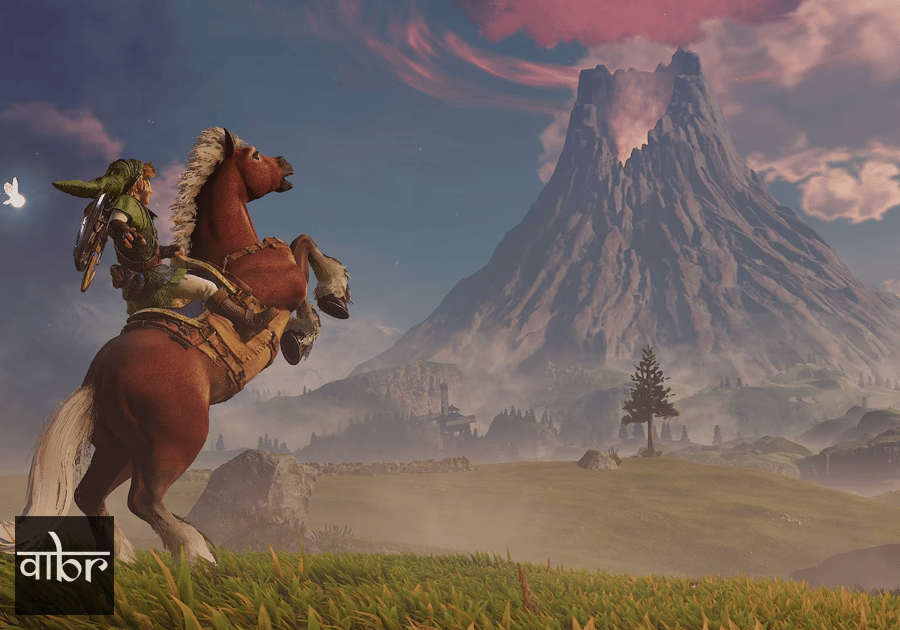
- Eiji Aonuma reveals how developing remakes trains junior game developers in essential design fundamentals and franchise preservation strategies.
- In an industry increasingly dominated by ballooning development cycles and astronomical budgets, game studios face a critical talent development challenge: how to onboard rising en...
In an industry increasingly dominated by ballooning development cycles and astronomical budgets, game studios face a critical talent development challenge: how to onboard rising engineers and designers without risking hundred-million-dollar flagships. Franchise producer Eiji Aonuma has offered a compelling solution, revealing Nintendo's deliberate decision to leverage projects like a Zelda Ocarina of Time remake as a cornerstone training initiative for junior game developers . Rather than viewing remakes purely as commercial nostalgia plays, Nintendo utilizes them as living classrooms designed to pass down foundational principles of Nintendo game design to a new generation of creators.
Executive Summary
Strategic Mentorship: Nintendo producer Eiji Aonuma champions using classic game remakes to train new talent. Foundational Learning: Assigning projects based on historical titles exposes entry-level staff to timeless mechanics and spatial design. Risk Mitigation: Remakes allow studios to train talent within established design constraints rather than unproven original concepts. Industry Trend: Addresses corporate knowledge loss across AAA studios by codifying institutional wisdom into practical production pipelines.
Deep Dive: Full Event Breakdown
During recent technical retrospectives on the evolution of Nintendo's game creation methodology, Eiji Aonuma outlined how assigning a Zelda Ocarina of Time remake project to emerging studio talent bridges the gap between historical design brilliance and contemporary production tools. The original 1998 masterpiece laid the blueprint for early 3D game design , establishing mechanics like target locking, contextual button mapping, and environmental puzzle integration. By tasking entry-level staff with rebuilding these systems, senior leadership ensures that junior game developers understand the raw arithmetic and psychology behind interaction design before managing modern, complex engines.
Aonuma explained that the architectural framework of a Zelda Ocarina of Time remake provides unique clarity. When new hires dissect why a specific dungeon puzzle succeeds, they are not merely copying code; they are learning how classic game mechanics generate player agency within strict memory limits. Mentors work alongside these creators inside Nintendo's game development pipeline , helping them analyze how historical constraints forced creative breakthroughs. Through hands-on experience with a Zelda Ocarina of Time remake , staff learn how tight camera controls and intentional pacing form the emotional spine of modern interactive entertainment.
Furthermore, this internal mentorship strategy acts as an incubator for creative confidence. Rather than overwhelming newcomers with the blank canvas of an unannounced open-world title, working on a established structure allows junior game developers to focus on execution, precision tuning, and user interface refinement without losing sight of overall game balance.
Industry Impact & Strategic Implications
The decision to position a Zelda Ocarina of Time remake as an internal training engine highlights a sophisticated response to an industry-wide crisis: institutional knowledge loss. As veteran developers retire or transition into executive oversight roles, major AAA studios frequently lose the implicit knowledge that produced iconic gaming experiences. By codifying these principles into active development projects, Nintendo ensures its signature design methodology remains intact.
Training Approach Traditional Studio Model Nintendo's Remake Academy Model Core Focus Trial by fire on live flagship titles Structured learning on established blueprints Risk Profile High budget and timeline risk Controlled technical and design exposure Knowledge Transfer Ad-hoc documentation and senior peer review Active deconstruction of historical code and mechanics Commercial Value Pure speculative project outcome Marketable product combined with upskilled staff
By viewing the Zelda Ocarina of Time remake as a practical academy, Nintendo aligns financial goals with workforce development. Enabling junior game developers to take ownership of classic titles transforms what could be routine remastering work into a transformative career milestone. This structured pipeline directly influences modern game design , as junior staff eventually carry these core lessons forward into massive original projects like Tears of the Kingdom and beyond.
Technical / Market Analysis
From a technical perspective, decompiling and rebuilding a Zelda Ocarina of Time remake forces teams to evaluate efficiency over raw computing horsepower. The original Nintendo 64 release operated under severe hardware limitations. Recreating those systems on modern hardware teaches junior game developers how spatial camera systems, hitbox precision, and environmental triggers function at an elemental level.
For example, embedded within the Zelda Ocarina of Time remake lies the foundation of dynamic target-locking system design—a mechanic pioneered by Nintendo that remains a standard in modern 3D action games. When guiding junior game developers through the implementation of these mechanics, senior directors highlight how subtle camera elasticity and character framing dramatically alter player perception.
From a market standpoint, financing a Zelda Ocarina of Time remake serves dual commercial and educational purposes. While consumers receive highly polished, modernized versions of beloved classics, Nintendo achieves substantial return on investment (ROI) by upskilling its engineering workforce without exposing unannounced original intellectual property to financial turbulence. It represents a masterclass in franchise preservation coupled with sustainable corporate HR execution.
What This Means for Consumers and Developers
For consumers, Nintendo’s approach guarantees that future titles retain the core identity and meticulous polish that define the publisher's history. When junior game developers master classic design principles early, their subsequent original contributions remain grounded in intuitive control schemes and inventive puzzle design rather than superficial graphical density.
For industry leaders, the success of the Zelda Ocarina of Time remake training model offers an actionable template for software engineering management. Studios looking to upskill junior game developers should look beyond formal onboarding presentations and consider establishing dedicated remake or porting units specifically aimed at teaching foundational code bases. Giving rising talent direct exposure to legendary mechanics fosters deep architectural empathy across the entire development studio.
Key Takeaways
Masterclass in Design: The Zelda Ocarina of Time remake serves as a practical classroom for understanding foundational 3D game design principles. Talent Development: Up-and-coming junior game developers gain invaluable insight by deconstructing historical code, dungeon layouts, and camera mechanics under senior guidance. Risk Mitigation: Utilizing legacy titles within the game development pipeline lowers financial risk while granting junior staff meaningful creative ownership. Institutional Knowledge Retention: Nintendo's holistic mentorship strategy safeguards core design philosophies across generational hardware transitions. Consumer Benefit: Broad adoption of these practices ensures future franchise entries maintain timeless pacing, intuitive gameplay loops, and mechanical depth.
The Road Ahead
As game budgets continue to scale exponentially, the line between talent training and commercial production will become increasingly blurred. Nintendo’s successful integration of classic project stewardship with team development proves that lookbacks into gaming history can light the path forward. By building upon lessons learned during the Zelda Ocarina of Time remake initiative, Nintendo ensures its classic philosophy of player-centric design will endure for decades to come. As these junior game developers step into leadership roles for future hardware generations, the gaming public can expect the legacy of classic game mechanics to remain vibrant, innovative, and deeply satisfying.
Strategic Industry Takeaways & Future Outlook
When evaluating the broader technological shift, Zelda Ocarina of Time remake serves as a defining benchmark for modern standards. Industry analysts emphasize that continuing developments in Zelda Ocarina of Time remake will dictate user adoption and market expansion.
When evaluating the broader technological shift, Zelda Ocarina of Time remake serves as a defining benchmark for modern standards. Industry analysts emphasize that continuing developments in Zelda Ocarina of Time remake will dictate user adoption and market expansion.
When evaluating the broader technological shift, Zelda Ocarina of Time remake serves as a defining benchmark for modern standards. Industry analysts emphasize that continuing developments in Zelda Ocarina of Time remake will dictate user adoption and market expansion.
Furthermore, strategic integration surrounding junior game developers remains a crucial priority for stakeholders. Ensuring high performance across junior game developers is expected to deliver long-term competitive advantages.
Furthermore, strategic integration surrounding junior game developers remains a crucial priority for stakeholders. Ensuring high performance across junior game developers is expected to deliver long-term competitive advantages.
Furthermore, strategic integration surrounding junior game developers remains a crucial priority for stakeholders. Ensuring high performance across junior game developers is expected to deliver long-term competitive advantages.
Furthermore, strategic integration surrounding junior game developers remains a crucial priority for stakeholders. Ensuring high performance across junior game developers is expected to deliver long-term competitive advantages.
📌 Related Briefings & Stories
AI games flood Itch.io as indie store page numbers double overnight Nagoshi Studio Closure Shakes Gaming Industry After NetEase Funding Cuts European venture capital fund Plural raises $1.1B to fuel deep tech moonshots
Varta Brief Team
· Newsroom DeskReported, verified, and published by the Varta Brief editorial desk with an uncompromising commitment to primary-source verification and independent journalism.
Related Dispatches
More in Gaming →
Why Mundane Video Game Design Is Driving the Next Era of GTA VI and WoW
Discover how immersive gaming downtime in Grand Theft Auto VI and World of Warcraft signals a major shift toward quiet moments in modern AAA titles.

GTA 6 Weekend Sales Crush Eras Tour and Shatter Gaming Records
GTA 6 smashes sales records, outperforming Taylor Swift's tour and major films while driving gaming industry revenue to unprecedented global heights.
How Ocarina of Time Remake Shapes Junior Game Developers at Nintendo
Nintendo's strategy leverages iconic titles to train junior game developers, instilling core design mechanics while building future Zelda games.