BMW 3 Series EV Pricing Shocks Industry: How the Electric Sedan Beats Gas

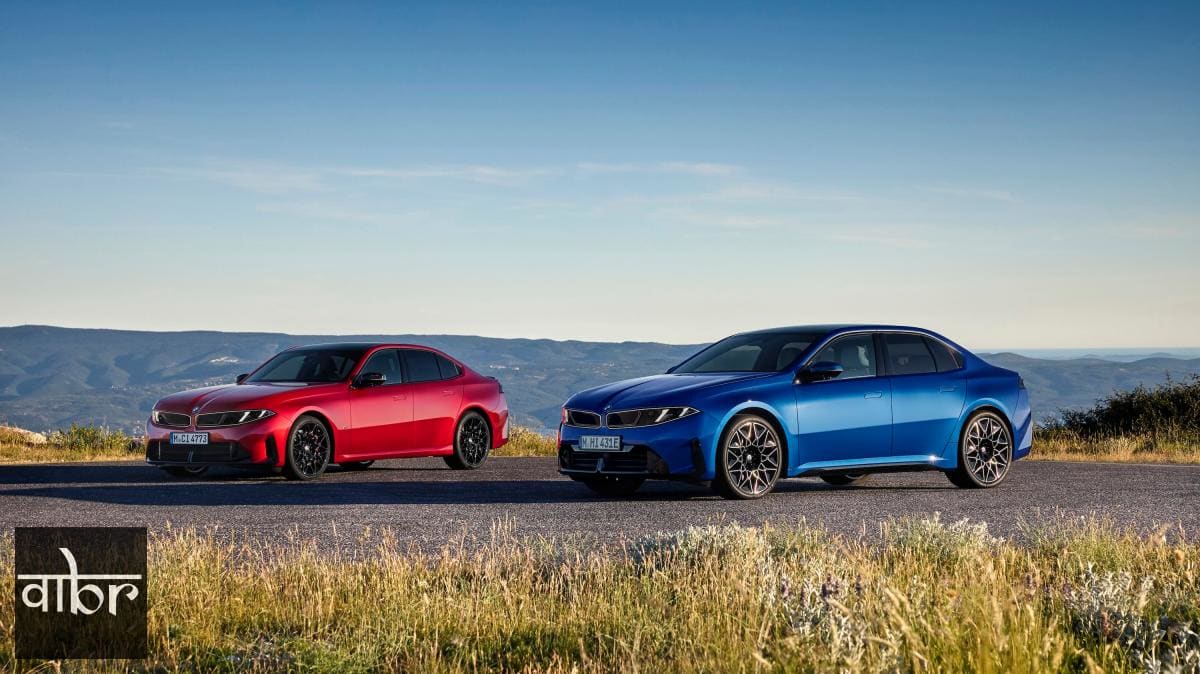
For over a decade, automotive industry analysts, legacy automakers, and prospective buyers accepted a seemingly immutable rule of modern transportation: electric vehicles would always carry a heavy financial premium over their traditional counterparts. Building a battery-powered car meant absorbing massive component expenses, engineering complex thermal management systems, and leaning heavily on subsidies to make the retail sticker remotely palatable. That narrative has just been upended in spectacular fashion. When BMW revealed its latest dual-powertrain strategy for its iconic compact luxury sedan, the industry was left reeling. In an unprecedented market milestone, the brand-new BMW 3 Series EV is actually retailing for $4,400 less than the internal combustion engine variant of the exact same vehicle architecture.
This tectonic shift in electric vehicle economics signals that the long-awaited arrival of true price parity has finally materialized. By engineering a unified platform capable of housing both legacy propulsion systems and next-generation battery architectures, the German automaker has shattered traditional manufacturing paradigms. Analysts tracking the luxury automotive market are scrambling to update their financial models, recognizing that the old assumptions governing battery manufacturing cost and profit margins no longer apply. This deep-dive investigative report explores how this engineering marvel was achieved, what it means for cost reduction strategies across the globe, and how this watershed moment alters the competitive landscape for legacy automakers and pure-play electric startups alike.
Deep Dive: Full Event Breakdown
The revelation surrounding the BMW 3 Series EV unfolded during a high-stakes media briefing in Munich, where executives detailed the production reality of their multi-powertrain strategy. For years, critics argued that forcing battery cells into shared architectures would result in bloated, compromised designs. However, the introduction of the BMW 3 Series EV proves otherwise. By leveraging an advanced multi-energy chassis, engineers streamlined production lines to accommodate both traditional fuel tanks and high-density battery packs under one roof.
Achieving price parity required a ruthless examination of every component within the vehicle. Historically, the internal combustion engine variant subsidized the development of experimental electric projects. Today, the roles are reversing. Through aggressive cost reduction strategies, supply chain localization, and optimized battery manufacturing cost reductions, the BMW 3 Series EV rolled off the assembly line with a production expenditure profile that undercuts its fossil-fueled sibling. Consumers walking into dealerships are now confronted with a fascinating economic reality: choosing the zero-emission BMW 3 Series EV is not only better for the environment, it is substantially better for their wallets.
Industry Impact & Strategic Implications
The ripple effects of the BMW 3 Series EV pricing structure are already shaking boardrooms across Detroit, Stuttgart, Tokyo, and Seoul. For decades, legacy automakers struggled with the dual-track cost burden of maintaining declining internal combustion engine assembly lines while simultaneously funding multi-billion-dollar electric transitions. The successful deployment of the BMW 3 Series EV demonstrates that achieving structural price parity is no longer a theoretical exercise for the distant future; it is an operational mandate happening right now.
Furthermore, this event forces a brutal reckoning regarding electric vehicle economics. Competitors who relied on government tax credits to artificially bridge the pricing gap must now re-engineer their supply chains from the ground up. If a prestige brand can sell the BMW 3 Series EV at a $4,400 discount compared to its gas equivalent, mass-market manufacturers face mounting pressure to replicate this feat immediately. The paradigm of the luxury automotive market has shifted from who can build the longest range to who can achieve absolute cost efficiency without sacrificing brand prestige.
Technical / Market Analysis
From a technical standpoint, the success of the BMW 3 Series EV boils down to radical structural integration and material science advancements. The underlying architecture—drawing heavily from lessons learned during the development of the Neue Klasse platform—minimizes heavy rare-earth elements while maximizing volumetric energy density. By simplifying the structural wiring harnesses and integrating power electronics directly into the drive units, assembly times for the BMW 3 Series EV dropped precipitously.
Market analysts note that reaching price parity hinges on scaling battery production without incurring prohibitive supply chain bottlenecks. As battery manufacturing cost figures continue their steady downward trajectory, the financial penalties once associated with zero-emission powertrains are evaporating. The internal combustion engine is rapidly losing its primary competitive advantage: cheap upfront acquisition cost. With the BMW 3 Series EV proving that electric powertrains can be cheaper to produce at scale, the economic momentum has decisively swung toward electrification.
What This Means for Consumers and Developers
For the everyday car buyer, the launch of the BMW 3 Series EV marks a critical psychological and financial tipping point. For years, buyers interested in sustainable mobility faced an uphill battle justifying the upfront expenditure, even when total cost of ownership calculations favored electricity. Now, with the BMW 3 Series EV starting at a significantly lower price point, the financial barrier to entry has vanished.
Software and powertrain developers also face new imperatives. As hardware costs decline, differentiation in the luxury automotive market will increasingly rely on software-defined vehicle features, user interface fluidity, and autonomous driving capabilities. Developers must design software stacks that seamlessly adapt across diverse powertrain options, ensuring that the BMW 3 Series EV offers an identical or superior digital user experience compared to its gas-powered counterpart.
Key Takeaways (Detailed bullet points)
- Historic Milestone: The BMW 3 Series EV undercuts its gas-powered counterpart by $4,400, proving that true price parity has arrived.
- Engineering Triumph: Utilizing a flexible dual-powertrain architecture allowed for massive manufacturing efficiencies and streamlined assembly.
- Economic Realignment: Shifting battery manufacturing cost curves and aggressive cost reduction strategies are fundamentally altering electric vehicle economics.
- Competitive Pressure: Legacy automakers must rapidly adapt their platforms to match the cost structure demonstrated by the BMW 3 Series EV.
- Consumer Victory: Sustainable mobility is now more financially accessible, eliminating the traditional upfront cost penalty of going electric.
The Road Ahead (Forward-looking conclusion)
The debut of the BMW 3 Series EV is much more than a routine product update; it is a definitive turning point in automotive history. As legacy automakers digest the implications of achieving price parity ahead of schedule, the internal combustion engine era enters its twilight chapter. The market has spoken: the future of personal transportation is not only electric, but increasingly affordable. How competitors respond to the benchmark set by the BMW 3 Series EV will dictate the winners and losers of the next decade in global mobility.
Strategic Industry Takeaways & Future Outlook
Furthermore, strategic integration surrounding price parity remains a crucial priority for stakeholders. Ensuring high performance across price parity is expected to deliver long-term competitive advantages.
Furthermore, strategic integration surrounding price parity remains a crucial priority for stakeholders. Ensuring high performance across price parity is expected to deliver long-term competitive advantages.
Furthermore, strategic integration surrounding price parity remains a crucial priority for stakeholders. Ensuring high performance across price parity is expected to deliver long-term competitive advantages.
Furthermore, strategic integration surrounding price parity remains a crucial priority for stakeholders. Ensuring high performance across price parity is expected to deliver long-term competitive advantages.
Furthermore, strategic integration surrounding price parity remains a crucial priority for stakeholders. Ensuring high performance across price parity is expected to deliver long-term competitive advantages.
📌 Related Briefings & Stories
Varta Brief Editorial Desk
• Newsroom StaffDedicated to objective, deep, and fact-verified reporting across technology, science, world affairs, and modern markets.
Follow Varta Brief on Google
Add Varta Brief as a preferred source to see our verified stories and daily briefings in Google Top Stories and Discover.
Found this briefing insightful?
Share it with your colleagues and community.